 Duty-free Shipping To EU (Pre-Christmas delivery for orders placed on 17th December )

Bahé vs Vivobarefoot: My Honest Comparison as a Footwear Designer

Alex Ward
Co-founder and Designer

People often ask me how Bahé compares with Vivobarefoot. They're probably the best-known name in the barefoot shoe world, and they've done a great deal to introduce people to the idea of more natural footwear. We share many of the same beliefs, particularly around the importance of foot-shaped shoes, allowing our feet to move naturally and encouraging people to reconnect with the outdoors.
Having worked in the footwear industry for around 20 years, it's a comparison I enjoy discussing because there's a lot more to footwear design than people might initially realise. Although we share many of the same principles, there are some interesting differences in how we've approached cushioning, running, fit and grounding technology.
So I thought it would be useful to share my perspective on where the two brands are similar, why we've made some different design decisions at Bahé, and which approach might suit you better. Hopefully, it'll give you a little more insight into the thinking behind the shoes and help you make a more informed choice.
Both Bahé and Vivobarefoot are built around the principles of natural movement, with foot-shaped designs that allow your toes room to spread, flexible soles and zero-drop options that keep the heel and forefoot at the same height.
Where our approaches differ most is in the amount of cushioning we offer and how people can use their shoes for different activities.
Vivobarefoot is particularly well known for its highly minimal designs, which offer a close connection to the ground and plenty of sensory feedback. It's an experience that many people love, and something we also offer through our Flex range.
At Bahé, we've taken that same foundation and developed three different cushioning levels within our Revive and Rewild ranges. This gives people more choice depending on their experience, the activities they enjoy and how much cushioning they prefer.
Another difference is grounding, which we've built into all our footwear from the beginning, while Vivobarefoot has introduced it into selected models.
I thought a quick comparison might be useful before getting into some of the details.
| What matters | Bahé | Vivobarefoot | |
|---|---|---|---|
| Foot shape | Roomy, foot-shaped barefoot-fit models | Foot-shaped barefoot designs | |
|
Foot shape Bahé Roomy, foot-shaped barefoot-fit models Vivobarefoot Foot-shaped barefoot designs |
|||
| Heel-to-toe drop | Zero-drop barefoot footwear | Zero-drop barefoot footwear | |
|
Heel-to-toe drop Bahé Zero-drop barefoot footwear Vivobarefoot Zero-drop barefoot footwear |
|||
| Sole cushioning | Optional sole cushioning (Flex, Adapt and Endurance) in selected ranges | Primarily thin, minimal soles | |
|
Sole cushioning Bahé Optional sole cushioning (Flex, Adapt and Endurance) in selected ranges Vivobarefoot Primarily thin, minimal soles |
|||
| Ground feel | Different levels of cushioning and sensory feedback | Strong emphasis on close-to-ground feel | |
|
Ground feel Bahé Different levels of cushioning and sensory feedback Vivobarefoot Strong emphasis on close-to-ground feel |
|||
| Grounding | Integrated into all Bahé footwear | Available in selected grounding models | |
|
Grounding Bahé Integrated into all Bahé footwear Vivobarefoot Available in selected grounding models |
|||
| Adjustability | Modular insoles and optional heel lifts | Model-dependent insole and fit options | |
|
Adjustability Bahé Modular insoles and optional heel lifts Vivobarefoot Model-dependent insole and fit options |
|||
| Outdoor footwear | Running, trails, everyday wear and hiking | Extensive range across running, trails, everyday wear and other activities | |
|
Outdoor footwear Bahé Running, trails, everyday wear and hiking Vivobarefoot Extensive range across running, trails, everyday wear and other activities |
|||
This is a general comparison of the two brands' approaches. Individual products can vary, so it's worth checking the specifications of any particular shoes you're considering.
Vivobarefoot has an interesting background, with founders Galahad and Asher Clark coming from the Clarks shoemaking family. They were involved in developing barefoot footwear long before it became as popular as it is today, and they deserve recognition for helping bring the category to a much wider audience.
I've always appreciated their commitment to barefoot principles, as well as their distinctive design aesthetic and the amount of education they've put into helping people understand natural movement.
Our own background at Bahé is a little different.
Kishan and I founded the brand in the UK, bringing together two quite different perspectives. I'd spent around 20 years working in footwear across different brands, while Kishan came from a technology background and was also a keen runner, taking part in events and challenges such as Marathons and HYROX.
I think that combination has been really valuable. My experience gave us a strong understanding of footwear construction, materials and design, while Kishan brought fresh eyes and a willingness to question some of the established ways of doing things.
We also didn't start Bahé as a barefoot shoe brand.
Our first shoe, Recharge, was a performance running shoe with a more conventional fit, but with grounding technology built into it. As we started exploring barefoot footwear, we spent a lot of time researching the category, wearing shoes from different brands and speaking with experts and customers about what they liked and where they felt there was room for improvement.
One of the things that became increasingly clear was that while many people loved the principles behind barefoot footwear, they didn't always find the transition particularly easy.
We also heard from experienced barefoot wearers who wanted a little more cushioning for certain activities, whether that was running longer distances, spending all day on their feet or simply wanting a more comfortable experience on harder surfaces.
That feedback really shaped our approach. We wanted to retain the things we loved about barefoot footwear while exploring how we could make it more versatile for the different ways people move.
This is one of the most interesting questions in barefoot footwear design, and something we've spent a lot of time thinking about.
There are some wonderful qualities to wearing shoes with very thin, flexible soles. You can feel much more of what's happening beneath your feet, whether you're walking through woodland, moving across different surfaces or simply enjoying being outdoors.
I really enjoy that feeling myself, and it's one of the reasons we developed our Flex Mode, our most minimal cushioning option.
At the same time, we've found through conversations with customers and footwear experts that people often have quite different preferences depending on what they're doing.
Someone might love that close-to-the-ground sensation on a short walk but prefer a little more cushioning when running, spending a full day standing or moving over hard surfaces.
There's also the question of adaptation. If you've spent much of your life wearing conventional footwear with cushioning and a raised heel, moving straight into a more aggressive, highly minimal, zero-drop shoe can be quite a significant change for your feet and lower legs.
Vivobarefoot recognises this and provides guidance around making that transition gradually, which I think is really positive.
For us, it raised an interesting design question: could we give people the benefits of foot-shaped, flexible footwear while also allowing them to choose how much cushioning they want?
We also wanted to make sure those choices remained relevant for experienced barefoot wearers, rather than simply being a way of transitioning towards increasingly minimal shoes.
My feeling is that natural movement should be about allowing your feet to function well throughout the activities you enjoy. Sometimes a highly minimal shoe is ideal for that, while other situations might call for a little more protection or cushioning.
Having those options available gives people the freedom to find what works best for them.
This thinking eventually led us to develop our three cushioning levels, which we call Modes.
Within our Revive and Rewild ranges, we offer Flex, Adapt and Endurance. All three retain the same fundamental foot-shaped, zero-drop design principles, but with different amounts of cushioning beneath the foot.

| Bahé Mode | Total stack height, including insole | How I think about it | |
|---|---|---|---|
| Endurance | 22 mm | More cushioning for longer runs, harder surfaces and people transitioning from conventional footwear | |
|
Endurance Total stack height, including insole 22 mm How I think about it More cushioning for longer runs, harder surfaces and people transitioning from conventional footwear |
|||
| Adapt | 14 mm | A versatile balance of cushioning, flexibility and ground feel | |
|
Adapt Total stack height, including insole 14 mm How I think about it A versatile balance of cushioning, flexibility and ground feel |
|||
| Flex | 10 mm | Our most minimal option, with greater sensory feedback and ground feel | |
|
Flex Total stack height, including insole 10 mm How I think about it Our most minimal option, with greater sensory feedback and ground feel |
|||
For most people transitioning from conventional footwear, Endurance is a good starting point. From there, they can explore Adapt and eventually Flex as their feet become more accustomed to less cushioning.
We generally describe that progression as Endurance → Adapt → Flex, although there's no requirement to keep reducing cushioning if you're already happy with what you're wearing.
I'm fortunate to be able to wear all our shoes regularly, and I've developed a good understanding of which ones I personally enjoy for different activities.
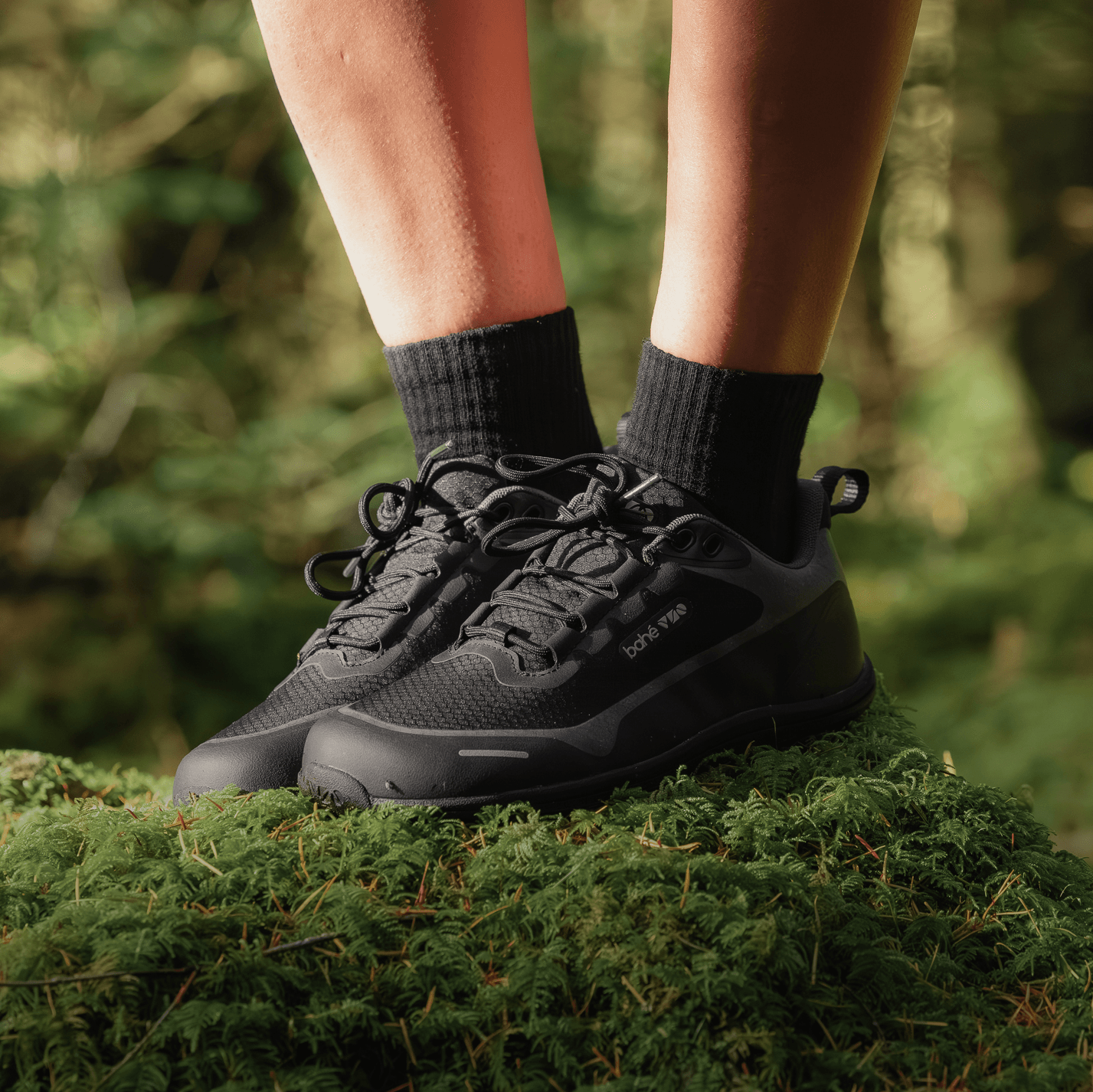
For walking outdoors, particularly on natural surfaces, I love Flex. There's something really enjoyable about feeling the changes in terrain beneath your feet, and the flexibility makes the whole experience feel very natural.
Adapt is probably my favourite all-rounder, especially if I'm spending a lot of time on my feet and want a balance between cushioning and ground feel.
For longer runs, I generally prefer Endurance, as I find the extra cushioning helps me maintain the pace and distances I enjoy, while still having the foot-shaped fit and zero-drop platform that I love about barefoot footwear.
Of course, everyone's preferences are different. Some experienced barefoot runners love running long distances in highly minimal shoes, while others prefer more cushioning even after years of wearing barefoot footwear.
I think both approaches are perfectly reasonable, and it's why I like giving people a choice rather than suggesting that everyone should ultimately be wearing the thinnest sole possible.
One of the interesting aspects of Vivobarefoot's running philosophy is their encouragement to slow down, become more aware of your movement and allow time to adapt to barefoot-style running.
There's a lot of value in that approach, particularly for people transitioning from conventional running shoes to highly minimal footwear.
Running with less cushioning can change the demands on your feet and lower legs, so taking time to adapt is sensible. I also like the idea of people becoming more aware of how they move and enjoying the sensory experience of running.
Vivobarefoot's guidance recognises that you can build up your running over time, rather than suggesting that barefoot runners should always run slowly.
When we were developing Bahé, though, we were also thinking about runners who already really enjoy their current distances and speeds.
For someone who regularly runs 5K, trains for a half marathon or enjoys longer trail runs, there can be a reluctance to make a significant change to their usual routine simply because they're interested in the principles of barefoot footwear.
That was something we wanted to consider in our designs.
By offering Adapt and Endurance alongside Flex, we can give runners a choice of cushioning while retaining the wider toe box, zero-drop geometry and flexibility associated with more natural footwear.
We've also developed optional 4 mm heel lifts for compatible models, which can be particularly useful when transitioning from conventional running shoes. By temporarily adding a little heel elevation, they can help make the change towards zero-drop less abrupt for the calves and Achilles, giving runners another way to adjust their footwear as they gradually adapt.
There's still an adaptation period when changing to zero-drop shoes, regardless of cushioning. But having different options underfoot can make it easier to find a shoe that suits your running and your current level of experience.
For me personally, the extra cushioning in Endurance makes longer runs more enjoyable, particularly on hard surfaces or when I want to pick up the pace.
Ultimately, I think one of the most important things is that people can continue enjoying the movement and activities they love.
If someone wants to explore the most minimal running experience possible, that's fantastic, that’s exactly why we created our Flex Mode. Equally, if they prefer a little cushioning for their regular runs, I think there's a good place for that too.
If you're considering your first pair of barefoot shoes, one of the biggest things I'd encourage you to think about is how you'll make the transition.
We regularly meet people at events who've already tried barefoot footwear, often starting with a very minimal design.
Many love the idea and appreciate how different the shoes feel, but some tell us they've struggled to wear them as much as they'd hoped.
Sometimes they've found the transition too demanding, particularly when moving from years of conventional footwear to very thin, zero-drop soles.
It's frustrating when someone buys a pair of shoes they're excited about but finds they're only comfortable wearing them for a short period before returning to their previous footwear.
That's one of the reasons we wanted Bahé to offer more flexibility.
Alongside our three cushioning Modes, we developed a modular approach that allows people to make smaller adjustments to their shoes.
In compatible models, removing the insole gives a little more space and ground feel, while adding another insole can create a snugger fit and provide additional cushioning.
We also offer optional 4 mm heel lifts, which can help reduce the initial change in heel-to-toe height for people moving from conventional raised-heel footwear towards zero-drop shoes.
These are useful tools for making a more gradual transition, although how much time someone needs to adapt will depend on their previous footwear, activity levels and individual circumstances.
A customer, Pierre's experience is a great example of how that progression can work. He started with Revive Original, which is the same as today's Revive Adapt in terms of cushioning, before deciding he was ready to try Rewild Flex.

We also work closely with our movement and physiotherapy team to help people understand how to introduce different footwear gradually.
I think that's an important part of the bigger picture. The right shoe can make the transition more manageable, but giving your feet time to adapt and gradually building their capacity matters just as much.
Both Bahé and Vivobarefoot place a lot of emphasis on giving the toes room to move, which is one of the barefoot footwear principles we strongly agree on.
However, even among foot-shaped shoes, the actual fit can vary quite considerably between brands and individual models.
At Bahé, we've designed our lasts to provide a generous amount of room through the forefoot, and we regularly hear from customers who appreciate that extra space.
Some have previously worn Vivobarefoot shoes and found particular models a little narrower than they'd prefer, although plenty of people find their fit works really well.
Elizabeth, who previously wore Vivobarefoot, shared her experience after switching to Rewild Flex for her regular walks:
If you have a narrower foot, you may even prefer the fit of certain Vivobarefoot models.
We've also found that while people often want plenty of room for their toes, they don't necessarily want the shoe to feel loose everywhere else.
That's another reason we've incorporated modular insoles into compatible Bahé models.
If you want a slightly snugger fit, you can add an extra insole. If you need a little more space, you can remove one.
It's a relatively simple adjustment, but it can make a useful difference to how the shoe feels.
My advice when switching between brands would always be to measure your feet and check the relevant size guides rather than assuming the same size will fit identically.

Grounding is an area that's particularly close to us at Bahé, as it was actually the starting point for the brand before we moved into barefoot footwear.
Grounding, also known as earthing, is the electrical connection between your body and the earth. When you're barefoot on a suitable natural surface, that connection can happen directly, but most conventional shoes insulate you from the ground.
Our original idea was to create performance footwear that could maintain that electrical connection while allowing people to enjoy their normal outdoor activities.
It's been a central part of our product development ever since.
Vivobarefoot has more recently introduced grounding shoes into selected parts of its range, which I think is great to see.
At Bahé, we've incorporated grounding technology into all our footwear, and we've spent years developing and refining the materials and construction that make it possible.
One of the interesting challenges with grounding footwear is creating a reliable conductive pathway between the foot and the ground without compromising the performance of the shoe itself.
That involves thinking carefully about the materials used throughout the construction, including conductive stitching, internal components and the rubber compounds in the outsole.
Over the years, we've experimented with different conductive yarns and materials, continually looking for ways to improve conductivity and long-term durability.
For example, we've worked with silver-based conductive materials, which performed very well in our testing, and subsequently explored stainless-steel yarns for their durability and resistance to corrosion.
We've also worked on increasing stitch density and contact area within the shoe, as well as refining our conductive rubber compounds.
These are the sorts of details that aren't necessarily visible when you look at a finished shoe, but they're an important part of the development process.
Our footwear is tested for electrical conductivity in accordance with EN ISO 20347:2022, providing a measurable way of assessing the electrical connection.
What we've always tried to achieve is a shoe that people would enjoy wearing regardless of the grounding technology.
We want the fit, comfort, flexibility, grip and overall performance to stand on their own merits.
The grounding then becomes an additional feature that allows people to maintain an electrical connection with the earth while enjoying the outdoors, provided they're on a suitably grounded surface.
There's interesting research exploring the potential effects of grounding, although more research is needed to understand those findings. The electrical connection itself is something we can demonstrate and test under the right conditions.
Here's how the two brands currently approach grounding:
| Grounding feature | Bahé | Vivobarefoot | |
|---|---|---|---|
| Availability | Integrated across the Bahé footwear range | Selected grounding models | |
|
Availability Bahé Integrated across the Bahé footwear range Vivobarefoot Selected grounding models |
|||
| Technology | Ground Flow System conductive pathway | Conductive components in selected footwear | |
|
Technology Bahé Ground Flow System conductive pathway Vivobarefoot Conductive components in selected footwear |
|||
| Electrical testing | Conductivity tested to EN ISO 20347:2022 | Check individual product information | |
|
Electrical testing Bahé Conductivity tested to EN ISO 20347:2022 Vivobarefoot Check individual product information |
|||
| Grounded surfaces required | Yes | Yes | |
|
Grounded surfaces required Bahé Yes Vivobarefoot Yes |
|||
| Main approach | Grounding integrated into performance and barefoot footwear | Grounding within selected barefoot designs | |
|
Main approach Bahé Grounding integrated into performance and barefoot footwear Vivobarefoot Grounding within selected barefoot designs |
|||
Trail running is an interesting area to compare because both Bahé and Vivobarefoot share the belief that your feet should have room to move naturally, even when you're tackling more demanding terrain.
Vivobarefoot's Primus Trail range has become a popular choice among people who enjoy a very minimal approach to trail footwear, with thin soles that place a strong emphasis on ground feel.
When we developed Rewild, we wanted to offer those same fundamental principles of foot-shaped, zero-drop footwear, but give runners more choice in how much cushioning they have underfoot.
Here's how the two approaches compare:
| What matters | Bahé Rewild | Vivobarefoot Primus Trail FG 3.5 | |
|---|---|---|---|
| Foot shape | Roomy, foot-shaped fit | Foot-shaped fit | |
|
Foot shape Bahé Rewild Roomy, foot-shaped fit Vivobarefoot Primus Trail FG 3.5 Foot-shaped fit |
|||
| Heel-to-toe drop | Zero-drop | Zero-drop | |
|
Heel-to-toe drop Bahé Rewild Zero-drop Vivobarefoot Primus Trail FG 3.5 Zero-drop |
|||
| Sole cushioning | Choice of Flex, Adapt and Endurance | Minimal cushioning with removable insole | |
|
Sole cushioning Bahé Rewild Choice of Flex, Adapt and Endurance Vivobarefoot Primus Trail FG 3.5 Minimal cushioning with removable insole |
|||
| Total stack height | Flex: 10 mm; Adapt: 14 mm; Endurance: 22 mm, including the 3 mm insole | Full stack height not published, including insole and internal construction. Vivo specifies a 3 mm sole base plus 2.5 mm lugs | |
|
Total stack height Bahé Rewild Flex: 10 mm; Adapt: 14 mm; Endurance: 22 mm, including the 3 mm insole Vivobarefoot Primus Trail FG 3.5 Full stack height not published, including insole and internal construction. Vivo specifies a 3 mm sole base plus 2.5 mm lugs |
|||
| Waterproofing | Waterproof across all three Modes | Standard FG 3.5 is not waterproof. All Weather version is water-resistant; other Primus Trail models offer waterproofing | |
|
Waterproofing Bahé Rewild Waterproof across all three Modes Vivobarefoot Primus Trail FG 3.5 Standard FG 3.5 is not waterproof. All Weather version is water-resistant; other Primus Trail models offer waterproofing |
|||
| Weight (per shoe, UK 8) | Flex: approx. 362 g; Adapt: approx. 322 g; Endurance: approx. 344 g | 281 g | |
|
Weight (per shoe, UK 8) Bahé Rewild Flex: approx. 362 g; Adapt: approx. 322 g; Endurance: approx. 344 g Vivobarefoot Primus Trail FG 3.5 281 g |
|||
For me, the biggest difference is the choice our Rewild Modes gives you underfoot.
With Flex, Adapt and Endurance, you can choose the balance of cushioning and ground feel that suits the trails you run and how you like to run them.
Flex offers the most minimal experience in our Rewild range, with plenty of flexibility and a close connection to the terrain. Adapt provides a little more cushioning while retaining good ground feel, and Endurance offers additional cushioning that some runners may prefer for longer distances or firmer trails.
I think this is particularly useful because trail running can mean very different things to different people. One person might enjoy short woodland runs on soft ground, while another is covering longer distances over rocky paths, gravel and harder surfaces.
And even for the same person, what feels comfortable on a short run might not be their preference several hours into a longer outing.
That's why we didn't want to design Rewild around one particular level of minimalism. We wanted people to enjoy the foot-shaped fit, flexibility and zero-drop design, while choosing a level of cushioning that works for their running.
Both brands offer interesting approaches to trail footwear, but if you're looking for more choice over how the shoe feels underfoot, that's where I think Rewild offers something genuinely different.
As one of Bahé's founders, I'm naturally proud of the shoes we've created, and we're constantly looking at ways to make them even better.
What motivates us is finding opportunities to improve footwear, listening to what customers are telling us and developing products that bring something genuinely useful to the market.
I also have a lot of respect for brands such as Vivobarefoot, which have played an important role in encouraging people to think differently about their feet and how they move.
Their commitment to highly minimal footwear has helped grow the category, and for some people, that approach will be exactly what they're looking for.
Where I think Bahé offers something particularly valuable is in giving people the freedom to choose how much cushioning they want underfoot, and fine-tune the fit, without giving up the foot-shaped, zero-drop design they are looking for.
I'd recommend Bahé to anyone who wants the freedom of foot-shaped footwear without having to compromise on the cushioning, comfort or performance that suits their activities.
One of the things I'm most proud of is the choice we've built into our footwear. Our three cushioning Modes, where available, mean you can enjoy a genuinely minimal experience with Flex, find a balance of cushioning and ground feel with Adapt, or choose the additional cushioning of Endurance for longer runs, harder surfaces or a more gradual introduction to barefoot footwear.
That choice isn't just about transitioning towards more minimal shoes. You might prefer Flex for everyday walking but Endurance for running, or simply find that a little more cushioning helps you enjoy the distances and activities you love. There's no reason everyone should need the same setup.
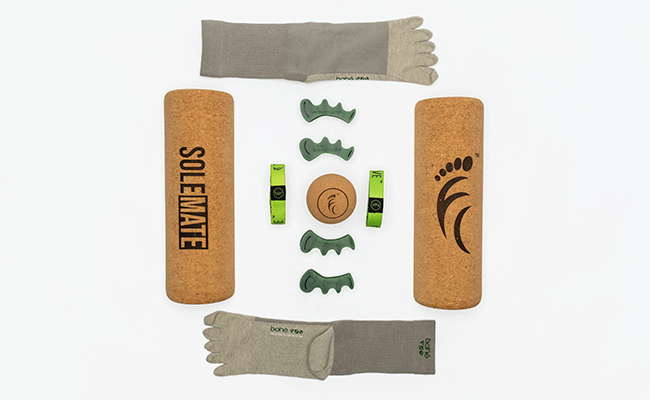
We've also developed a wider range of products around that philosophy, including shoes, hiking boots, sandals and foot-health equipment such as toe spacers and mobility tools. Alongside every product, we provide practical guidance to help people understand how to use it and get the most from it.
Add in our roomy foot-shaped fits, modular adjustments and integrated grounding technology, and I think we've created something that offers people considerably more choice in how they approach natural movement, whether they're just starting out or have been wearing barefoot shoes for years.
If you're looking for the most minimal experience possible, particularly if you're already well adapted to very thin soles, Vivobarefoot has some excellent options.
They're also a more established brand with a larger range, so you may find particular styles or products that suit your needs.
And as with any footwear, individual fit is important. Some people may simply find that a particular Vivobarefoot model suits the shape of their foot better.
Having spent so much of my career working with footwear, one of the things I've come to appreciate is just how different people's needs and preferences can be.
Even people who share the same enthusiasm for natural movement might prefer very different shoes depending on their activities, previous footwear experience and what feels comfortable to them.
At Bahé, we've tried to reflect that in our designs, giving people the freedom to choose between Flex, Adapt and Endurance rather than expecting everyone to have the same preferences.
I love the feeling of walking through woodland in Flex, but I also really enjoy the cushioning of Endurance when I'm heading out for a longer run.
For me, both experiences have their place, and that's something I'd like more people to feel they have the freedom to explore.
If you're considering Bahé or Vivobarefoot, I'd encourage you to think about the activities you enjoy, how much ground feel you prefer and what you want from your footwear.
Hopefully, this comparison has given you a better understanding of our thinking at Bahé and helped you decide which approach feels right for you.
Bahé is worth considering if you like the principles of Vivobarefoot but would prefer more choice in cushioning. Our Revive Modes and Rewild Modes ranges offer three different sole cushioning options while retaining foot-shaped, flexible and zero-drop designs. We also integrate grounding technology throughout our footwear.
Both brands offer footwear based on barefoot principles, including foot-shaped designs, flexibility and zero-drop construction. Vivobarefoot generally focuses on highly minimal soles, while Bahé offers different cushioning levels. Flex is our most minimal option, although some Vivobarefoot models have thinner soles.
Vivobarefoot offers grounding technology in selected models, including its grounding collection. Bahé incorporates grounding technology across our full footwear range. With either brand, electrical grounding requires suitable conductive surfaces and conditions.
For most people new to barefoot footwear, Bahé Endurance is a good starting point, offering extra cushioning while you adapt to a foot-shaped, zero-drop design. Adapt can also be a great option if you'd prefer a balance of cushioning and ground feel from the outset. We also provide free practical guidance with our products to help you choose the right setup and make the transition gradually. Vivobarefoot offers a more minimal approach alongside its own transition education, so the best choice depends on your experience, activities and preferences.
Bahé footwear is designed with a roomy, foot-shaped fit, and some customers find certain Vivobarefoot models narrower. However, fit varies between individual products, so it's worth measuring your feet and comparing the relevant size guides. Bahé also offers modular insoles in compatible models to help adjust internal volume.
Bahé Adapt and Endurance Modes provide more cushioning than many highly minimal barefoot shoes, which some runners prefer for longer distances and harder surfaces. Others enjoy running in very minimal footwear. The best choice depends on personal preference, experience and the demands of your running.
Yes, Bahé Rewild is designed as a waterproof, foot-shaped trail shoe with zero-drop construction and different cushioning options. Vivobarefoot also offers outdoor footwear with varying levels of weather protection, so it's worth checking individual models when comparing products.



Alert me via email when this size/colour becomes available
Leave a comment