UK Based: Duty-free Delivery
Transitioning to Barefoot Shoes


The 3 Rules That Make Transitioning Work
Most transition struggles come down to one thing: you’ve changed too much at once. Keep it repeatable by adjusting time, surface, and intensity - then build gradually.

Rule 1 - Change less, repeat more
Most transition struggles happen when the jump is too big. Adjust time, surface, and intensity until it feels easy to repeat - then build gradually.

Rule 2 - Start where you are (Modes help)
Start with the level that suits your experience, activity, and preferred ground feel. Bahé Modes make it easier to choose a starting point that feels manageable and repeatable.

Rule 3 - Listen to your body
A mild “worked” feeling - especially calf soreness - can be normal at first. Use how you recover to decide what’s next: hold steady, progress a little, or scale back.
What To Expect
Barefoot-style gets better with time. Here’s what you might feel, and how to make the transition smooth.
| Potential Benefits | A Healthy Transition Looks Like | Watch-outs (+Easy Fixes) | |
|---|---|---|---|
| ✓ More toe room + toe splay | Toe room and movement feels comfortable, and stability builds week by week. | Toe room feels comfortable when standing, and stability improves over time. | |
|
✓ More toe room + toe splay A Healthy Transition Looks Like Toe room and movement feels comfortable, and stability builds week by week. Watch-outs (+Easy Fixes) Toe room feels comfortable when standing, and stability improves over time. |
|||
| ✓ More ground feel and feedback | Better signals means better movement. | If it feels too much, add an extra insole or reduce time on hard ground. | |
|
✓ More ground feel and feedback A Healthy Transition Looks Like Better signals means better movement. Watch-outs (+Easy Fixes) If it feels too much, add an extra insole or reduce time on hard ground. |
|||
| ✓ Increased foot strength | Sessions feel easy enough to repeat, and you can gradually do more. | If you feel “worked” for days, reduce time and repeat that level for longer. | |
|
✓ Increased foot strength A Healthy Transition Looks Like Sessions feel easy enough to repeat, and you can gradually do more. Watch-outs (+Easy Fixes) If you feel “worked” for days, reduce time and repeat that level for longer. |
|||
| ✓ Calf and Achilles function | Mild calf soreness settles within 24–48 hours and doesn’t build each session. | If it escalates, reduce time and avoid hills/speed for now. | |
|
✓ Calf and Achilles function A Healthy Transition Looks Like Mild calf soreness settles within 24–48 hours and doesn’t build each session. Watch-outs (+Easy Fixes) If it escalates, reduce time and avoid hills/speed for now. |
|||
| ✓ More natural, upright posture | You feel tall through the spine, with ribs over hips when walking. | If you feel pulled forward, slow down and shorten stride until it feels easy. | |
|
✓ More natural, upright posture A Healthy Transition Looks Like You feel tall through the spine, with ribs over hips when walking. Watch-outs (+Easy Fixes) If you feel pulled forward, slow down and shorten stride until it feels easy. |
|||
| ✓ Smoother running technique | Less over-striding, steps feel lighter and more efficient. | If you’re heel striking hard, land closer under your body and relax the pace. | |
|
✓ Smoother running technique A Healthy Transition Looks Like Less over-striding, steps feel lighter and more efficient. Watch-outs (+Easy Fixes) If you’re heel striking hard, land closer under your body and relax the pace. |
|||

Start Here: The 0–12 Week Transition Plan
If you’re new to barefoot-style shoes, this plan is the easiest way to make the transition feel steady - without guessing.
What the plan covers):
- A simple weekly progression plan
- Guidance on how to scale your transition
- Surface and activity guidance
- Tips on common struggles
Choosing Your First Barefoot Shoes
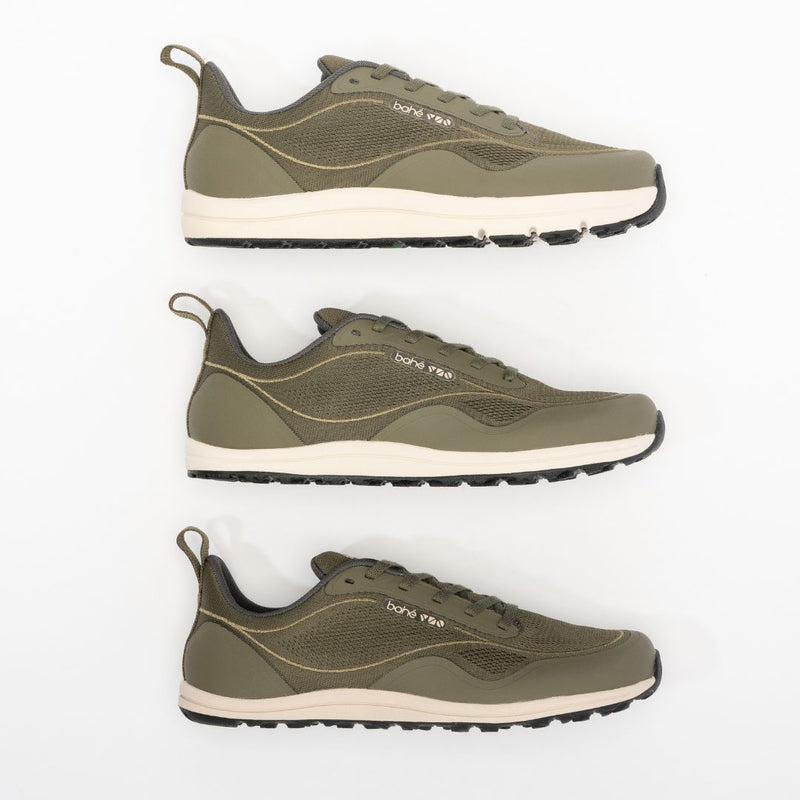
Your first barefoot shoes should be the ones you’ll actually wear. That’s why we built Bahé Modes: three cushioning levels on the same foot-shaped, zero-drop platform, so you can start where your body is and build from there.
As a rule of thumb, Endurance -> Adapt -> Flex over time. More cushioning can be a smart starting point for longer days, harder surfaces, or higher volume. Less cushioning has a place too - especially if transitioning gradually with a technique focus and keeping sessions short and repeatable.
Start With Your Right Cushioning Level

Most Cushioned
Endurance Mode

Balanced Cushioning
Adapt Mode

Most Flexible
Flex Mode
FAQs
It depends on your starting point - and the Mode you choose. If you start in a more cushioned Mode like Endurance (and keep your early weeks mostly walking), the switch can feel smoother and quicker for many people. With less cushioning, or if you’re adding lots of time, hard surfaces, hills, or running, it usually takes longer. The best results still come from the same approach: start at a level you can repeat, then increase gradually once recovery feels easy.
They can feel different at first, especially in the calves and lower legs. That doesn’t automatically mean anything is wrong - it often just means the jump in time, surface, or intensity is bigger than your current routine can comfortably handle.You're likely reactivating underused tissues and they need tome to gradually adapt.
Start smaller than you think you need to, and repeat that same level until it feels easy to recover from. Then build gradually. Using Bahé Modes can help you choose a cushioning level that keeps you consistent, rather than going heroic on day one.
It depends. If you start in a more cushioned Mode like Adapt and Endurance (and your day is mostly walking), some people can wear them for longer sooner. Others still do best building up in shorter blocks - especially if you’re coming from raised-heel shoes, you’re on hard surfaces, or you’re adding lots of miles. A good rule is: start with what feels comfortable and repeatable, then extend time gradually as your recovery stays easy.
A lower drop gives you a more level platform, but it can shift load through the ankles and lower legs at first. If the change is too big or too fast - or you add hills, speed, or long days - calves can feel overworked early on.
Walking first is the easiest way to keep things controlled and predictable. Running adds load quickly - and technique matters more, because overstriding and heavy heel striking can amplify calf and Achilles demand. Most people do best building a steady walking base first, then adding short, easy run doses once things feel settled.
Scale back: reduce time, choose an easier surface, and return to a level you can repeat comfortably. You don’t have to “start over” - you’re just making the step size smaller so your body can catch up.