UK Based: Duty-free Delivery


Do Podiatrists Recommend Barefoot Shoes?
There isn't one answer that applies to every foot. Some podiatrists see barefoot footwear as a way to encourage natural foot movement, while others recommend additional support depending on individual needs.
We spoke to podiatrist Andy Bryant, who favours a function-led approach to foot health, to explore why traditional footwear advice can differ, when orthotics are useful and how different people can approach the transition to barefoot shoes.

A Podiatrist's Perspective: Andy Answered the Big Questions

20+ Years Working With Feet Changed How Andy Bryant Thinks About Footwear
Podiatrists often work with people who are already experiencing pain or injury. That's one reason cushioning, orthotics and supportive footwear are familiar tools in clinical practice.
Through years of working with patients and exploring different approaches to foot health, Andy Bryant has revisited some traditional assumptions about support and natural movement.
We asked him when support is helpful, where its limitations lie and how barefoot footwear fits into the bigger picture.
“Support is supposedly good, but if you support something over and over again, then it doesn’t need to do the work itself.”
“Personally, I’m more likely to have function as the goal.”
- Andy Bryant, Podiatrist
Do feet always need support?
Not usually, in Andy’s view. Support can be useful, but he doesn’t see it as the default answer for most feet.
Orthotics can have a role in certain injuries, congenital or hereditary conditions, or when a structure needs to be temporarily offloaded. But Andy believes they are often used more than necessary, particularly as a long-term solution.
His concern is that relying on support can restrict how the foot moves and reinforce the idea that there is something inherently wrong with the foot that needs fixing. Instead, his preference is to build mobility, strength and capacity wherever possible.
“I don’t think we need to use orthotics to the level that we do.”
– Andy Bryant, Podiatrist
What Actually Makes a Shoe “Barefoot”?
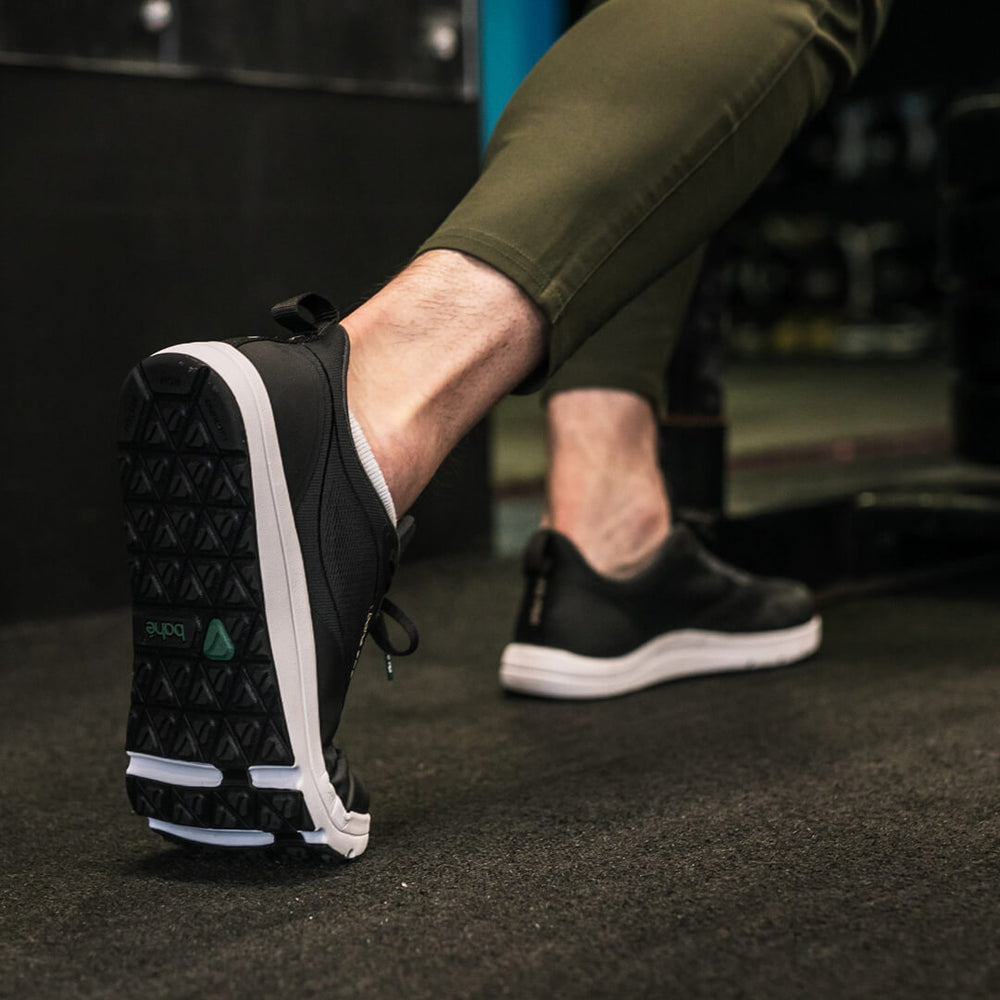
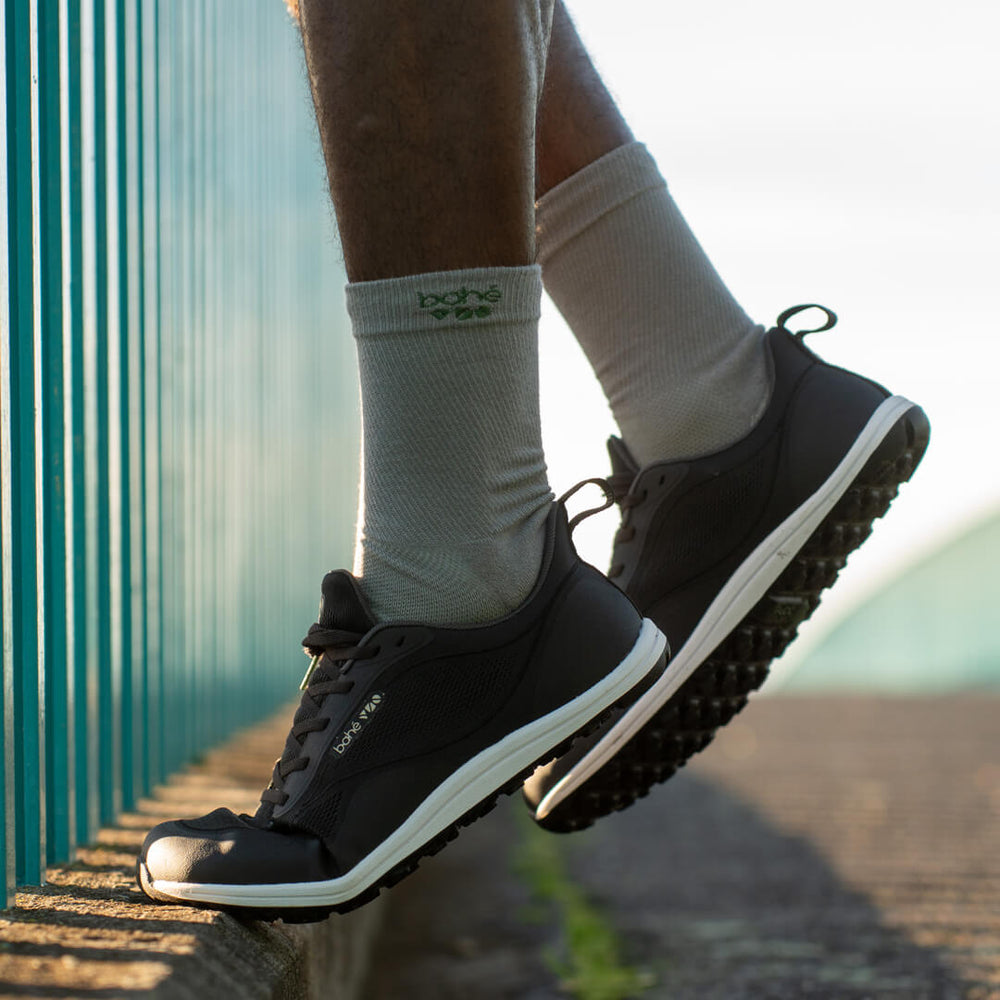
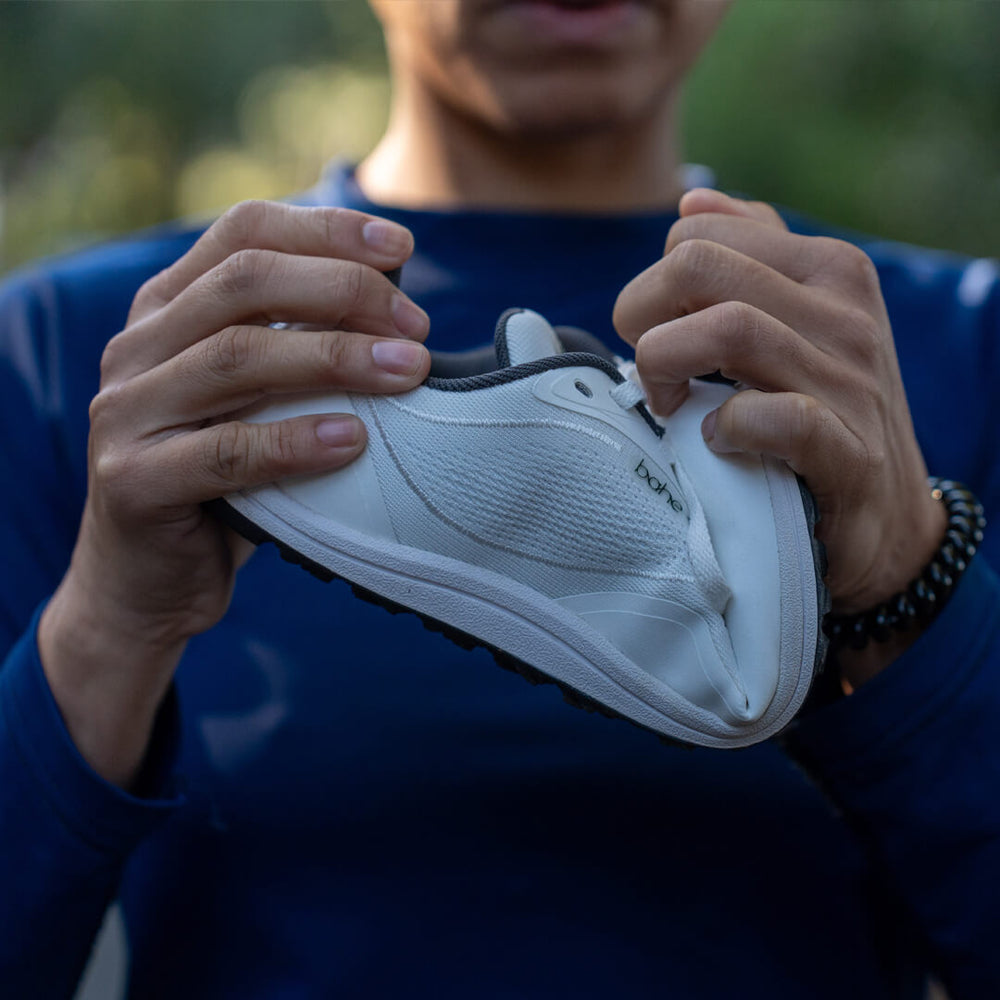
Barefoot shoes are designed to give your feet more freedom to move. But barefoot doesn't necessarily mean ultra-thin soles or no cushioning.
It's about how the shoe works with your feet.
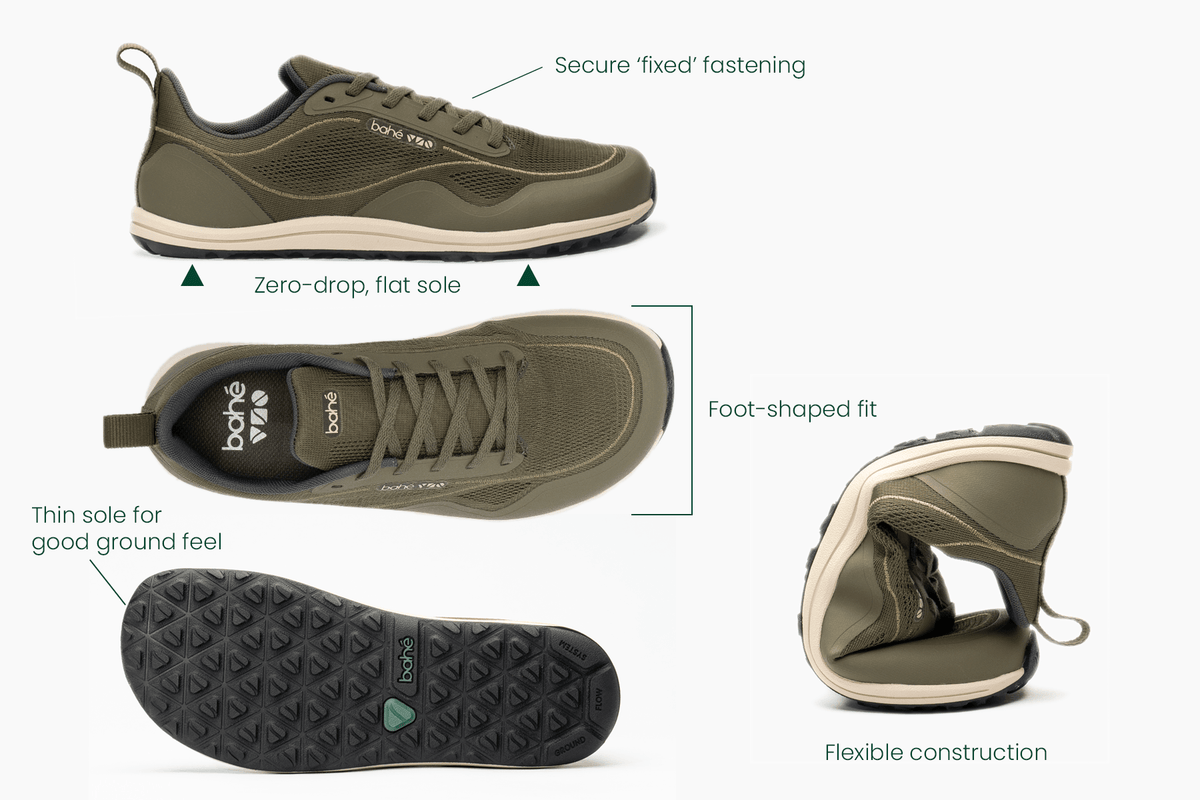
Barefoot shoes are often defined by five "f's":
- Foot-shaped
- Fixed to the foot
- Flat (Zero-drop)
- Flexible
- Feel the ground
Barefoot Shoes vs Traditional Shoes
Traditional footwear often uses raised heels, structured soles and narrower toe boxes. Barefoot shoes prioritise natural foot shape, flexibility and freedom of movement.

Raised Heels
Shorten your Achilles tendon and calf muscles, affecting posture and tilting the body forwards leading to further misalignment

Narrow Toe-boxes
Severely inhibits natural foot function by preventing toes from articulating and being able to absorb load and generate force

Stiff Soles
Prevents the foot from moving naturally leading to reduced foot strength and increased foot stiffness

Toe Spring
Raised toes do not articulate correctly during the gait cycle and prevents them being able to engage with the ground during activity
Cushioned barefoot shoes: why cushioning still has a role
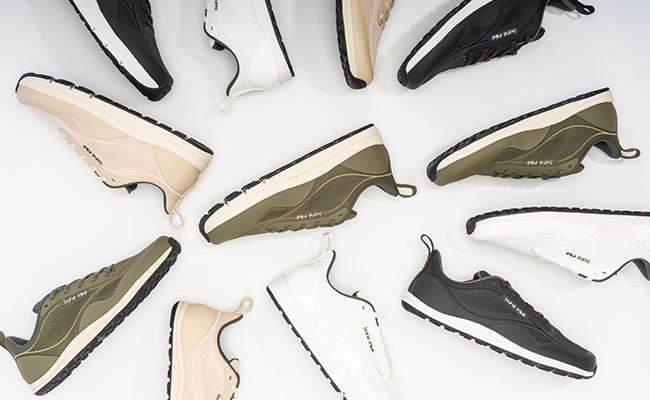
Andy’s view is that sole cushioning can still be useful in barefoot shoes, depending on what you’re used to. Bahé Modes offer three levels of sole thickness, balancing cushioning and ground feel while keeping the shoe’s barefoot-fit principles.

Most Cushioned
Endurance Mode

Balanced
Adapt Mode

Most Flexible
Flex Mode

Who are barefoot shoes for? A podiatrist's answer
Andy recommends foot-shaped footwear to nearly everyone he sees. In ten years of practising this way, he says only two people have struggled with that change. How quickly someone moves towards less shoe is where it becomes more individual.
May need a more gradual approach: People with an acute or chronic injury, a history of injury or current pain, or more one-dimensional movement habits - such as a runner who otherwise sits at a desk. Sleep, stress and wider lifestyle matter too.
Can often move quickly: Someone who is habitually barefoot at home, spends hours barefoot in summer and has a movement-rich, varied lifestyle can often make the change very quickly.
New To Natural Footwear?
If you’re new to barefoot-style footwear then you’re about to start a journey to return your body to a more natural style of movement.
The goal is not less shoe - it is more capable feet. The pair you will benefit from most is usually the one you will wear more often. Take the quiz to find the best Mode for you.


FAQs
In Podiatrist, Andy Bryant’s, view, yes - barefoot shoes can be good for your feet because they give the foot more room to move, feel and function naturally. The right level of cushioning, flexibility and ground feel depends on what you’re used to, your activity and any current pain or injury.
They can. Andy Bryant’s view is that cushioning can still be useful in a barefoot shoe because it helps meet people where they’re at. Some barefoot-style shoes therefore use more cushioning while still keeping the core barefoot principles of a foot-shaped fit, zero-drop platform and natural movement.
Cushioning is better thought of as a dial, not a rule - some shoes give you more ground feel, while others add more underfoot comfort to make longer days, higher-impact activity, or the transition into barefoot-style footwear feel more manageable. That is the idea behind Bahé Modes: three cushioning levels built on the same foot-shaped, zero-drop base.
Yes. Andy Bryant recommends barefoot shoes to most people he sees, with foot-shaped footwear as his starting point. How quickly someone transitions is more individual - some people can adapt very quickly, while others may benefit from more cushioning or stiffness at first and move gradually towards less shoe, depending on what they’re used to, their movement habits and any current pain or injury.
Not necessarily. Andy Bryant’s view is that barefoot shoes shouldn’t automatically hurt when you start wearing them. Some people can adapt very quickly, while others may notice discomfort if they change cushioning, stiffness or heel-to-toe drop too quickly. Pain also isn’t the only measure of how well someone is adapting - function matters too. If you already have pain or an injury, a more gradual, individual approach makes sense.
There’s no set transition time. Andy Bryant says some people can move into barefoot shoes very quickly, especially if they’re already often barefoot and have a varied movement practice. Others - particularly those with current pain, injury or less movement variety - may need to take longer and build up wear time more gradually.