How to choose the best barefoot hiking boots
When choosing the best barefoot hiking boots for you, do not just look for the thinnest sole or the widest toe box, consider all the factors needed for it to allow you to move better while staying comfortable and protected.
1. Foot-shaped fit
A good barefoot hiking boot should follow the natural shape of your foot, not force it into a narrow, tapered shape.
Look for space through the toes, but not an overall loose fit. You should be able to spread and move your toes, while still feeling held securely through the heel and midfoot.
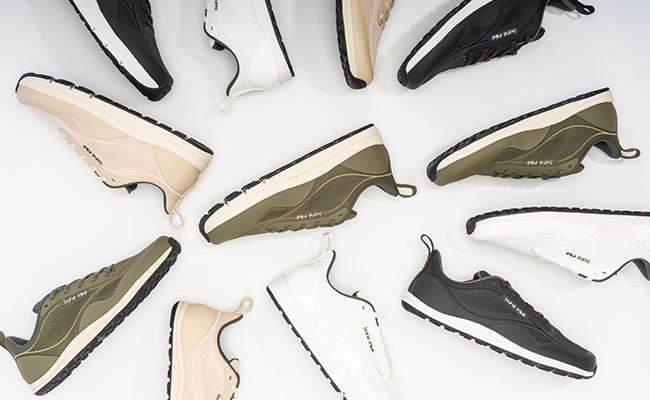
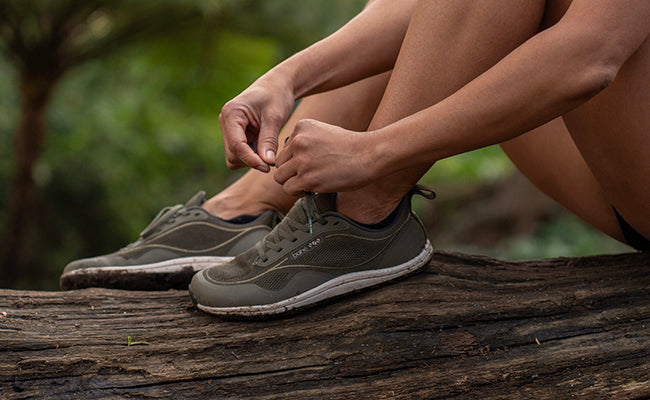
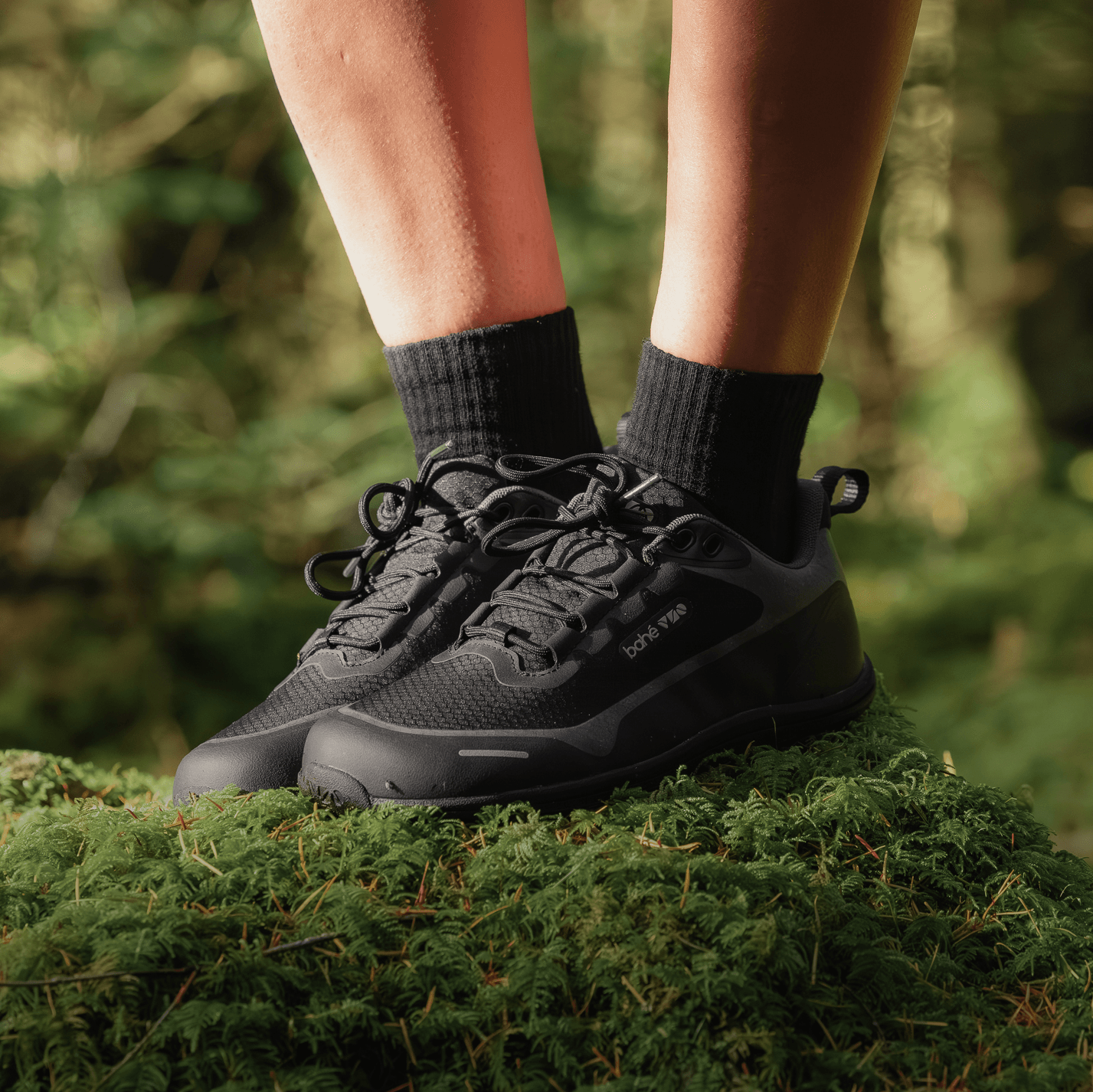
Rediscover Adapt is designed with a foot-shaped fit, but also a secure lacing structure so you can feel confident when moving across varied terrain.
2. Zero-drop sole
Zero-drop means there is no height difference between the heel and forefoot.
In hiking boots, this matters because a raised heel changes the position of the foot and ankle. Some people are used to that feeling, so it can take time to adapt to zero-drop footwear, but the aim is a more natural standing and walking position.
If you are new to zero-drop, start gradually. Walking is usually less intense than running so adaptation can be easier than with running shoes,, but hills, descents and uneven ground can still increase demand on calves and Achilles.
3. Avoiding toe spring
Toe spring is the upward curve at the front of a shoe or boot. It is common in stiffer footwear because, when the sole does not flex easily through the forefoot, that curved shape helps the boot roll forwards as you walk.
Downsides of this are that your toes can spend less time in direct contact with the ground, they are forced into an unnatural position and there is reduced range of motion when walking. In a more natural, flexible hiking boot, a flatter forefoot allows the toes to sit in a more natural position where they can feel the ground beneath you and move through a fuller range, so they can contribute to balance and respond to changes in the terrain.
4. Flexibility with enough underfoot comfort
A barefoot boot should flex with your foot. Your foot is designed to bend, adapt and respond to varied terrain.
But hiking can be demanding; rocks, gravel, roots, long distances and loaded packs all add up. That is why “more minimal”, ultra thin soles are not always better.
Rediscover Adapt uses a 6mm EVA midsole with flex grooves, creating a little cushioning for longer days while keeping the boot flexible. This makes it more accessible for barefoot beginners and also great for experienced barefoot wearers who want more comfort and protection on longer walks.
5. Grip for real terrain
Grip is one of the most important features of a barefoot hiking boot because it gives you confidence when the ground becomes wet, loose or uneven.
Look for meaningful lug depth, a tread pattern that can grip in more than one direction, and a rubber compound that performs reliably in wet conditions.
Rediscover Adapt uses 4.5mm lugs, multidirectional grip and an updated rubber compound developed for better traction in the wet. It has been tested in demanding real-world conditions, from rugged mountain trails and wet Highland terrain to high-altitude routes in the Himalayas..
6. Waterproofing that suits real outdoor use
If you are looking for waterproof barefoot hiking boots, make sure the boot is genuinely built for sustained wet conditions rather than just light showers. Look for the term ‘waterproof’ rather than just ‘water-resistant’.
Rediscover Adapt uses a fully waterproof construction with a polyurethane membrane, a gusseted tongue and waterproofing up to around 110mm.
That performance holds up in real use. One customer described them as “perfect for 10 days in the Scottish Highlands”, while another sharing: “they didn’t leak” after a wet Nordic walking week.
7. Protection without restriction
A barefoot hiking boot still needs to protect your foot.
Look for reinforcement in high-wear areas, especially around the toe and heel. This is where very minimal boots can sometimes feel exposed on rocky or rugged ground.
Rediscover Adapt uses a ripstop upper, reinforced panels, and rubberised heel and toe protection. The aim is simple: keep the boot flexible and natural, but give enough protection so you can walk with confidence.
8. Weight
Weight matters more the longer you are on your feet. A lighter hiking boot can reduce the sense of bulk and make the boot feel less tiring over a full day.
Rediscover Adapt weighs approximately 483g in a UK size 8, keeping the build relatively light while still including the protection, grip and waterproofing expected from a hiking boot.
9. Comfort and practicality
Comfort is not just about cushioning. It also comes from how easy the boot is to live with over a long day.
Rediscover Adapt has a soft padded collar, plus heel and tongue pullers to make it easier to get on and off. We also increased the gusset opening on this version so the foot can slide in more easily.
There is also an elastic strap on the tongue for tucking away the laces, helping keep them neat and reducing the chance of them catching while you walk.
 Duty-free Shipping To EU







Leave a comment