 Duty-free Shipping To EU
Are Barefoot Shoes for Everyone? Six Questions Answered

Lauren Jackson
Head Physiotherapist at Bahé

Barefoot shoes can suit a wide range of people because the principles behind them - more room for the toes, a level sole and greater freedom of movement - are relevant across many foot shapes, ages and activities. The most suitable fit, cushioning level and transition pace will still depend on your current footwear, strength, any existing symptoms and intended use.
The key question is how to choose a barefoot-style shoe that works for your feet now, then introduce it at a pace that allows your body to adapt. This article explores six common concerns, from narrow feet and arch shape to bunions, running and age.
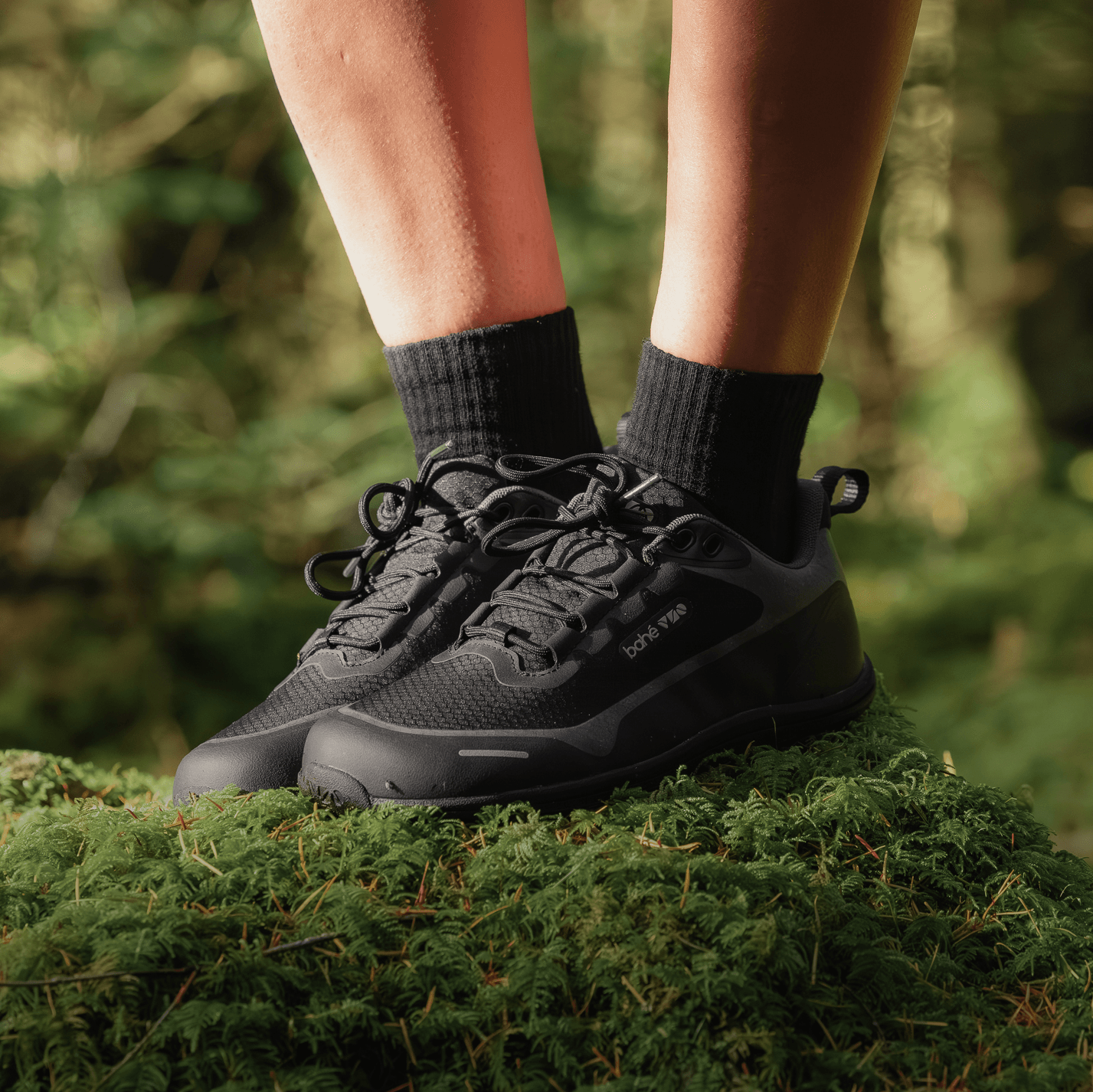
Barefoot-style shoes are designed around the shape and movement of the human foot. They usually combine:
They do not all have very thin soles. Cushioning can change how much ground texture and impact you feel while retaining the foot-shaped, zero-drop foundation.
Bahé Modes offer three cushioning levels:
Someone new to barefoot-style footwear may find the additional cushioning of Endurance makes the change more manageable. Someone with more experience may prefer Adapt or Flex. Modes are cushioning choices rather than stages everyone must complete. Our transition guidance recommends increasing time, surface difficulty and intensity gradually, whichever Mode you choose.
For a fuller explanation of the category, read Understanding Barefoot Shoes: Minimalist, Zero-Drop and Cushioned - What’s the Difference?.
Yes. Having narrow feet does not mean your toes should be compressed into a tapered toe box.
A foot-shaped shoe should still give your toes room to spread and sit naturally, even if the rest of your foot is slim. The key is finding a shoe that combines enough space at the front with a secure fit around the heel and midfoot.
If the shoe feels loose, check:
At Bahé, spare insoles can help create a snugger fit without taking away the space around the toes. The Bahé Size and Fit Guide explains how barefoot footwear should feel and how insoles can be used to fine-tune the fit.
Arch height and pronation vary naturally, and neither automatically means that a foot is weak or functioning poorly. Pronation is part of how the foot adapts to the ground and manages force, and research has not found a simple link between arch shape or pronation alone and whether someone will develop symptoms (Nachbauer and Nigg, 1992; Neal et al., 2014).
For most people, the main consideration is choosing a comfortable starting point and giving the feet and lower legs time to adapt. That might mean beginning with shorter periods of wear, keeping more cushioning at first and building strength through the feet, calves and ankles alongside the transition.
If you already have pain, recurring fatigue or difficulty controlling movement, you may benefit from a slower approach and more individual guidance. If you already have pain, recurring fatigue or difficulty controlling movement, the answer is not necessarily to avoid barefoot shoes. A more cushioned option, and in some cases a temporary heel lift, can make the change more comfortable while you build strength and tolerance. Orthotics can also be used where they are genuinely needed, although it may still be useful to work on the underlying strength and control of the foot over time.
Our Barefoot Transition Exercises provide a simple routine to support strength and movement during the transition (Bahé, n.d.-d). If symptoms are persistent, worsening or affecting the way you walk, it is worth seeking an individual assessment before progressing.
Yes, rehabilitation can be a good time to introduce barefoot shoes, provided the change fits the stage of your recovery and the guidance of the clinician supporting you.
Rehab is already about rebuilding strength, range of movement and confidence step by step. A foot-shaped shoe can give the toes more room, while a flexible, zero-drop design allows the foot and lower leg to take a more active role as that capacity returns.
That extra work is also why the transition may need to be more gradual during recovery. Barefoot shoes can place greater demand on the muscles and tissues of the foot and lower leg, so a more cushioned option may be especially helpful at first. It can give you the barefoot foundation without introducing the most amount of ground feel straight away.
The right starting point will depend on the injury and where you are in the rehabilitation process, but the principle is simple: use the shoe as part of the gradual rebuild, increase wear as strength and movement improve, and avoid progressing faster than the recovering area is ready for.
A foot-shaped toe box can be useful for someone with a bunion because it gives the big toe and the joint at its base more space. This can reduce the compression and rubbing created by footwear that narrows sharply towards the front.
Hallux valgus, commonly called a bunion, has multiple contributing factors. Footwear may influence comfort and symptoms, but wider shoes cannot be assumed to reverse an established structural change (Nix et al., 2012).
The practical aim is to choose footwear that does not continue to squeeze the toes and that allows the big-toe joint to move as comfortably as possible. A flexible sole may also make it easier to move through the joint during walking, provided this remains comfortable.
Some people combine wider footwear with foot exercises or toe spacers. Small studies suggest toe-separation orthoses may improve pain and walking in some people with painful hallux valgus, but this should not be treated as a guaranteed correction (Tang et al., 2002).
Introduce toe spacers for short periods and stop if they cause numbness, rubbing or increasing discomfort. When a bunion is painful, inflamed, changing quickly or affecting walking, seek advice from a podiatrist or another suitably qualified clinician.
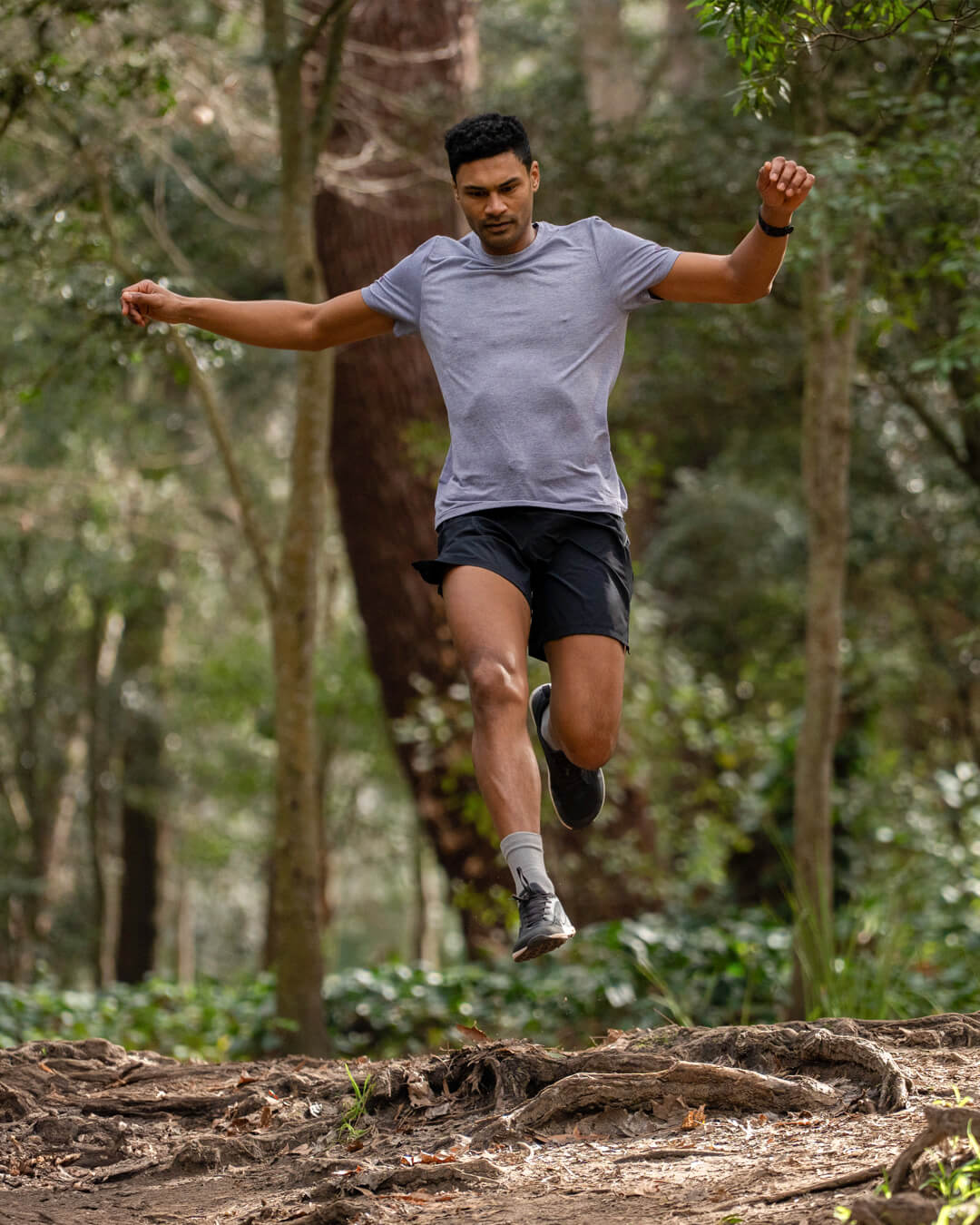
Yes. The foot-shaped fit, zero-drop platform and flexibility of barefoot shoes can give the foot more room to move naturally while running. Some runners also find that the extra feedback from the ground helps them become more aware of their stride, foot placement and overall technique.
Barefoot running does not have to mean giving up cushioning. At Bahé, our three Modes keep the same foot-shaped, zero-drop foundation while offering different levels of sole cushioning. Endurance is the most cushioned and can work well for runners moving from conventional footwear, building distance or simply preferring more protection. Adapt offers a balance of cushioning and ground feel, while Flex gives the clearest feedback from the ground, and less impact absorption.
The right option depends on your running background, current shoes, distances and surfaces you’ll be running on. Different minimalist shoes can affect running mechanics in different ways, so the label alone does not guarantee a particular foot strike or movement pattern (Bonacci et al., 2015).
Our blog posts with Keith Bateman and Heidi Jones, authors of the book 'Older Yet Faster' give guidance on transitioning to barefoot-style running and explores technique, gradual progression and rebuilding for running in more detail.
- How to start Barefoot-style running - All you need to know
- Transitioning to Barefoot-style Running
For runners moving from a raised heel to zero-drop, at Bahé we also offer 4 mm heel lifts as a temporary transition tool. These can make the change around the calves and Achilles feel less abrupt while the body adapts.
Many runners continue to use different cushioning levels for different sessions. Endurance may suit longer road runs, while Adapt or Flex may feel better for shorter runs, technique work or gym training.
Age alone does not determine whether barefoot-style footwear is suitable.
Current strength, balance, mobility, sensation and activity are more useful considerations. A younger person may still need a gradual transition after years in narrow or raised-heel shoes, while an older person with good strength and movement experience may adapt comfortably.
Older adults may benefit from paying closer attention to secure fastening, sufficient underfoot protection and overall stability. Current reviews emphasise that footwear recommendations for older adults should be tailored to the individual rather than based on age alone (Menz and Auhl, 2025).
More cushioning, shorter initial wear periods and simple strengthening work can make the introduction easier. Anyone with reduced sensation, significant balance difficulties, circulation concerns or a history of wounds should seek individual advice before changing to thinner or less structured footwear.
Medical diagnoses can affect muscle tone, sensation, balance, joint position and the way someone bears weight. However, barefoot shoes should not be ruled in or out based on a diagnosis alone.
Some people may need specialist footwear, orthoses or a transition supervised by a clinician who understands their movement and medical history. This is particularly important when there is altered sensation, significant instability, high muscle tone or a restricted return to weight-bearing.
For most people, a gentle start works well. Begin with short, comfortable periods in the shoes during easier activities, then build up as your feet and lower legs settle between wears.
Our 0-12 Week Barefoot Transition Plan provides a practical framework for building exposure gradually.
Barefoot shoes can work across different foot shapes, ages and activities. The shoe should give the toes room while holding the heel and midfoot securely, and the cushioning should suit your current experience and intended use.
Choose a level that lets you move comfortably now, then build your wear time, activity and confidence gradually.



Alert me via email when this size/colour becomes available


Leave a comment