
Do Barefoot Shoes Help Plantar Fasciitis? Why We Designed Modes - Three Sole Cushioning Levels To Suit You And Your Activity

Alex Ward
Co-founder and Designer

If you are new to barefoot shoes, or already wearing minimal barefoot shoes and wondering how they fit with plantar fasciitis recovery, this blog is for you.
Barefoot-style shoes can give the feet more opportunity to move and respond to the ground, which can help with building capacity - an important part of a more sustainable recovery - but strength changes depend on the person, the transition and any supporting exercise (Ridge et al., 2019; Curtis et al., 2021). Barefoot shoes are not a shortcut, and they are not something to jump into at full speed if you have plantar fasciitis symptoms.
This post looks at where barefoot shoes can fit into recovery, what to consider if you are managing plantar fasciitis symptoms, and how to find the right shoe for what your feet need at the time. It also explains why we designed Bahé Modes: to make the move towards barefoot and zero-drop principles more gradual, more flexible and more realistic.
A good barefoot-style shoe changes the job your foot is allowed to do.
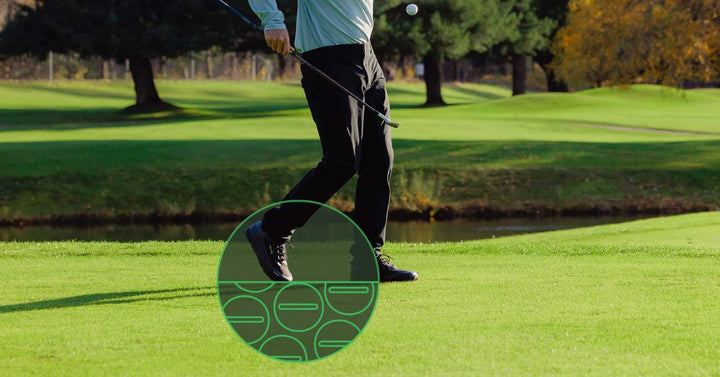
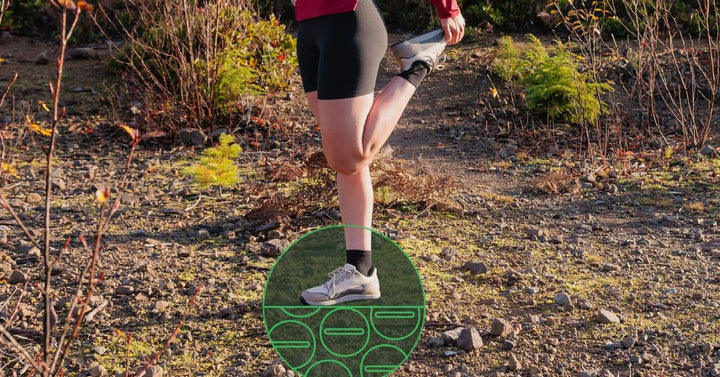
Many conventional shoes feature a narrow toe box, raised heel and thick underfoot cushioning, which can limit how much the foot is able to spread, sense and contribute to movement. A barefoot-style shoe is different and features: more toe room, a zero-drop platform, more flexibility and more ground feedback.
That can be useful because the plantar fascia does not work alone. The toes, arch, calf, Achilles and smaller foot muscles all help manage load. If those structures are underused, footwear that gives the foot more room and feedback may be one part of a gradual approach to increasing the overall capacity of the foot and lower leg (Ridge et al., 2019; Curtis et al., 2021).
Small changes in footwear can make walking, standing or running feel different because the body is being asked to organise load in a new way. More ground feel gives the foot more information from the floor. A zero-drop platform changes the demand on the calf and Achilles. A foot-shaped toe box lets the toes play a more active role during walking and standing. These changes can be positive, but they require the body to adapt - which is why your starting point matters.
When people have plantar fasciitis symptoms, it is understandable to think: “My foot hurts, so I need more cushioning all the time.”
There are times when more cushioning can be helpful, particularly if your symptoms are flared up or you know you will be spending a long time on your feet. Reducing the demands placed on the plantar fascia can make walking and standing more comfortable. However, while cushioning can provide short-term symptom relief, managing symptoms and building long-term capacity are two different goals, and both have a place in recovery.
The aim is to use cushioning strategically while gradually building your foot’s strength and tolerance to load. Building strength and tolerance where more minimal footwear can play a role.
Most barefoot footwear asks people to make a big jump. Many barefoot shoes are very minimal, highly flexible and built for maximum ground feel. That can be brilliant if your feet are ready for it. But if you are coming from conventional cushioned shoes, managing plantar fasciitis symptoms, or trying to increase activity again after injury, that jump can be too large.
Research on minimalist footwear suggests transition speed and loading matter, with some runners reporting higher injury incidence or calf and shin pain during transition periods (Ryan et al., 2014; Warne and Gruber, 2017).
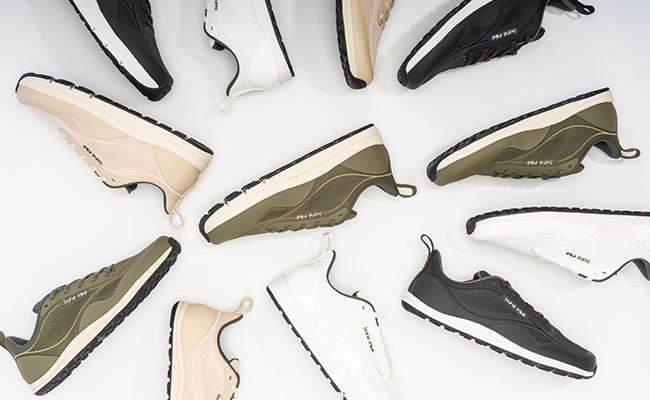
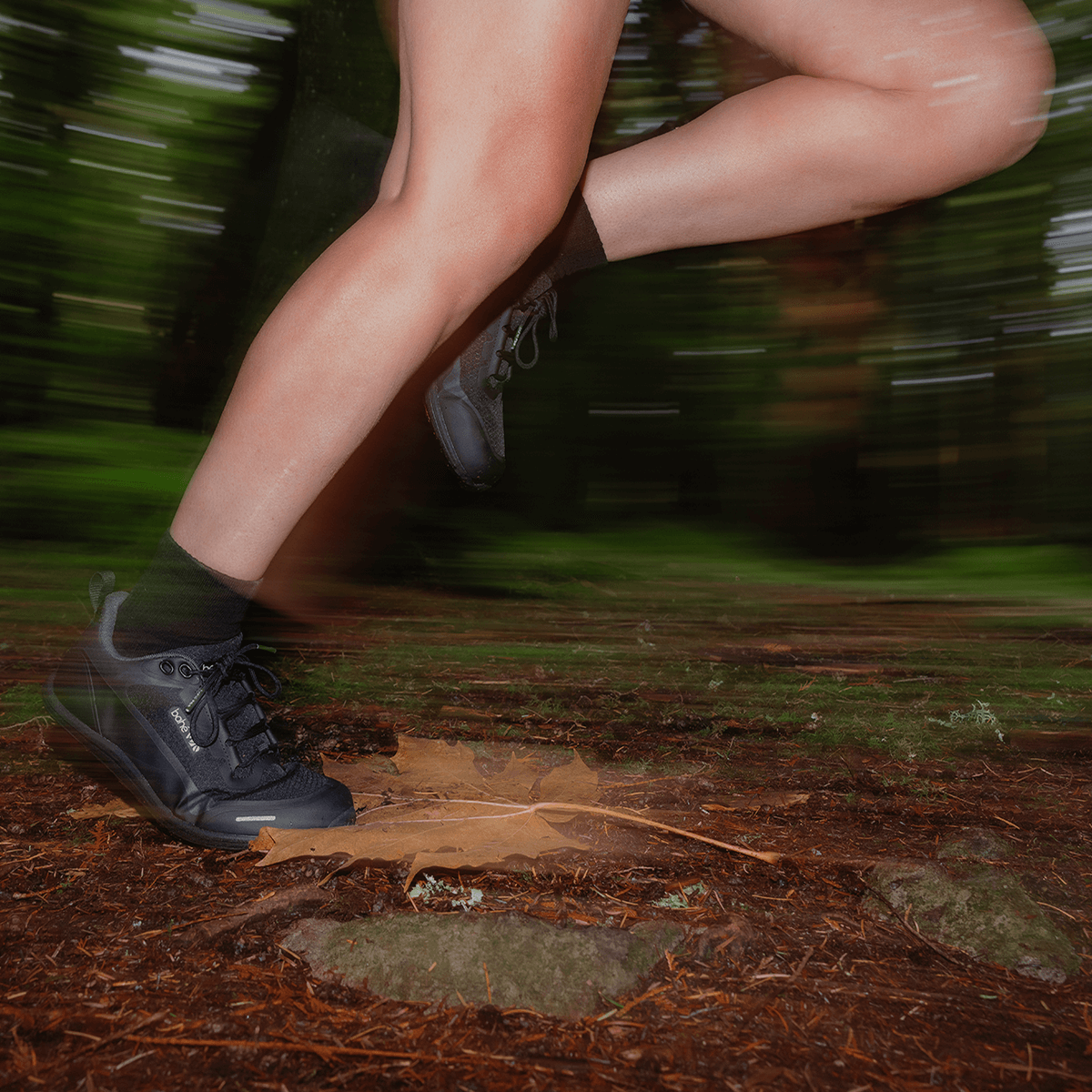
That’s why we created Bahé Modes. The concept is simple: three levels of sole cushioning, built on the same foot-shaped, zero-drop foundation, so you can choose the amount of input your body is ready for now and progress when it makes sense for you.
Where you start should depend on your foot strength, current capacity, symptoms and activity. Lower-impact or shorter-duration use may allow more ground feel sooner. Running, longer walks or irritated symptoms usually ask for a more forgiving starting point. If you are unsure, check our at-home assessment before deciding the right starting point for you.
Can I Switch to Barefoot Shoes With Plantar Fasciitis? At-Home Movement Assessment
Endurance gives the most cushioning while keeping the foot-shaped, zero-drop foundation. For many people new to barefoot shoes or doing higher-impact activities like running, this is the most sensible starting point.
Adapt sits in the middle. It provides more ground feel than Endurance, while still giving more underfoot comfort than the most minimal setup.
Flex gives the most ground feel and least cushioning. It can be a great option once your feet and lower legs are ready for more feedback, or for people who are already well adapted to minimal footwear.
If you are new to barefoot shoes, the usual progression is: Endurance -> Adapt -> Flex. But it is not a rule you have to follow blindly. The right choice depends on your body, your symptoms and your lifestyle.
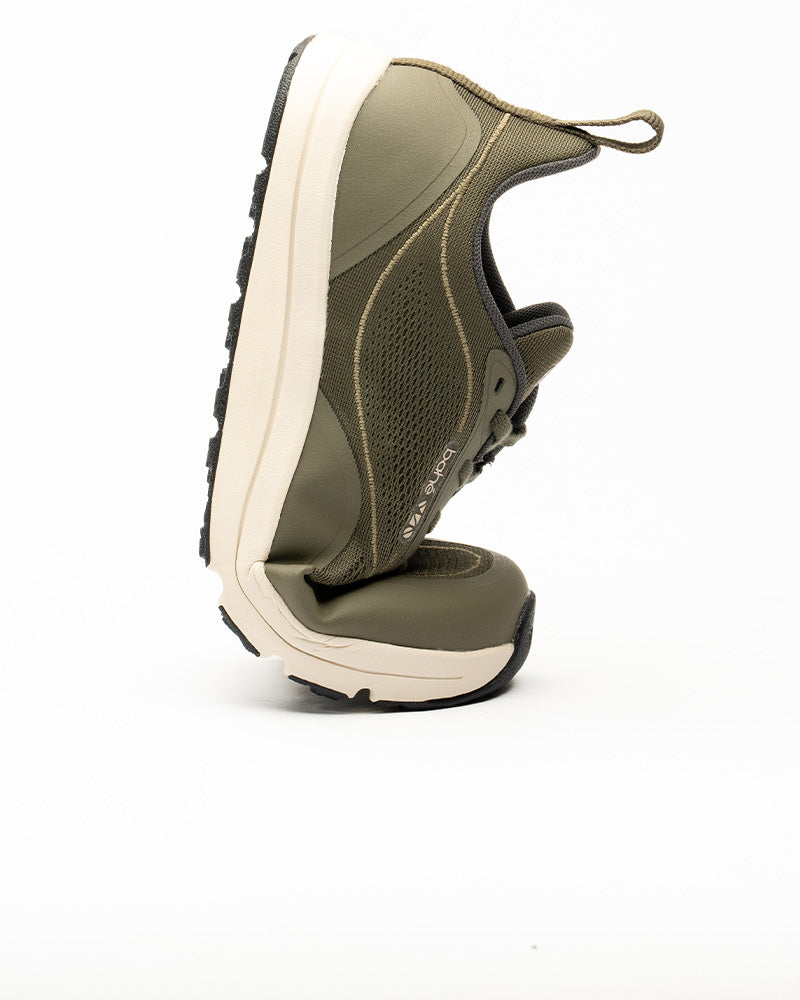
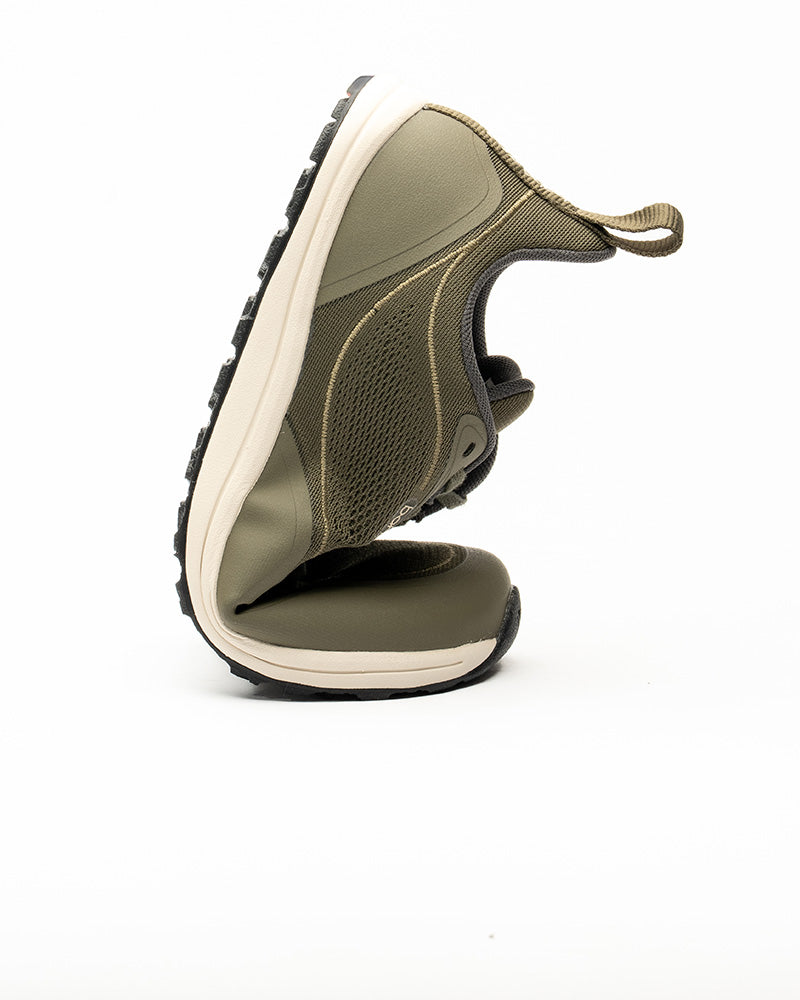
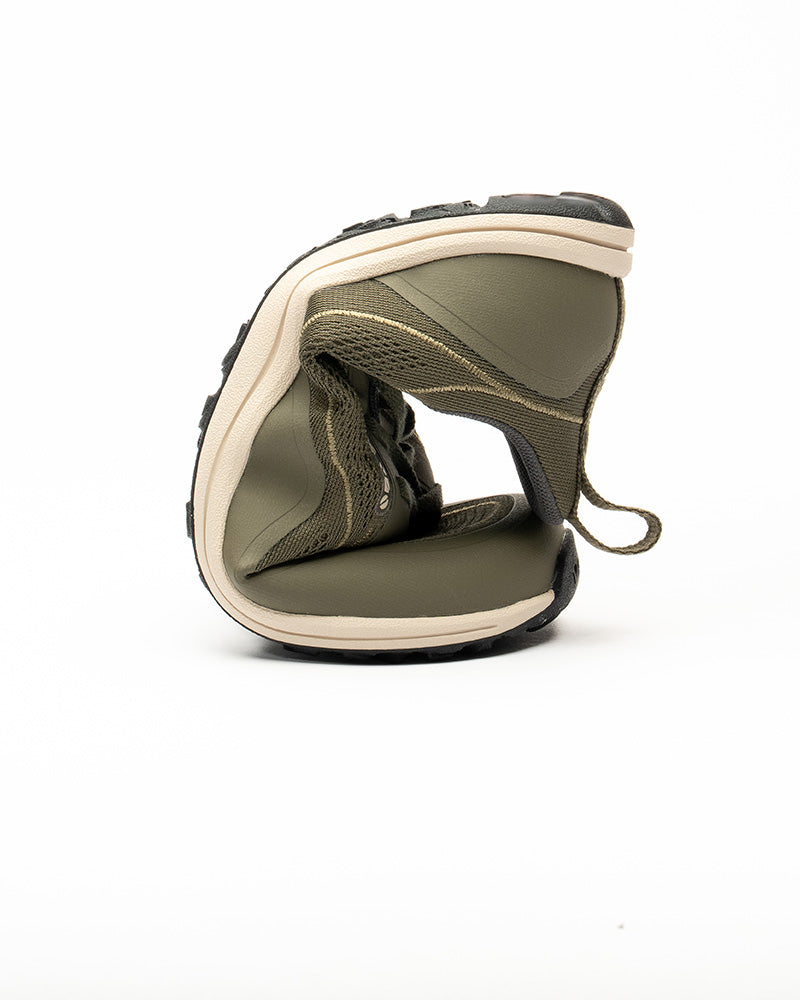
To make the switch towards zero-drop or less cushioned shoes easier, we created a few handy tools that let you customise heel position, cushioning, ground feel and fit to suit what you need.
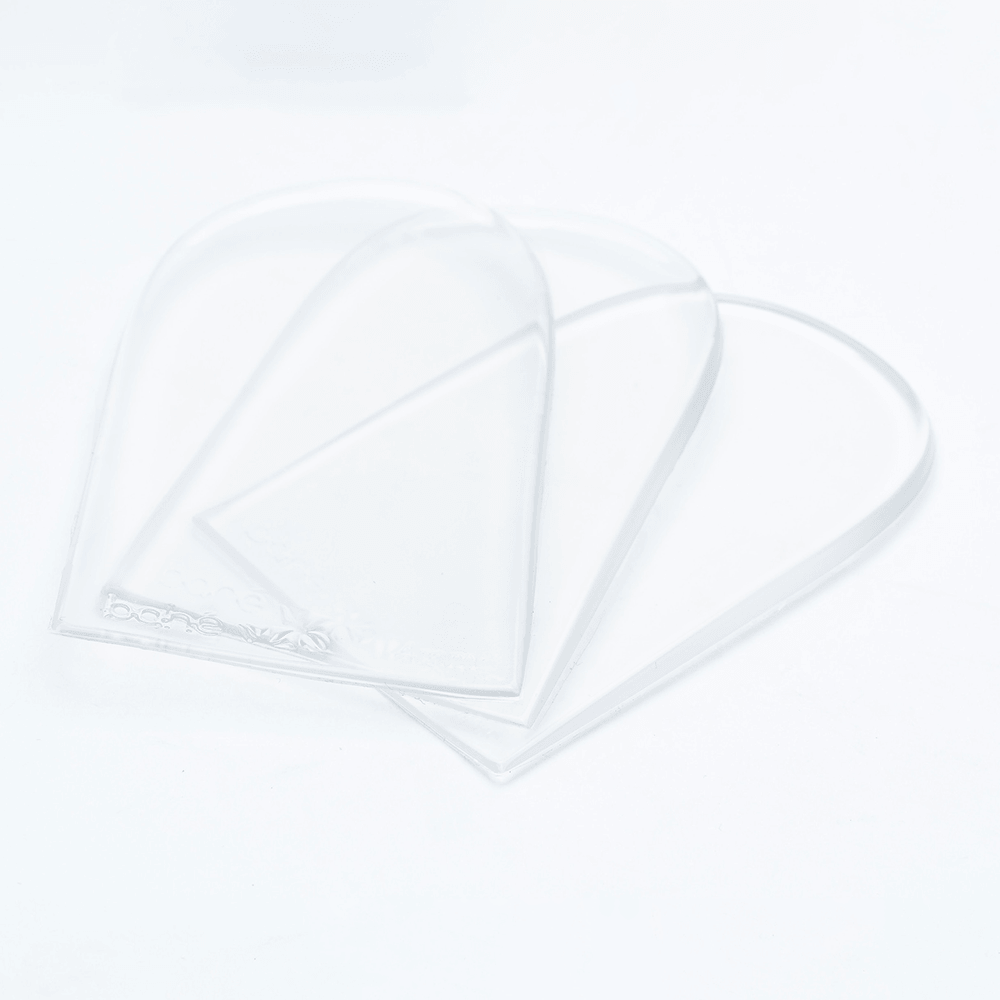
A small heel lift may make the shift towards zero-drop feel less abrupt for some people, particularly if the calf or Achilles feels sensitive (Warne and Gruber, 2017). It can act as a temporary bridge while the lower leg adapts to a flatter platform.
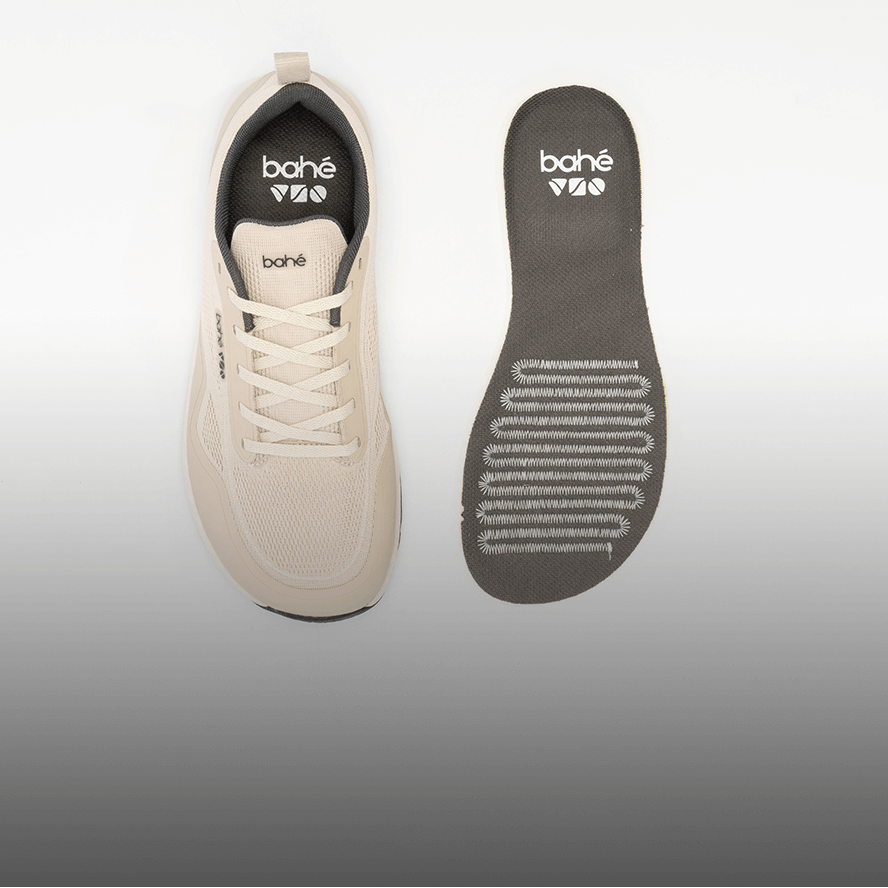
Insoles can also fine-tune the starting point. Removing an insole can create more space and ground feel. Adding an insole can create a snugger fit and a little more cushioning.
These tools are relevant whether you are new to barefoot shoes or already wearing them. You might use them to make a transition gentler, to add comfort on higher-load days, or to gradually reduce support as your foot becomes more tolerant.
We explain more about how to use these tools on our Heel Lifts And Insoles Explained page.
Barefoot-style shoes can be a useful tool, but the transition works best when the overall change is manageable. That means thinking about the whole picture: the cushioning level you choose, how your body responds to zero-drop, how much ground feel you introduce, what activity you do in the shoes, and how your foot feels afterwards.
Difficult transitions often happen when too many things change at once. For example:
A gradual transition should feel steady rather than dramatic. Start with the level of cushioning and ground feel that suits your current capacity, then build around it carefully. If you are managing plantar fasciitis symptoms, pay attention to how your foot feels later in the day and in the morning after exercise. If things feel steady or improving, you can keep building. If symptoms are increasing, reduce the overall demand - that might mean choosing more cushioning, keeping activity easier for a while, exercising on familiar surfaces, or giving yourself more recovery time before progressing again.
Barefoot shoes is a broad term. Some are extremely minimal, some offer more sole cushioning, but the core principles - a foot-shaped toe box, zero-drop sole and more flexibility - can allow your feet to move more naturally again. That is why at Bahé we focused on creating different cushioning levels, so you can find the right barefoot shoe for your current starting point, activity and lifestyle.
Barefoot-style shoes may be suitable for some people with plantar fasciitis symptoms, but they should be introduced gradually and chosen based on current capacity, activity and symptom response (Martin et al., 2023; NICE, 2024). Plantar fasciitis symptoms often appear when the body is struggling with the load it is experiencing. Barefoot-style shoes can be part of building capacity because they give the foot more space, feedback and opportunity to work - but that exposure needs to build gradually.
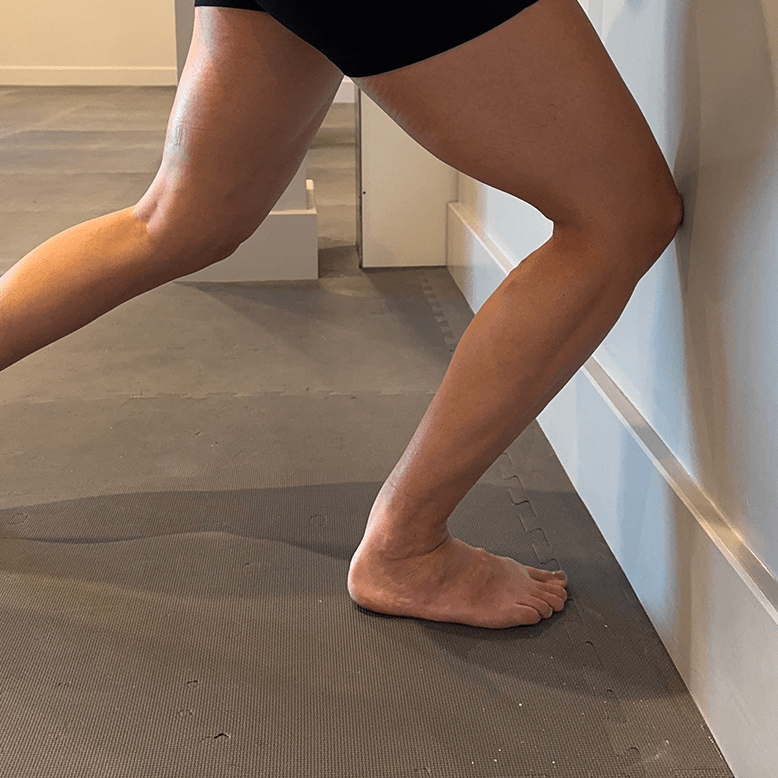
Many people may also benefit from appropriate strength and mobility work, ideally guided by a qualified professional if symptoms are persistent or worsening (Martin et al., 2023; NICE, 2024).
For more context on plantar fascia symptoms, recovery and transition, read:
Plantar Fasciitis: What It Is, How It Happens, and What Footwear Has to Do With It
Plantar Fasciitis After Switching to Barefoot Shoes? The Problem Might Be the Jump
Does Rest Help Plantar Fasciitis? A Load-Management Approach
Can I Switch to Barefoot Shoes With Plantar Fasciitis? At-Home Movement Assessment
Start with the at-home assessment first, then use the Find Your Mode Quiz to choose the sole cushioning level that best matches your current capacity and activity.
Can I adjust sole cushioning without replacing my shoes?
Yes. Where compatible, Bahé’s modular insole system can give you up to 6mm of variation inside one shoe. Adding an insole can create a snugger feel and a little more cushioning. Removing an insole can create more space and more ground feel.
Can a barefoot-style shoe still have sole cushioning?
Yes. Barefoot-style design is about the shape and function of the shoe - foot-shaped, zero-drop, flexible and good ground feel. Sole cushioning can still vary, which is exactly why Bahé Modes exist.
Should I use heel lifts forever?
Heel lifts are best thought of as a transition tool. They can make the shift towards zero-drop less abrupt, especially for the calf and Achilles. If things feel comfortable over time, you can gradually reduce or remove them rather than relying on them permanently.

Alert me via email when this size/colour becomes available
Leave a comment