
Foot Strengthening and Mobility for Plantar Fascia Symptoms: 3 Simple Steps

Charlie Kirby
Head of Movement

Plantar fascia symptoms are usually felt around the heel or underside of the foot, often during the first steps in the morning, after rest, or after longer periods on your feet. They can be frustrating because the painful area is obvious, but the cause is often broader than that one spot.
The plantar fascia is just one part of a larger system. The muscles and joints of the foot and lower leg all play a role in how load is absorbed and distributed during movement (Martin and McDonough, 2023). For this reason, treatment isn't just about stretching the underside of the foot. Building strength and improving mobility throughout the foot and lower leg can help these tissues better support movement and manage load (Martin and McDonough, 2023; Rathleff et al., 2015).
This blog outlines three simple stages of exercises that can help improve foot strength and mobility for people with plantar fascia symptoms. They are intended as general education rather than a personalised rehabilitation plan, so keep the movements controlled, avoid sharp pain, and scale back if symptoms worsen over the following days.
Consistency is more important than intensity when building strength and improving tissue capacity. If your foot tolerates it, aim to complete these exercises daily, although 4-5 sessions per week is still an excellent starting point. For each exercise, continue until you feel muscle fatigue or notice your control or technique beginning to decline, rather than pushing through with poor form. The goal is to provide your foot with regular, manageable loading that encourages adaptation without unnecessarily aggravating your symptoms.
As symptoms settle and your foot feels more tolerant, you may not need to keep every exercise at the same frequency forever. But even if the pain goes completely, it is worth keeping a few key strengthening exercises in your week. That helps maintain capacity, reduces the chance of symptoms returning when load increases again, and supports your return to walking, running or the movement that matters to you.
Mobility at the foot and ankle helps the foot and lower leg move through the ranges they need for walking, running and push-off during the gait cycle (Martin and McDonough, 2023; Welte et al., 2021).
Try the following mobility exercises:
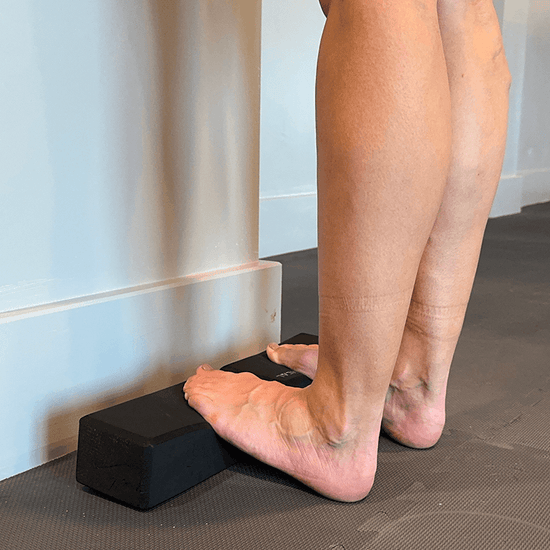
Helps target the gastrocnemius muscle, the larger of the two calf muscles. Allow your heel to drop towards the floor into a range that feels like a comfortable stretch.
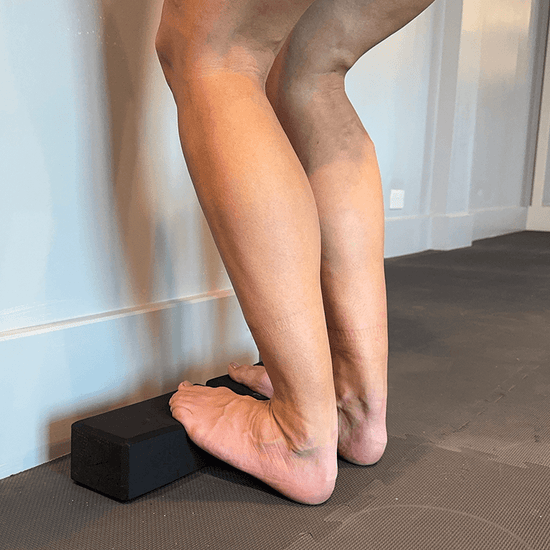
Targets the soleus muscle, the calf muscle especially important for running and controlled push-off. Allow your heel to drop towards the floor into a range that feels like a comfortable stretch.
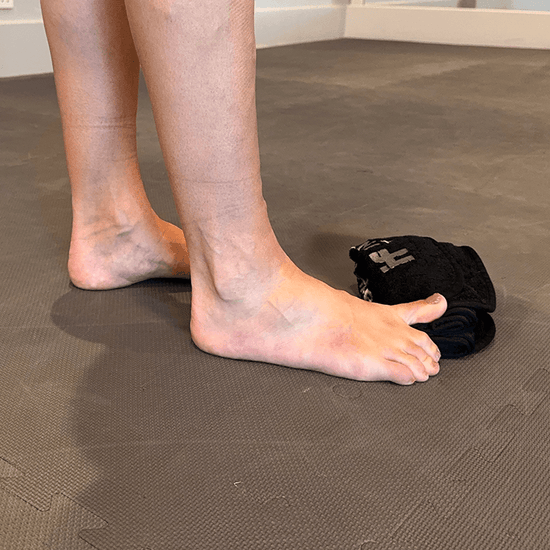
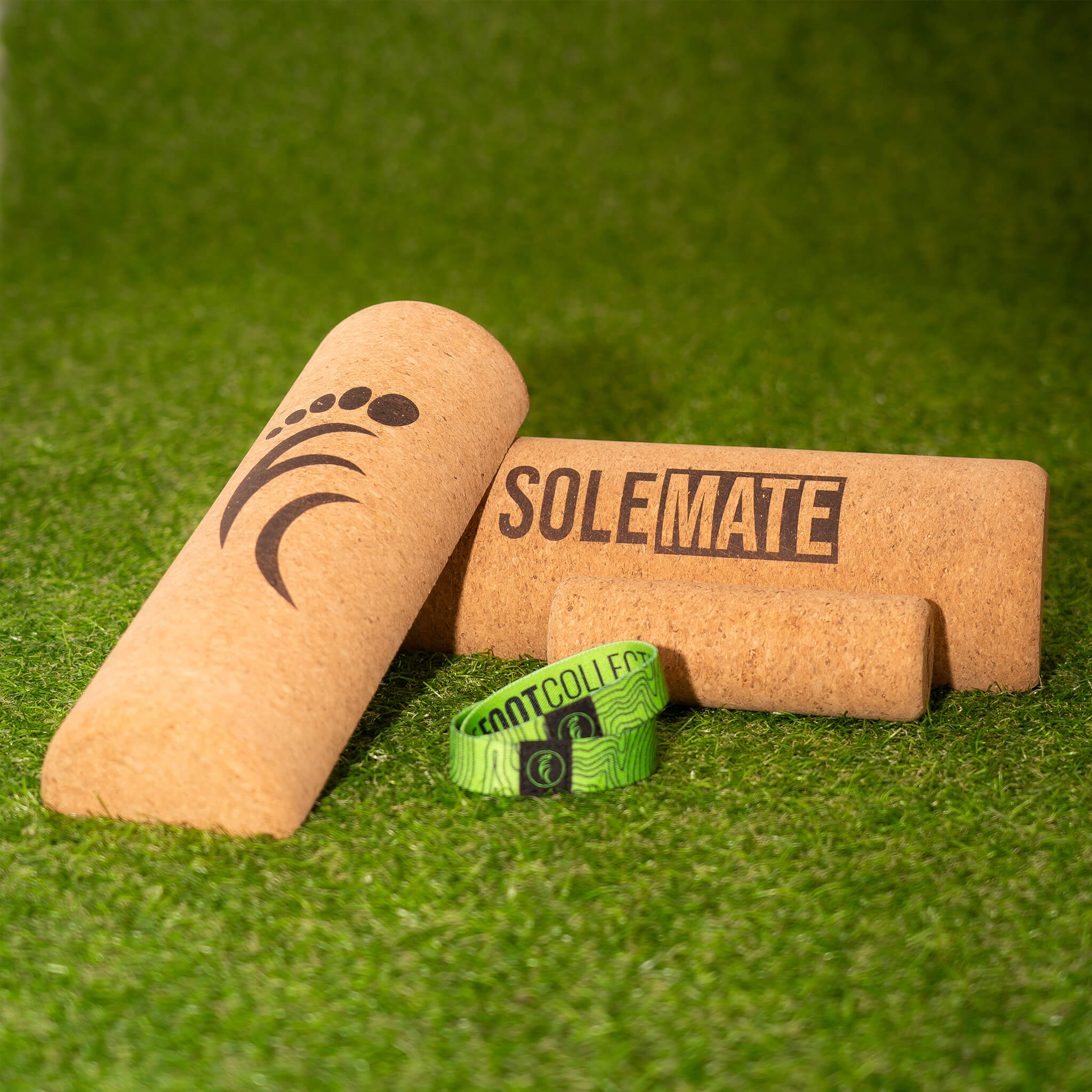
Use your hand, a towel, or a tool like the SoleMate from The Foot Collective to gently encourage the big toe to extend.
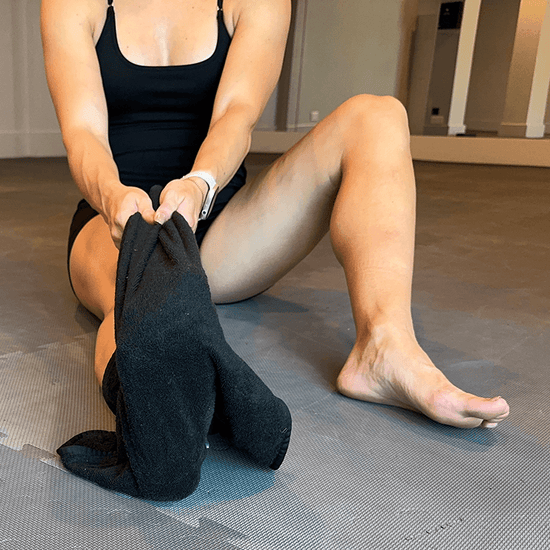
Sit down, loop a towel around the forefoot, and gently draw the toes back until you feel a controlled stretch through the underside of the foot.
None of these exercises should feel aggressive or painful. When performing the mobility exercises, aim for a gentle stretch rather than pushing into discomfort, and hold each stretch for at least 30 seconds to encourage changes in tissue flexibility over time. A mild stretching sensation is expected, but sharp pain is a sign to ease off.
Self-mobilisation encourages you to pay attention to how your foot moves and feels, while helping to reduce stiffness and improve confidence in movement.
Use a Cork Ball, SoleMate from The Foot Collective, or similar tool under the foot. Roll slowly through the arch, heel pad and forefoot, using pressure that feels useful but not sharp. A good rule: you should be able to breathe normally while doing it - if you are digging in and bracing, it is probably too much. The aim is to encourage comfortable, relaxed movement rather than pushing into discomfort.
Try 1-2 minutes per foot, then stand and notice any changes in comfort, stiffness, or how your foot feels during weight-bearing.
Strength work is often an important part of longer-term management of plantar fascia symptoms (Martin and McDonough, 2023; Rathleff et al., 2015).
The plantar fascia works alongside the muscles and tendons of the foot and lower leg during walking and running (Welte et al., 2021; Kurihara et al., 2025). Strengthening those areas may help improve the foot’s ability to manage load, which is why strength work can be useful when the goal is a more sustainable recovery rather than short-term symptom relief only (Martin and McDonough, 2023; Rathleff et al., 2015).
Try the following strengthening exercises:
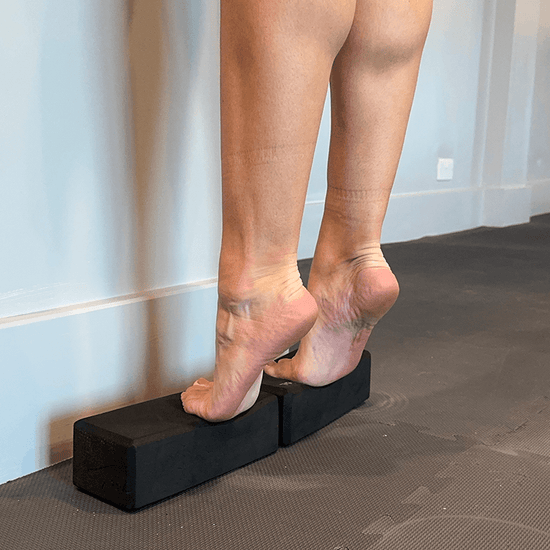
Rise with control, then lower slowly. If tolerated, you can use both feet to rise and one foot to lower, focusing on the eccentric lowering phase.
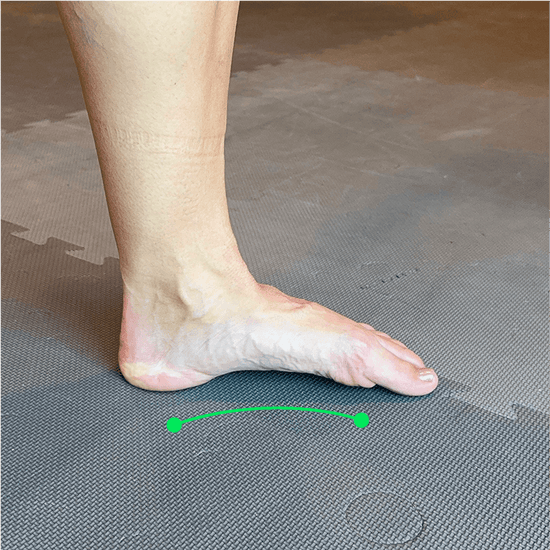
Keep the toes relaxed and gently lift the arch without curling or gripping. Think “shorten the foot” rather than “claw the floor”.
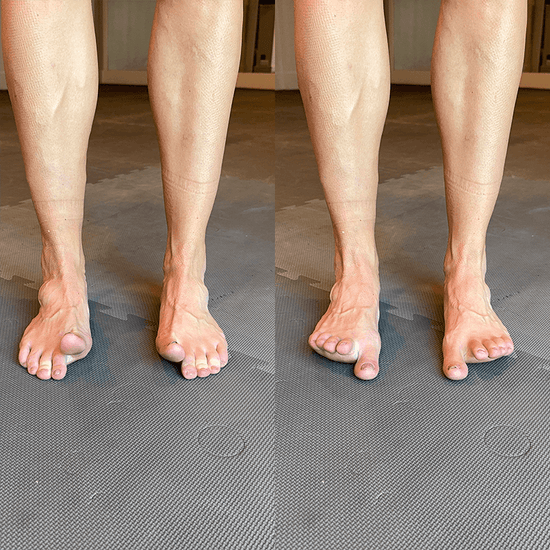
Practice lifting the big toe whilst keeping the other four down and vice versa, with as much control as you can.
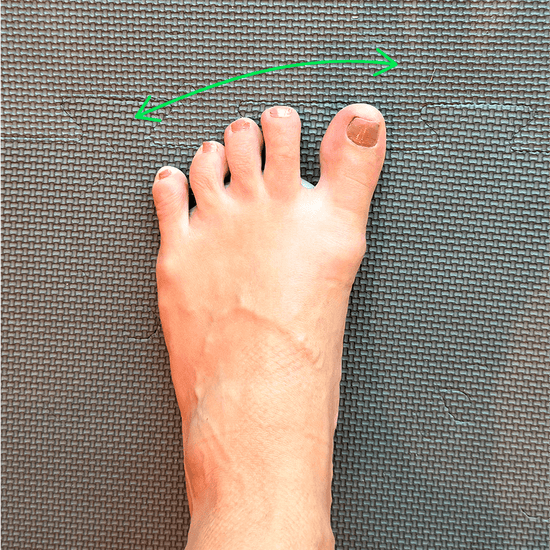
Spread the toes, then relax them. Avoid gripping. The aim is control, not force.
If your symptoms are particularly active, begin with an easier version of each exercise. This might mean performing the exercise in sitting rather than standing, using both feet instead of one, completing fewer repetitions, and taking longer rest periods between sets. Perform every movement slowly and with good control, prioritising quality over quantity. As your symptoms settle and the exercises become easier, gradually increase the challenge using the principle of progressive overload. This simply means making small, manageable increases over time - such as adding a few repetitions, progressing from two feet to one, or moving from sitting to standing - so your feet continue to adapt without being overwhelmed.
One commonly used guide is to monitor how symptoms respond over the next 24 hours. If symptoms are noticeably worse the following morning, consider reducing the amount or difficulty of the exercises (Martin and McDonough, 2023).
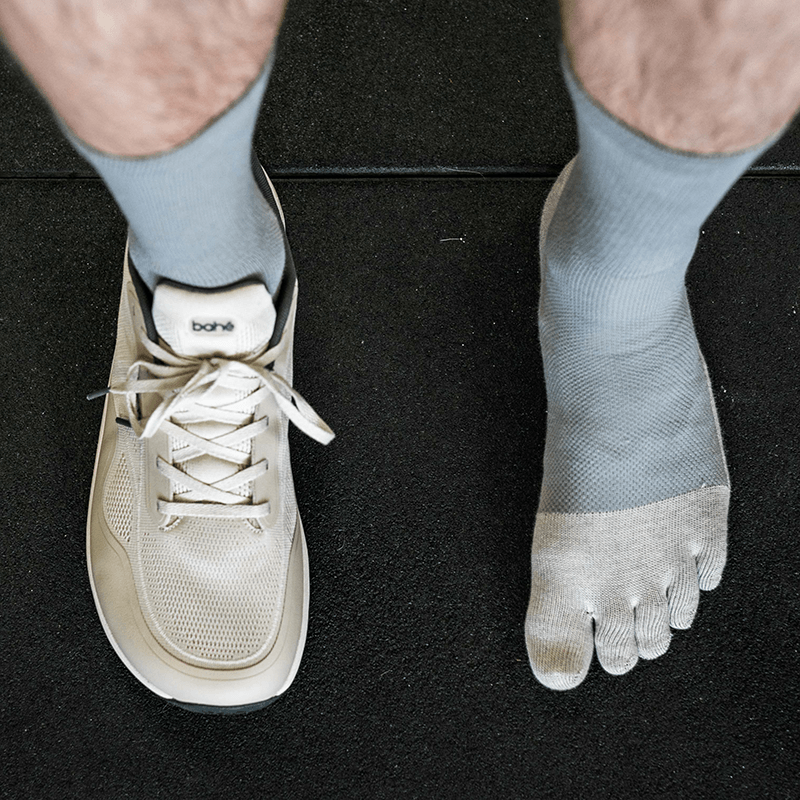
Strength work helps your foot gradually become better at handling demand. Footwear affects how much demand your foot feels in the first place - through cushioning, ground feel, heel lift and flexibility. If you are managing plantar fascia symptoms, it makes sense to think about both: build the foot’s capacity, while choosing a shoe setup your foot can tolerate now.
If you are already wearing barefoot-style shoes, cushioning can still be used as a dial. Some days, especially when symptoms are more sensitive or activity is higher, a little more cushioning may help reduce demand while you continue building strength and mobility. That does not mean stepping away from barefoot principles - it means choosing the level of ground feel your foot can handle well right now.
If you are also moving towards barefoot-style shoes, keep the transition gradual. More ground feel may change the demands placed on the foot, so a gradual transition is usually sensible (Xu et al., 2025).
This is why your starting point matters. If your foot is sensitive, use the assessment from the previous post before changing shoes, cushioning, insoles or heel lifts.
Can I Switch to Barefoot Shoes With Plantar Fasciitis? At-Home Movement Assessment
For the wider context, read:
Plantar Fasciitis: What It Is, How It Happens, and What Footwear Has to Do With It
Does Rest Help Plantar Fasciitis? A Load-Management Approach
Should plantar fascia exercises hurt?
They should not create sharp pain or make symptoms worse across days. Mild effort or fatigue can be normal, but worsening pain is a sign to scale back.
Is stretching enough for plantar fascia symptoms?
Usually, stretching alone is not the whole answer. Mobility can help, but strength and load management matter too.
How long should I do the routine for?
Start small and repeat consistently. A few controlled exercises done 4-5 times per week is often a better starting point than one long session that leaves symptoms worse. As your symptoms improve, you can gradually reduce the routine into maintenance work while increasing the activities you want to return to.


Alert me via email when this size/colour becomes available
Leave a comment