
Can I Switch to Barefoot Shoes With Plantar Fasciitis? At-Home Movement Assessment

Lauren Jackson
Head Physiotherapist at Bahé

Barefoot-style shoes can be a useful way to rebuild foot function, improve ground feel and give your toes more room to move - but if you have plantar fascia symptoms, the starting point matters.
A foot-shaped, zero-drop shoe changes how load moves through the foot, calf, Achilles and plantar fascia. That can be helpful when introduced gradually, but some people find that increasing exposure to barefoot-style or zero-drop shoes too quickly can aggravate symptoms (Warne and Gruber, 2017).
This blog gives you a simple at-home readiness check, then explains how to choose the right starting point. At Bahé, that is exactly why we created options like Modes, removable insoles and heel lifts - so switching towards barefoot and zero-drop principles does not have to be all-or-nothing.
This is general education, not a diagnosis or personalised medical advice. If symptoms are severe, worsening, or affecting normal function, it is worth seeking individual assessment.
The choice is not simply “cushioned shoes or barefoot shoes”. The key is matching the level of support to what your feet can currently tolerate, then gradually progressing as they become stronger.
For many people coming from conventional cushioned shoes, a gradual transition is often more manageable than starting with the most minimal option (Warne and Gruber, 2017).
That might mean starting with a more cushioned barefoot-style shoe, gradually building up usage and exercise intensity, or using insoles and heel lifts to make the transition less abrupt.
This is a readiness check, not a diagnosis. Do not push into sharp pain. If symptoms are severe, worsening, or affecting normal function, consider seeking individual medical assessment (NICE, 2026).
For each test, score yourself:
1 = Difficult, painful, restricted or poor control
2 = Possible, but limited or inconsistent
3 = Comfortable, controlled and repeatable
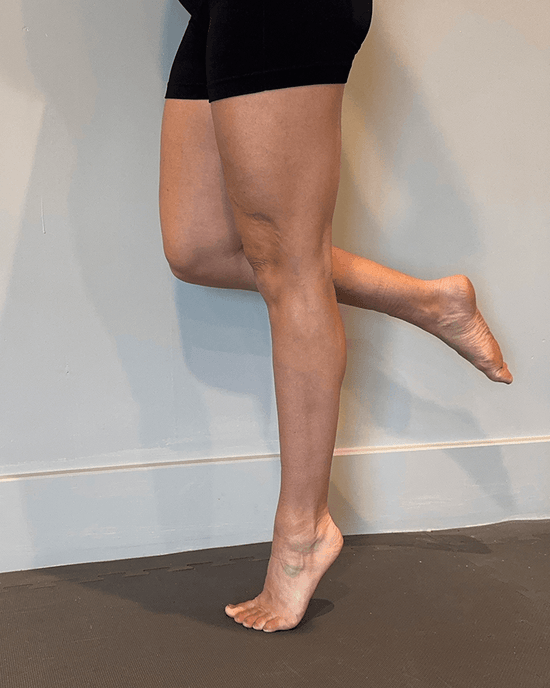
Stand near a wall for balance. Lift one foot so you are standing on one leg, then rise onto the ball of the standing foot by lifting your heel off the ground. Hold for a few seconds and then lower with control.
1: Unable to complete one repetition without pain or difficulty
2: Can complete one single-leg raise without pain, but anything more is painful and/or difficult
3: Smooth, controlled and repeatable for 3+ repetitions
Why it matters: strong calf muscles are vital to support the Achilles tendon and help manage load through the foot during walking and running.
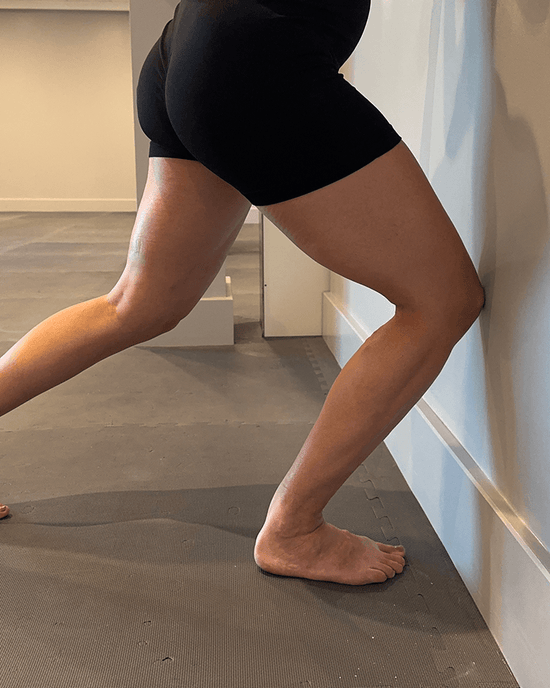
Try a simple knee-to-wall test to assess your ankle mobility. Start with your toes around 8cm / 3 inches away from the wall - keep your foot flat, bend your knee forwards, and keep the heel down.
1: Restricted, uncomfortable, or very different between sides
2: Some range, but the heel lifts and you are unable to get the knee to the wall
3: Able to touch the knee to the wall while maintaining heel contact
Why it matters: ankle mobility affects how force moves through the foot and lower leg.
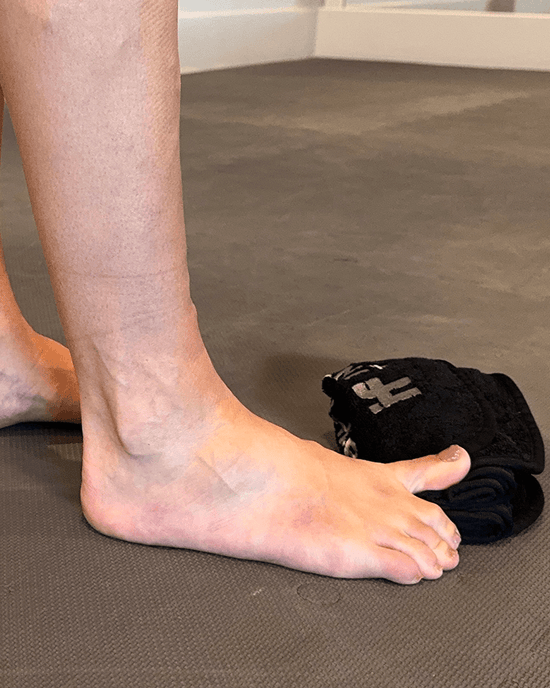
Gently lift your big toe into an extension stretch while keeping the ball of the foot down.
1: Stiff, uncomfortable, or barely moves
2: Some movement, but limited and cannot hold for longer than 10 seconds without discomfort
3: Comfortable extension without forcing that you can hold for 20-30 seconds or more
Why it matters: big toe extension helps the foot use its natural spring system.
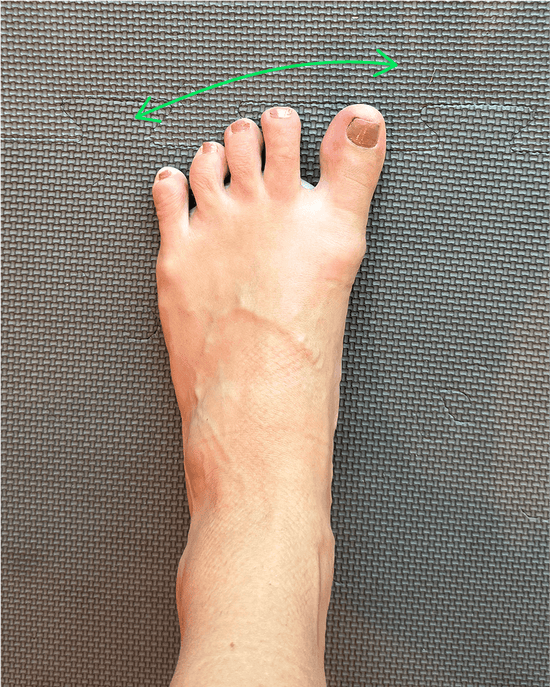
Stand or sit with your foot relaxed. Try to spread your toes as wide as possible without gripping or clawing.
1: Little movement, cramping or gripping
2: Some movement, but hard to control
3: Toes spread and relax with control
Why it matters: toes help with balance and load sharing, especially when able to splay freely.
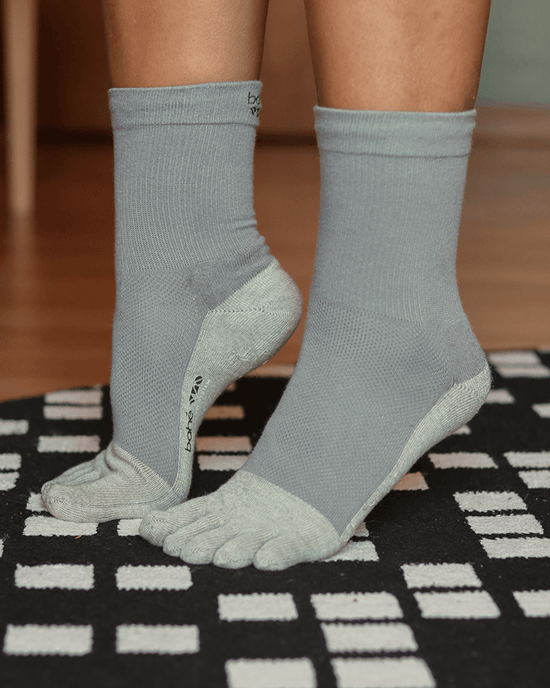
How does your foot respond to a short, easy amount barefoot, or only wearing socks at home?
1: Symptoms flare quickly or feel worse afterwards
2: Short periods are tolerable, but anything longer than 20-30 minutes feels uncomfortable
3: Comfortable for periods of 30+ minutes
Why it matters: being barefoot still places demands on your feet. Even walking or standing around the house barefoot contributes to the overall load on the plantar fascia and should be considered when assessing your readiness to transition.
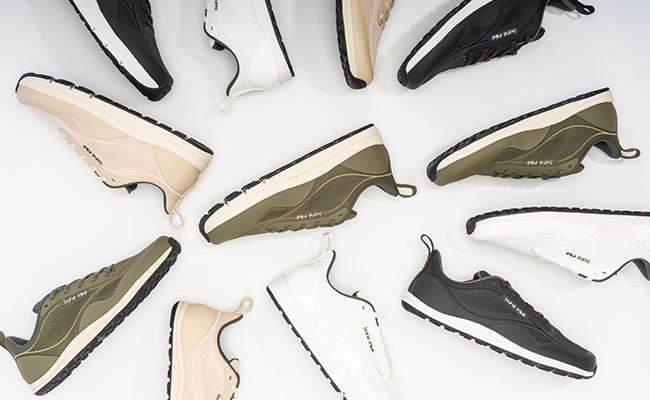
If your aim is to work towards more minimal barefoot shoes, your score gives you a useful starting point. This principle applies across brands: think of Endurance as a barefoot fit with more cushioning, Adapt as a middle ground, and Flex as the most minimal option with the most ground feel.
You do not have to move through every level, and you do not need to buy three pairs of shoes. The point is to choose the level of cushioning and ground feel that matches your current capacity, your symptoms and the activity you want to do. Even without plantar fascia symptoms, many people do better starting with more cushioning and changing gradually over months, not days.
Choose a gentler entry point: more cushioning, shorter exposure to zero-drop shoes initially, flatter and more predictable surfaces, and allow more time to build up exercise intensity.
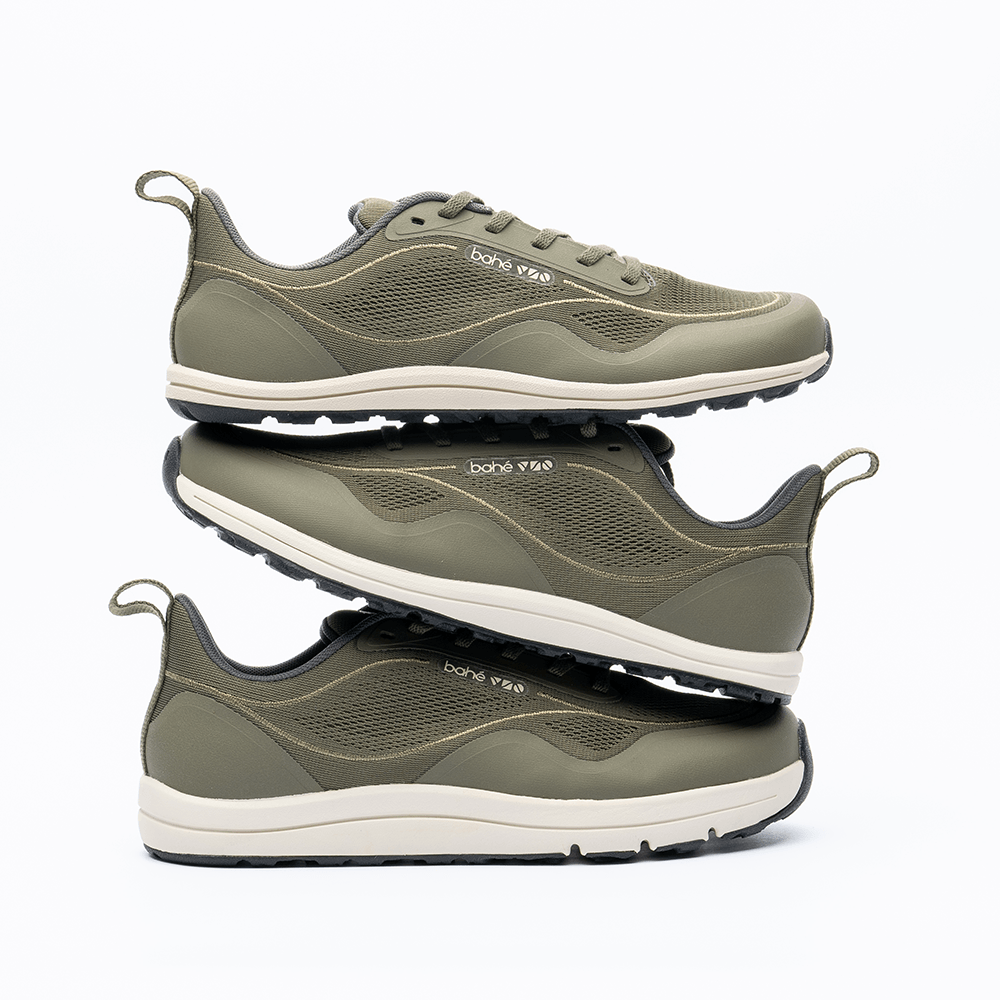
For Bahé Modes, this usually points towards Endurance as the starting point for most people. It provides more cushioning while keeping the foot-shaped, zero-drop foundation.
You have some useful capacity, but your foot is still asking for a measured approach. Start with controlled exposure and gradually build usage, walking time or exercise intensity.
For Bahé Modes, Endurance or Adapt may make sense depending on your symptoms, activity and tolerance.
You may be ready for more ground feel sooner, especially for lower-load activities.
For Bahé Modes, Adapt or eventually Flex may be appropriate. Flex offers the most ground feel and is often later for most people, especially if symptoms are still active. For running, Endurance may still be the better starting point because the load is higher.
At Bahé, we created a few handy tools so that even within one shoe, you can adjust cushioning, heel lift and fit to suit your current situation or activity. These are relevant to anybody, but especially if your scores were mostly in the 1s or 2s.
Some people find that a small heel lift makes the transition towards zero-drop footwear feel more comfortable (Wulf et al., 2016). A heel lift slightly reduces the immediate change in heel position, which can make the calf, Achilles and plantar fascia feel less abruptly loaded during the early transition.
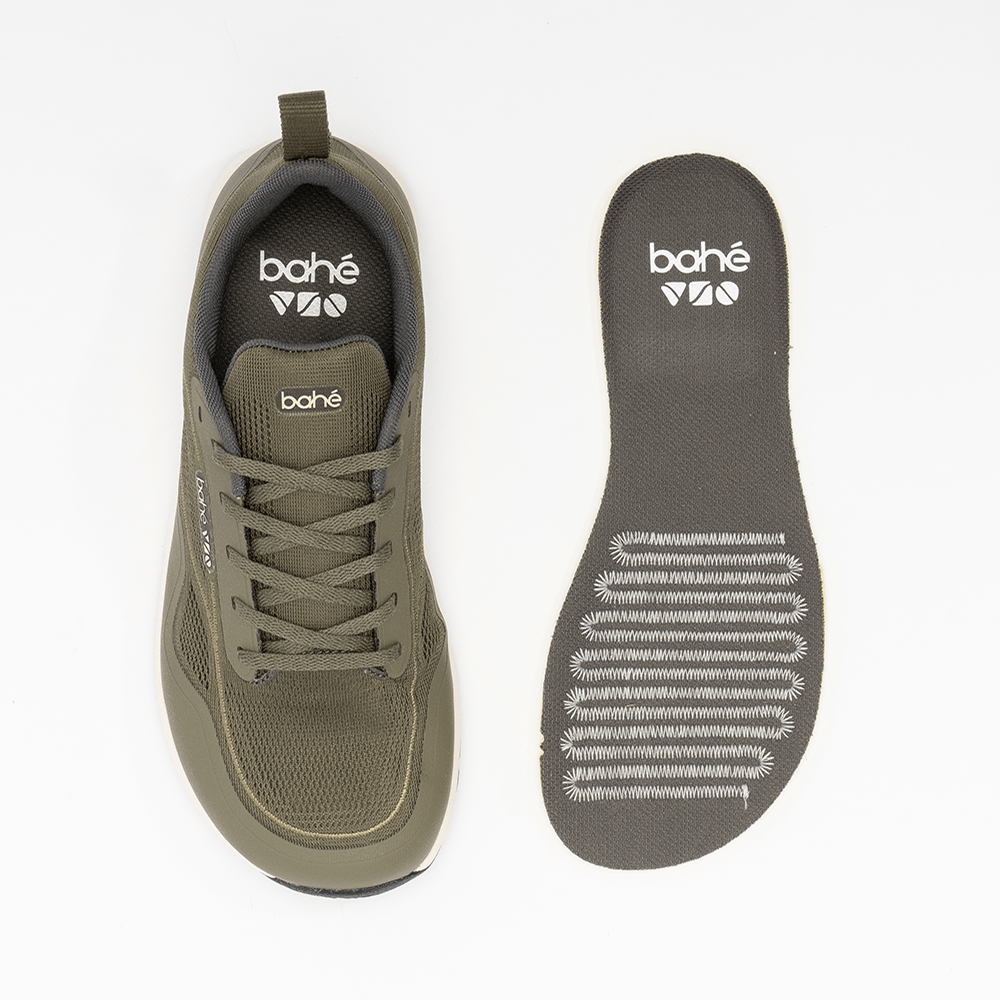
Our removable 3mm insoles can also change fit, feel and volume. Removing an insole can create more space and more ground feel. Adding one can make the fit more snug and add a little more cushioning.
They are tools for adjusting cushioning and load, alongside the other variables you control: surface, walking time, running intensity, recovery and how often you wear the shoes. Over time, you may decide to remove the heel lifts or insoles as you want more ground feel and no longer need your heel to be raised.
Give yourself time to adjust. Footwear is one load variable, but so are distance, surface, pace, exercise intensity and barefoot time. If you change too many of those at once, it becomes much harder to know what your foot is responding to.
In the first week or two, keep the switch positive and controlled. Wear the shoes for manageable periods, notice how your symptoms respond later that day and the next morning, and build from there if things stay settled.
If symptoms increase, that does not mean you have failed or that barefoot shoes are wrong for you. It may simply mean the jump was too large. Reduce the exposure, use more cushioning or heel lift if helpful, choose easier surfaces, and build again more gradually.
For more context, read the earlier posts in this series:
Plantar Fasciitis: What It Is, How It Happens, and What Footwear Has to Do With It
Plantar Fasciitis After Switching to Barefoot Shoes? The Problem Might Be the Jump
Does Rest Help Plantar Fasciitis? A Load-Management Approach


Alert me via email when this size/colour becomes available
Leave a comment