How To Test Grounding Shoes
Want a simple way to test grounding shoes? This guide walks you through a few quick at-home checks using simple tools, plus how to tell which surfaces are best for grounding
Am I Grounded?
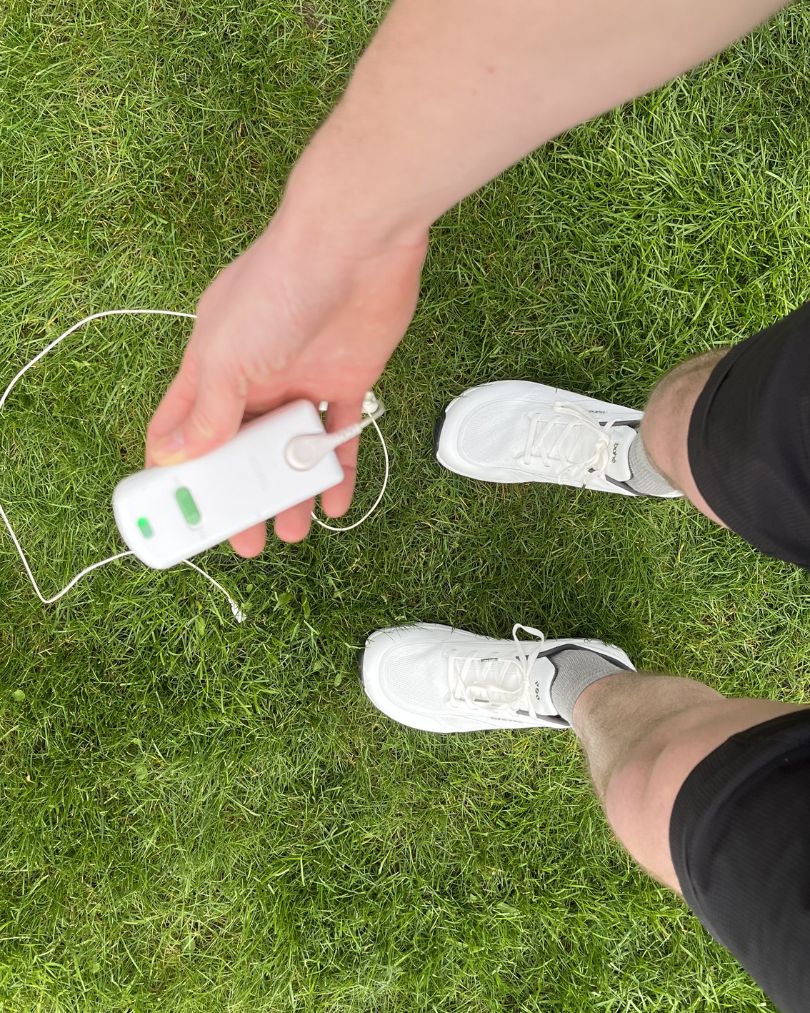
A continuity meter is the quickest and easiest way to check if you're grounded.
The continuity meter simply checks if there is a continuous electrical path between two points.
- Your foot inside the shoe
- The ground
The aim if grounding shoes is to create this electrical pathway, so when you're standing on a grounded surface the meter should light up.
How To Do A Continuity Meter Test
What You Need:
- A continuity meter
- Your grounding shoes
- A grounded surface
Testing Steps:
- Plug one end of the tester into the ground
- Place your finger on metal part on the back of the meter
- Press the test button
Did It Work:
- If the light comes on and stays on, you're connected!
Check our explainer video below

Continuity Meter FAQs
It shows whether there’s a continuous conductive path between you, the shoe, and the surface you're standing on. If the light comes on and stays on, you’ve got a connection.
If you stand barefoot on a grounded surface, you should be grounded. The light should come on and stay on. This is a great way to check the surface works before you try your grounding shoes.
Yes, a simple test is to place one end of the continuity meter on the sole of the shoe and the other on the conductive stitching on the insole. Press the button, and it should light up.
Just bear in mind, when you wear the shoes you have your bodyweight pressing you down, so you may need to press the meter into the shoe a little to get the best reading.

Does It Affect My Body Voltage?
This test is a simple before-and-after check. You’re looking at whether your body voltage reading changes when you go from being ungrounded to grounded.
Body voltage is the small electrical potential your body can carry relative to the earth - it can build up from your environment (especially indoors, around mains power and electronics).
When you’re electrically connected to the earth on a grounded surface, the reading on a multimeter often shifts compared to when you’re insulated by a normal shoe or standing on an ungrounded indoor floor. That’s because grounding can give electrical charge a path to equalise with the earth.
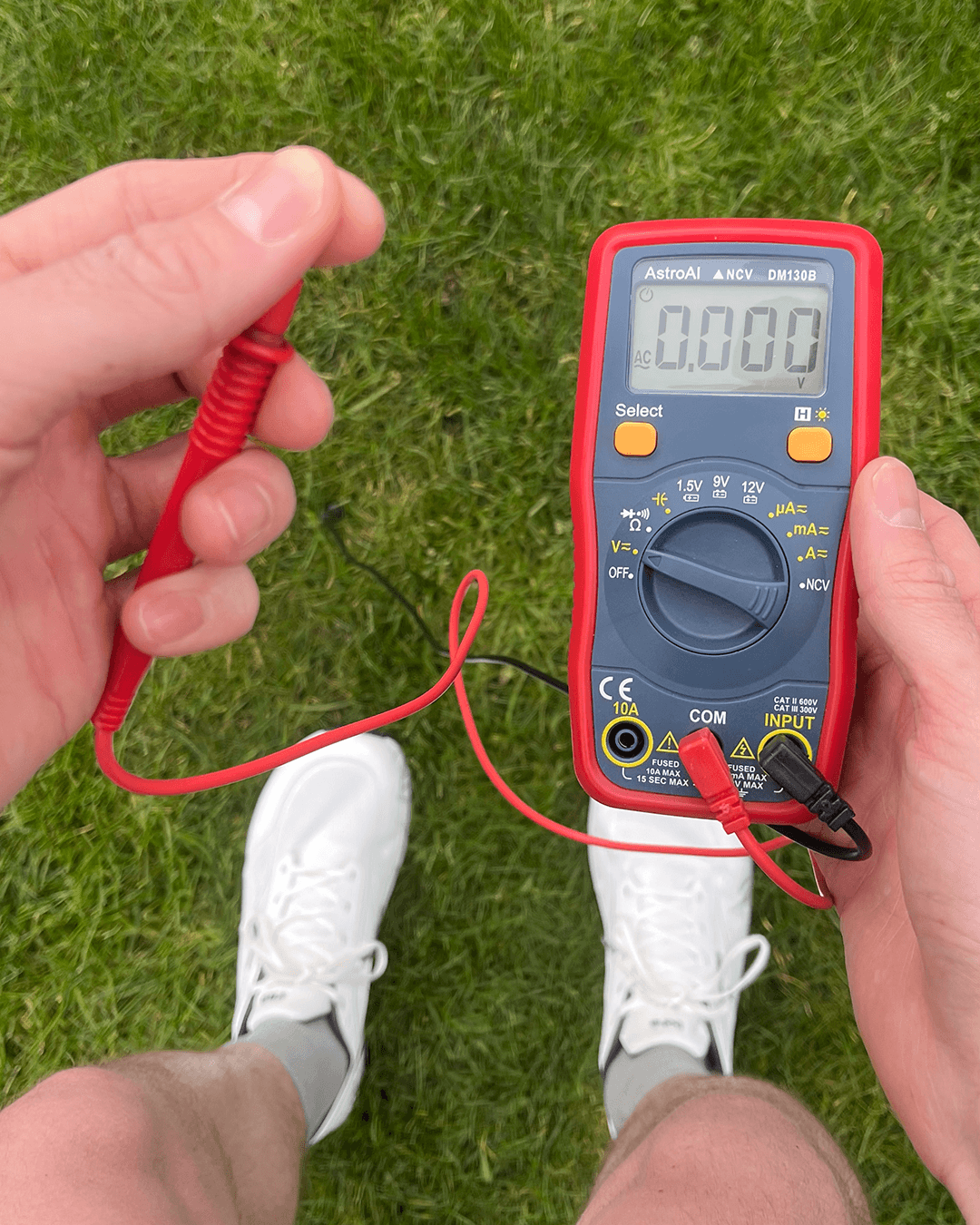
How To Do A Body Voltage Multimeter Test
What You Need:
- A multimeter
- Your grounding shoes (and, ideally, a 'normal' shoe for comparison)
- A grounded surface
Testing Steps:
To make a comparison, you'll want to go from an ungrounded to a grounded situation, so you may want to test initially with 'normal' shoes on, or on a surfaces you know is not grounded
- Set your multimeter to AC voltage (V~ / VAC)
- Plug the black lead into the ground
- Hold the red end in your hand
- Check the voltage reading on the meter
Did It Work:
- If you see your body voltage drop in the grounded setup, that’s a good sign your setup is working.
Check our explainer video below

Multimeter FAQs
Use AC voltage (V~ / VAC) and set a low manual range so the meter can “see” small changes.
- Set the dial to V~ (AC volts).
- If your meter has ranges, choose the lowest AC range above zero - usually 2V AC or 20V AC (pick the smallest available that still gives a stable reading).
- Avoid auto-ranging for this test if you can - body voltage is often low, and some auto meters can jump ranges or behave inconsistently, which makes comparisons harder.
Connect the black lead (COM) to the ground point. Hold the red lead (V) against bare skin to take the reading.
You’re looking for a clear change between conditions (grounded vs ungrounded). It’s a comparison test, not a single pass-fail number.
This is a very sensitive test. Small changes in your body position and the ground itself can shift the reading - even on the same patch of grass. Moisture levels, soil composition, and how firmly you’re contacting the ground can all make a difference.
For a cleaner result, keep everything as consistent as possible:
- Stand in the same spot on the grass (ideally damp).
- Keep the same stance and posture each time.
- Hold the probe in the same hand, in the same place, with bare skin contact.
- Change one thing at a time (shoe vs barefoot, for example), then re-check.
Body voltage tests can be influenced by the surface, indoor wiring, humidity, clothing and the surrounding electrical environment. The voltages involved in the human body are also very low, and some meters are not sensitive enough to show a clear change. Meters that let you manually set the voltage range are often more useful for this than fully automatic ones. So a low or unchanged reading does not always mean the shoes are not grounding you to the earth.
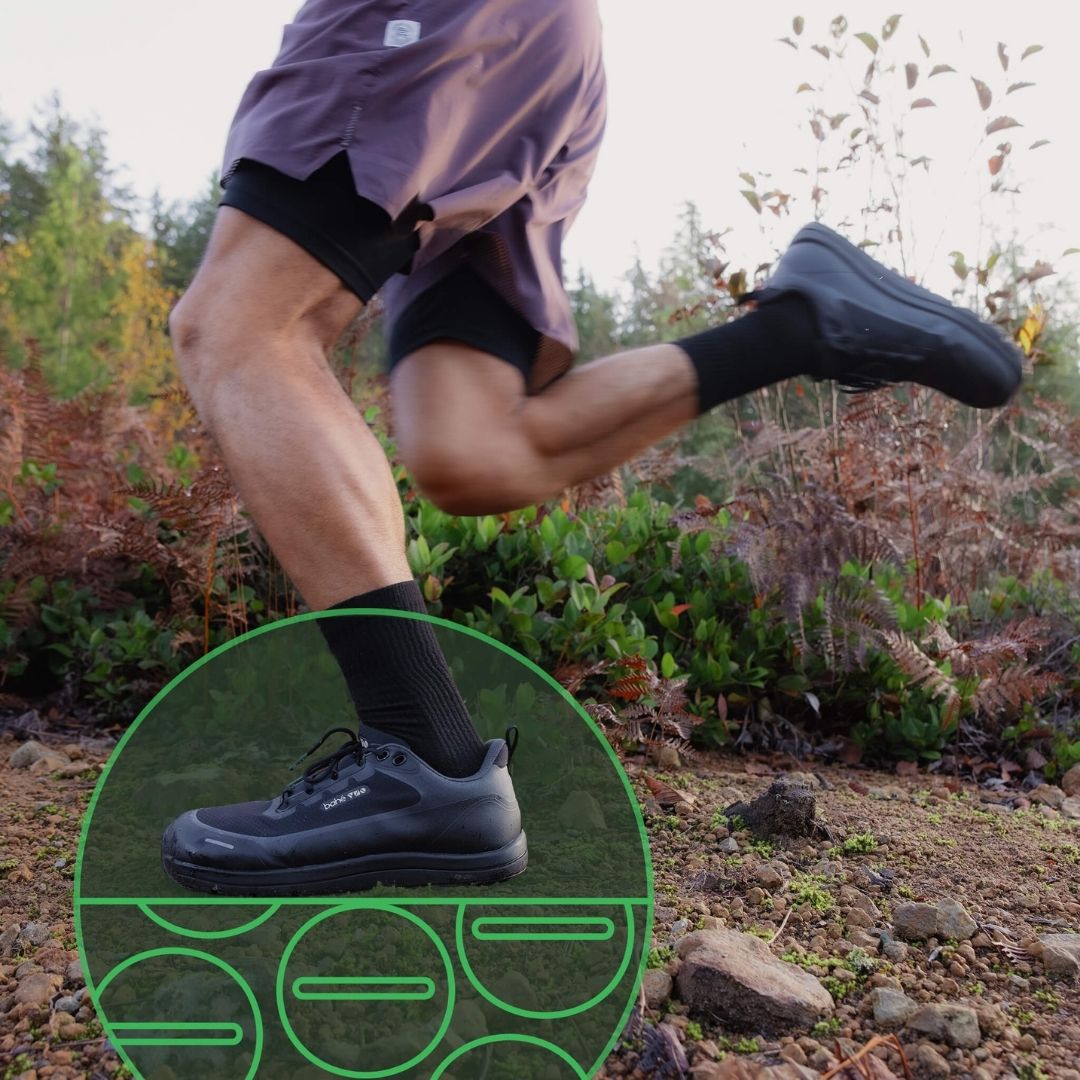
Testing Different Grounding Surfaces
Grounding opportunities are all around you - it mostly comes down to what you’re standing (or running) on. In the countryside, you’re often on surfaces that are more likely to support grounding. In towns and cities, small route tweaks can help you spend more time on the right kind of ground. Use the guide below to see which surfaces are worth targeting - and which ones to skip.
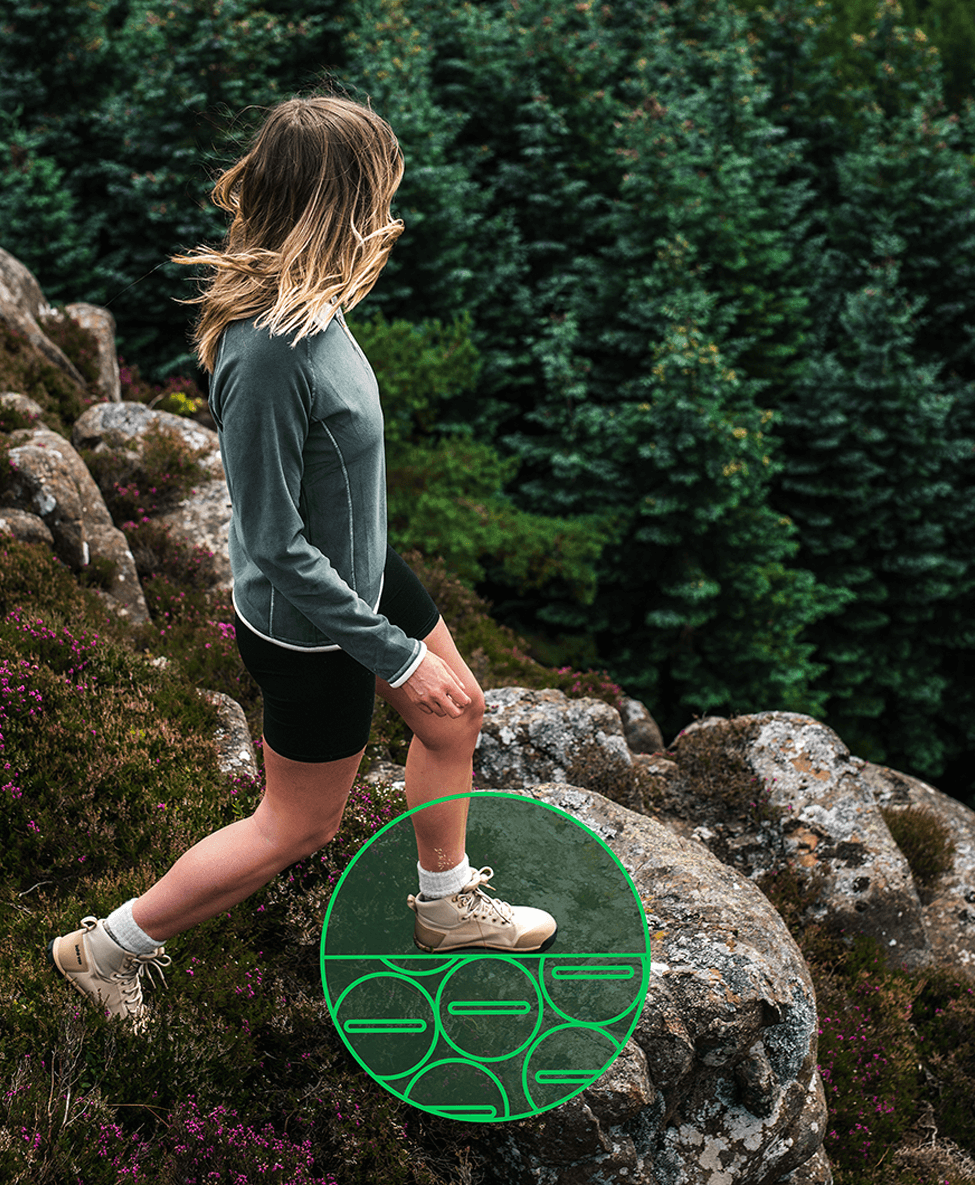
To be grounded, you need a grounded surface and a continuous conductive path between you, your shoe, and the ground. At Bahé we create this with our Ground Flow System.
Check our explainer video below

Grounding Surfaces FAQs
Different ground types conduct differently, and moisture changes the picture. Wet grass or damp soil often gives a clearer read than dry ground. Concrete can be variable (sealants and dryness matter). Indoors, surfaces are often ungrounded, so the “signal” can disappear.
Start on grass, ideally damp. It’s usually the easiest baseline for seeing a clear difference before you try trickier surfaces.
Concrete varies. Sealants, dryness, and what’s underneath can all affect what you see - so treat concrete as a “compare and learn” surface, not a guaranteed one.
Either works. A continuity meter gives a quick light on-light off check, while a multimeter (body voltage) shows a before-and-after change. The key is keeping everything else the same and changing only the surface each time.
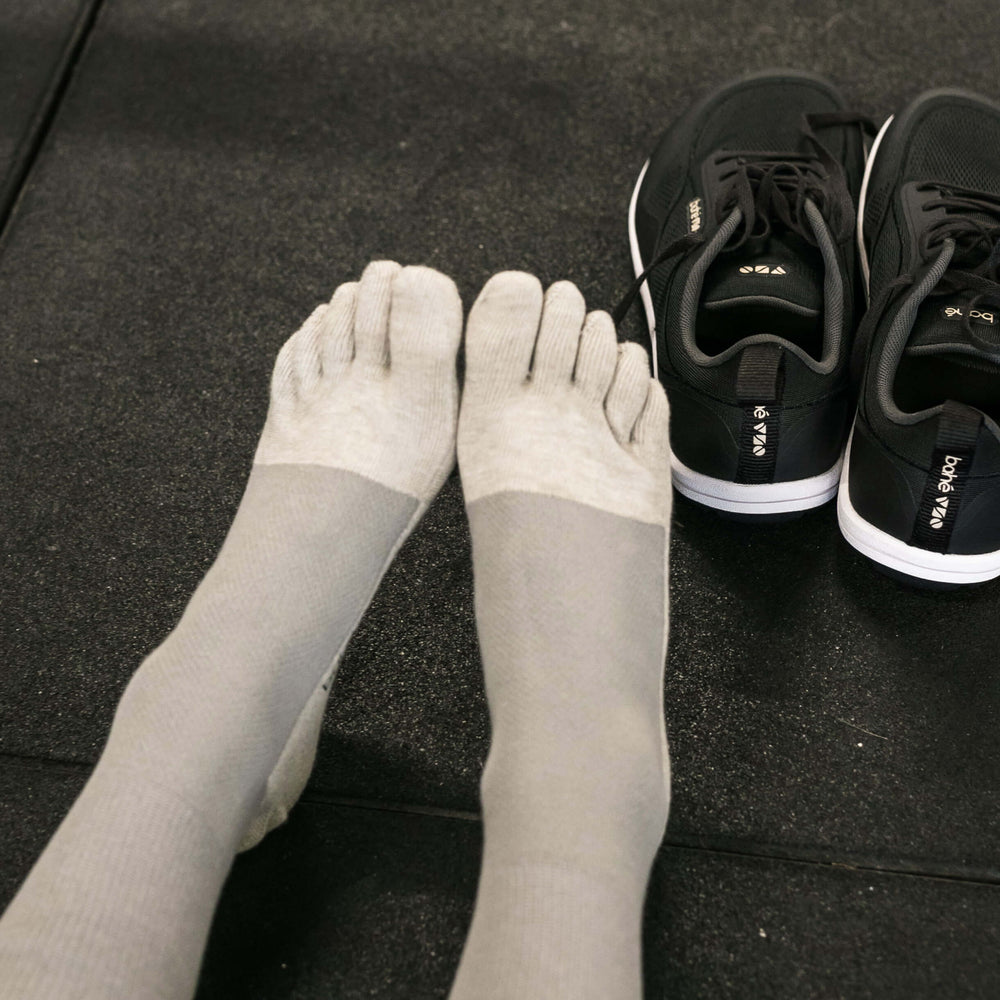
In most cases, wearing regular socks will not prevent you being grounded.
As you move, your feet will perspire and this perspiration will allow for a connection to be made between your foot and the in-soles via your socks.
We’re tested different types of socks and we recommend thinner socks to allow for a connection to be made more quickly, but thicker socks should work fine.
For the best connection, we have created Bahé grounding socks which feature conductive yarns in the base with almost zero resistance. Shop here.