What Are Grounding Shoes?
Most shoes insulate you from the earth. Grounding (Earthing) shoes do the opposite - they’re designed to create a testable electrical connection when you’re on grounded surfaces. Bahé builds this in with our Ground Flow System: a conductive pathway between your foot and the ground.
Grounded vs Insulated Shoes
Grounding Shoes
Our Ground Flow System is a conductive pathway from foot to ground - on grounded surfaces.
Insulated Shoes
Most shoes (even 'barefoot' ones) insulate you from the ground blocking your electrical contact with the earth.
Grounding vs Barefoot Shoes
Grounding is about electrical connection - barefoot is about natural foot function. Both relate to reclaiming your natural connection with the earth, but involve different designs and mechanisms within the footwear.
| Footwear Type | Grounding ⚡️ (Electrical Connection) | Barefoot Features 🦶 (Foot-shaped, Flat, Flexible) | |
|---|---|---|---|
| Barefoot Grounding Shoes | ✓ Yes | ✓ Yes | |
|
Barefoot Grounding Shoes Grounded ⚡️ (Electrical Connection)
✓ Yes
Barefoot Features 🦶(Foot-shaped) ✓ Yes |
|||
| Most Grounding shoes | ✓ Yes | ✕ Usually Not | |
|
Most Grounding shoes Grounded ⚡️ (Electrical Connection)
✓ Yes
Barefoot Features 🦶(Foot-shaped) ✕ Usually Not |
|||
| Most Barefoot Shoes | ✕ Usually Not | ✓ Yes | |
|
Most Barefoot Shoes Grounded ⚡️ (Electrical Connection)
✕ Usually Not
Barefoot Features 🦶(Foot-shaped) ✓ Yes |
|||
| Traditional Shoes | ✕ Usually Not | ✕ Usually Not | |
|
Traditional Shoes Grounded ⚡️ (Electrical Connection)
✕ Usually Not
Barefoot Features 🦶(Foot-shaped) ✕ Usually Not |
|||

How Do Grounding Shoes Work
Ground Flow System is a conductive pathway from foot to ground. On grounded surfaces, it can reconnect you with the earth’s natural electrical energy.
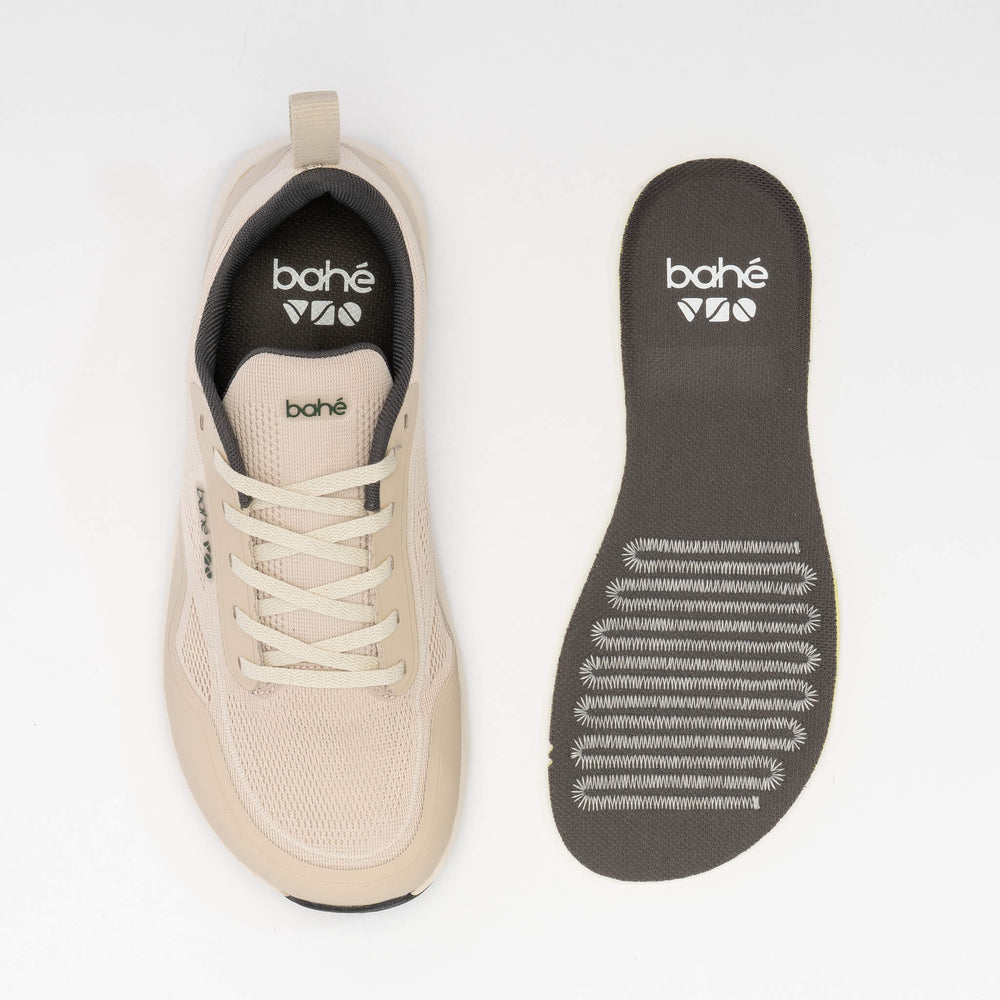
1 - Conductive stitch on removable insole
2 - Strobel board with conductive stitch
3 - Conductive loop through midsole
4 - Conductive additive in outsole
Conductive in accordance with EN ISO 20347:2022. - Making them certified to have close to zero electrical resistance.

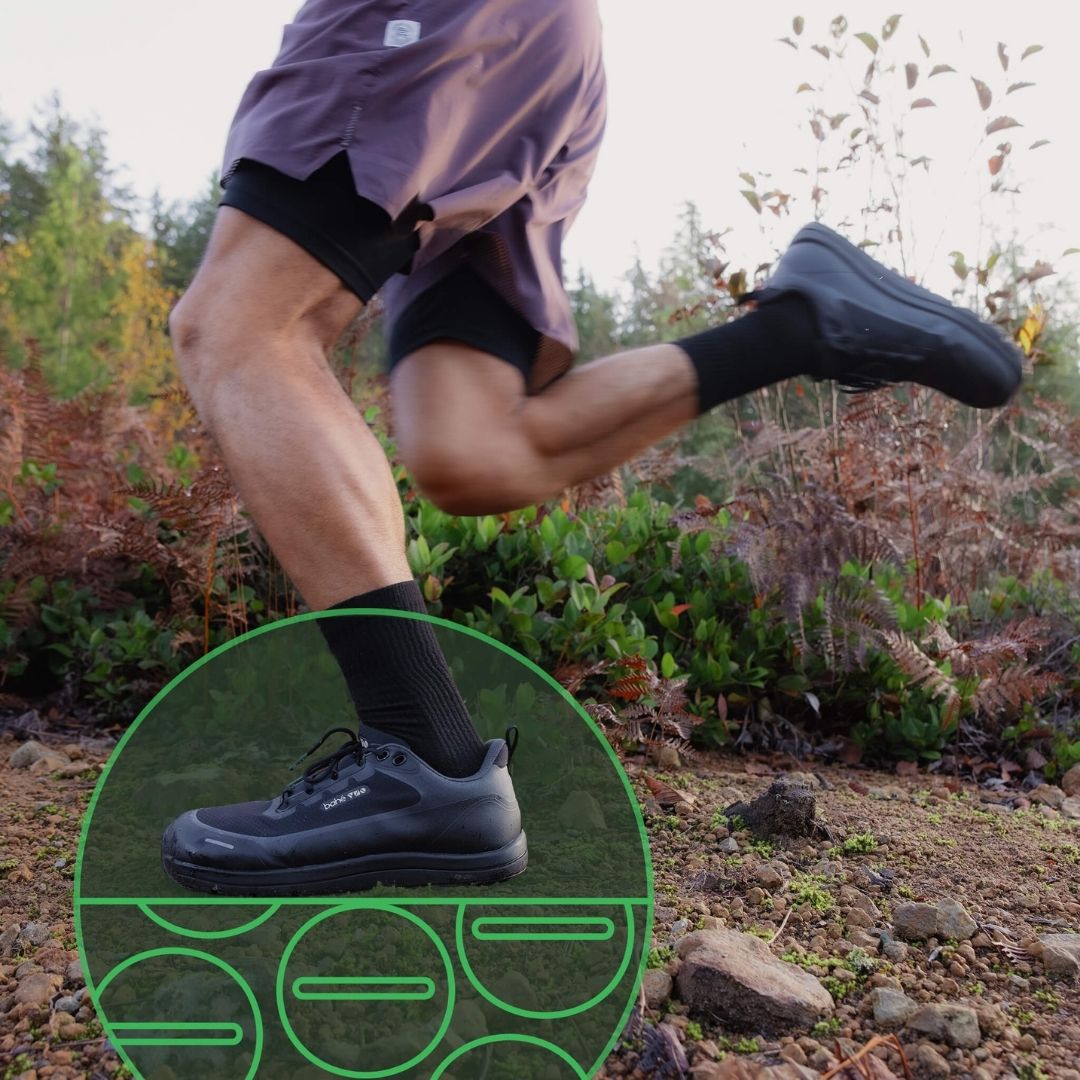
Grounding Surfaces Matter
Grounding opportunities are all around you - it mostly comes down to what you’re standing (or running) on. In the countryside, you’re often on surfaces that are more likely to support grounding. In towns and cities, small route tweaks can help you spend more time on the right kind of ground. Use the guide below to see which surfaces are worth targeting - and which ones to skip.
To be grounded, you need a grounded surface and a continuous conductive path between you, your shoe, and the ground. At Bahé we create this with our Ground Flow System.

Grass

Earth

Sand

Stone

Concrete
Wood

Synthetic

Asphalt
What Surfaces Work For Grounding
| Surface | Grounded? | Extra Information | |
|---|---|---|---|
| 🌿 Grass | ✓ Yes | Usually grounded outdoors. Great for easy daily grounding. | |
|
🌿 Grass Grounded?
✓ Yes
Extra Information Usually grounded outdoors. Great for easy daily grounding. |
|||
| 🏔️ Earth (Soil/Gravel) | ✓ Yes | Typically grounded in nature - avoid sealed, coated, or paved sections. | |
|
🏔️ Earth (Soil/Gravel) Grounded?
✓ Yes
Extra Information Typically grounded in nature - avoid sealed, coated, or paved sections. |
|||
| 🏖 Sand | ✓ Often | Damp sand tends to conduct better than dry sand - nearer the waterline is often best. | |
|
🏖 Sand Grounded?
✓ Often
Extra Information Damp sand tends to conduct better than dry sand - nearer the waterline is often best. |
|||
| 🗿 Stone | ✓ Often | Often grounded if it’s natural stone in contact with the earth - sealants can reduce it. | |
|
🗿 Stone Grounded?
✓ Often
Extra Information Often grounded if it’s natural stone in contact with the earth - sealants can reduce it. |
|||
| 🪨 Concrete | ✓ Often | Often conductive, especially unsealed - coatings and paint can block it. | |
|
🪨 Concrete Grounded?
✓ Often
Extra Information Often conductive, especially unsealed - coatings and paint can block it. |
|||
| 🪵 Wood | ~ Varies | Usually insulates unless living - can be a bit more conductive when wet, but it’s inconsistent. | |
|
🪵 Wood Grounded?
~ Varies
Extra Information Usually insulates unless living - can be a bit more conductive when wet, but it’s inconsistent. |
|||
| 🏃♀️ Synthetic | ✕ Usually Not | Usually not grounded - rubber, plastic and turf tend to insulate. | |
|
🏃♀️ Synthetic Grounded?
✕ Usually Not
Extra Information Usually not grounded - rubber, plastic and turf tend to insulate. |
|||
| 🛣 Asphalt / Tarmac | ✕ Usually Not | Usually more insulating than concrete - it can vary, so don’t rely on it. | |
|
🛣 Asphalt / Tarmac Grounded?
✕ Usually Not
Extra Information Usually more insulating than concrete - it can vary, so don’t rely on it. |
|||
The best way to know if a surface is grounded is to test it.
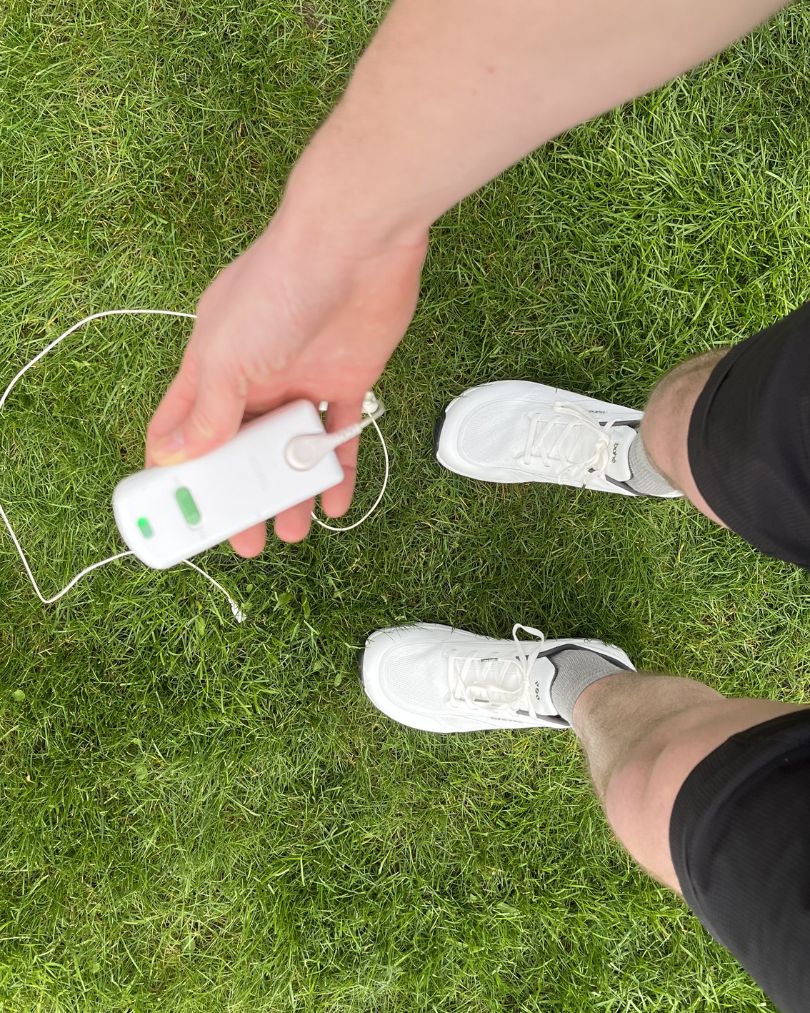
How To Test Grounding Shoes
The electrical connection created by grounding can be demonstrated under the right conditions on grounded surfaces using simple tests. You can test the conductivity of grounding shoes in a few ways, including using a continuity meter or a multimeter.
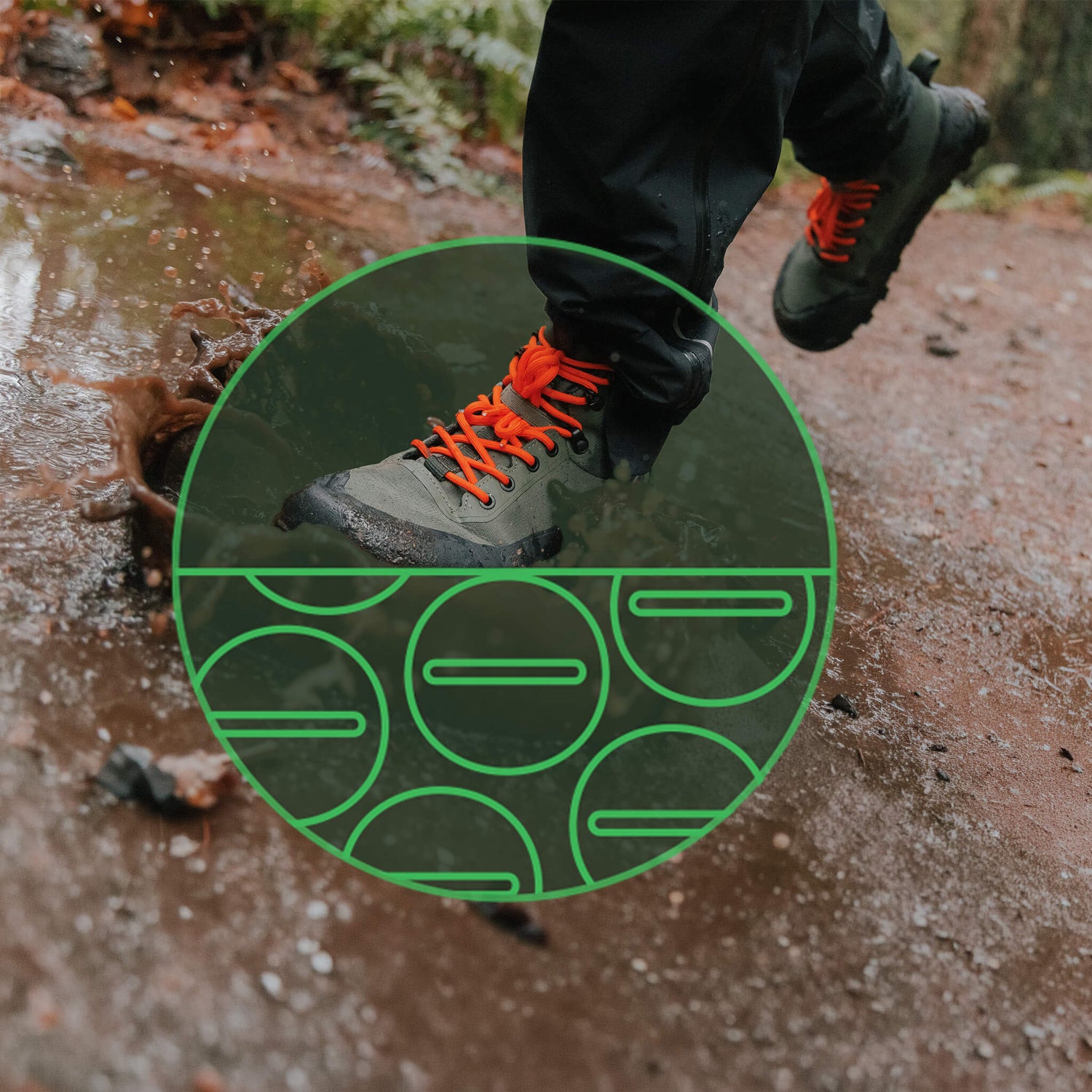
Do Grounding Shoes Work?
Yes - the connection can be tested on grounded surfaces.
Grounding research is genuinely interesting - and it’s still developing. We don’t make medical claims, but we can demonstrate the electrical connection our shoes can provide on grounded surfaces under the right conditions.


Grounding Shoes FAQs
In most cases, wearing regular socks will not prevent you being grounded.
As you move, your feet will perspire and this perspiration will allow for a connection to be made between your foot and the in-soles via your socks.
We’re tested different types of socks and we recommend thinner socks to allow for a connection to be made more quickly, but thicker socks should work fine.
Grounding shoes are designed to provide an electrical connection to the earth when you’re on grounded surfaces - it’s a simple mechanism (connection vs insulation), not a medical intervention.
If you use an implanted medical device (e.g. a pacemaker) or you have a specific health concern, it’s sensible to check with a qualified clinician before changing anything.
And just like any footwear, common-sense electrical safety still applies: avoid hazardous electrical environments and follow local safety guidance.
If there’s a thunderstorm, you’d take the usual precautions anyway. Grounding shoes don’t change that. If there’s lightning risk, head indoors and follow local guidance.
Natural ground outdoors is the simplest place to start. Built surfaces vary - concrete and indoor floors can be grounded or ungrounded depending on construction.
Sometimes, but many indoor floors are ungrounded. We recommend using a grounding mat to remain grounded inside.
In most cases, regular socks will not stop you being grounded. As you move, a little natural perspiration helps create contact between your foot and the insole, even through fabric.
That said, most common sock materials like cotton, wool, and polyester are not conductive, so they can reduce the strength and consistency of the connection.
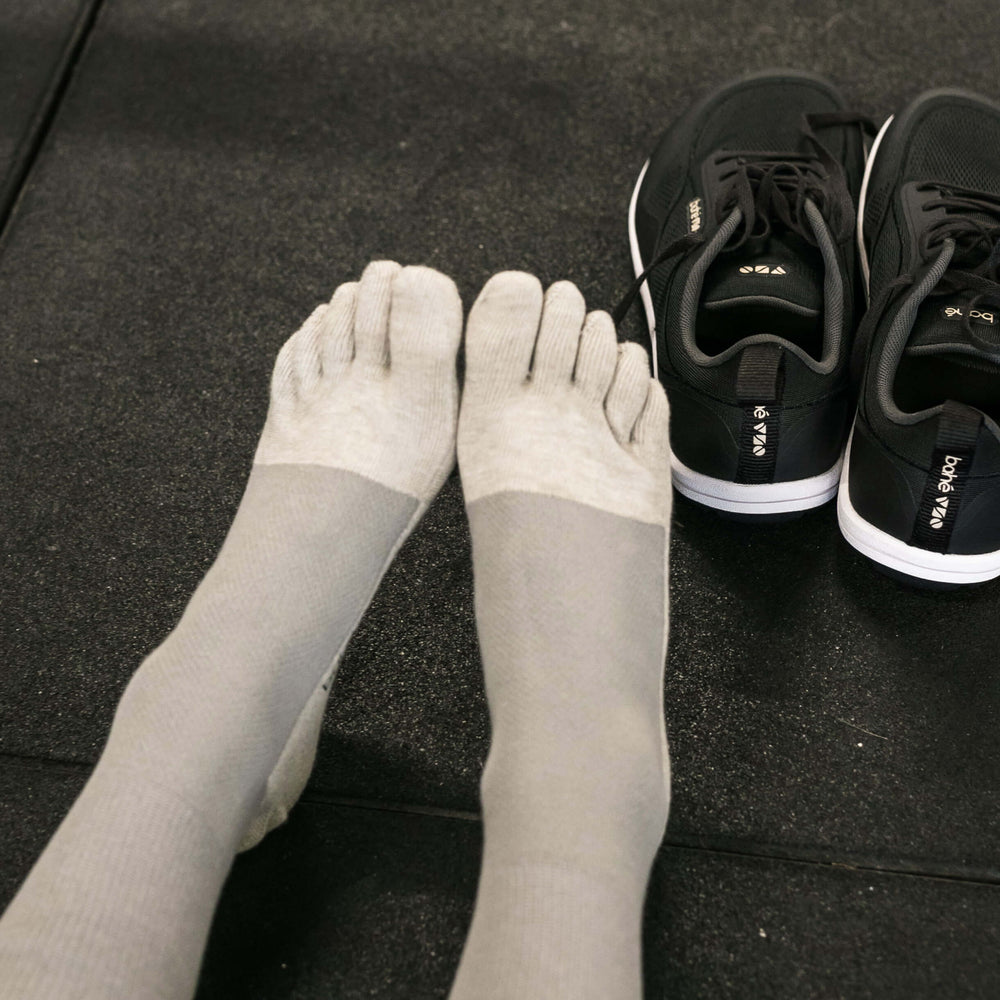
For optimised grounding, use our grounding socks which feature stainless steel yarns which give near perfect conductivity.
It can. Moisture often improves conductivity at the surface level, which is why wet grass or wet earth is a common testing choice.
No - they’re not sold as certified safety footwear. If you need ESD or work-rated protection, choose a product that is explicitly certified for that use.
Our shoes have a removable insole so it is easy to slip an orthotic in.
The grounding technology is in the front of our shoes, so if you have a half length orthotic you'll remain grounded when on the grounded surfaces. If you have a full length orthotic, we recommend wrapping conductive tape around the front of your orthotic to maintain the electrical pathway.
No, this is purely a design detail. The conductive rubber is black, so all other aspects of the sole are in fact conductive.