Can Your Toes Do This? Five Signs Your Feet Need More Space
A simple five-part self-assessment you can do at home right now. Charlie, Head of Movement at Bahé, shares the key signs that your toes need more space - and what to do about it.
Try something right now.
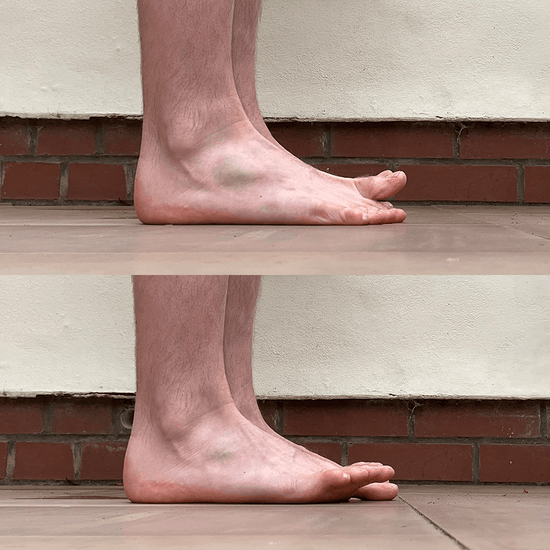
Lift just your big toe off the floor. Keep the other four flat. Now swap - lift the four lesser toes, keep the big toe down.
Most people struggle with this. Some can't do it at all. And that tells you something genuinely useful about the state of your toe function - something most of us have never thought to check.
This post is a simple self-assessment: five things you can test at home, that give you a clearer picture of how much space and freedom your feet actually have. No equipment needed.
Natural foot function depends on toes that can spread, grip, and move with some independence (Nigg, 2010; Kelly et al., 2014).
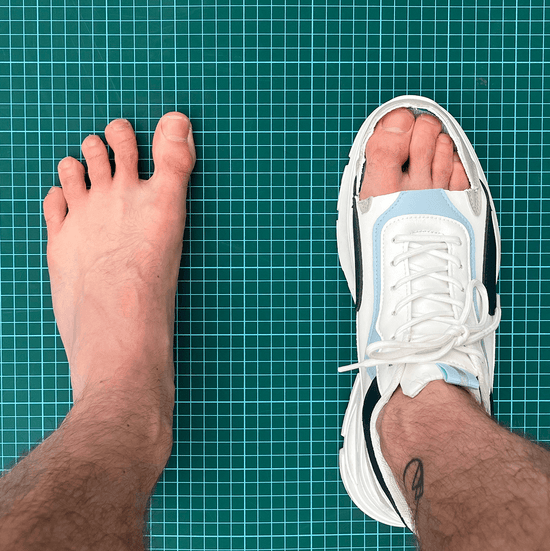
The most common thing that restricts this is simply shoe shape - most conventional shoes narrow toward the front, compressing the toes inward over years of daily wear (Hoffman, 1905; Kinz et al., 2009). Other design features can add to this over time, but the shape is where it usually starts.
The signs of restriction tend to be subtle and easy to miss until you know what to look for - which is exactly what this blog post is for.
If you want to go deeper on the why before diving in, Natural Foot Shape vs Shoe-Shaped Feet and Why Wide Toe Boxes Improve Foot Health cover the full picture. But you don't need to have read those to find this assessment useful.

Lift your big toe while keeping the other four on the floor. Then swap: four up, big toe down.
Good independent toe control means you can do both with reasonable ease. If all your toes tend to move together rather than separately, that's really common in people who've spent most of their time in conventional shoes - the muscles that control individual toe movement just haven't had much practice (Goldmann et al., 2013). The good news is it can be improved with some basic exercises and better day-to-day mobility which can come from wearing more flexible shoes.

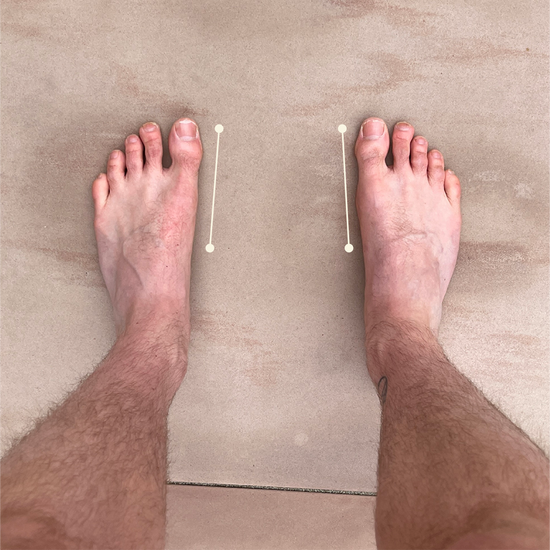
Stand naturally and look down at your feet.
Where is your big toe pointing? In a foot that hasn't been significantly shaped by narrow footwear, the big toe points roughly straight ahead. If it angles noticeably toward the other toes even at rest, that's a sign of gradual adaptation over time (Hoffman, 1905; Kinz et al., 2009) - the kind of drift Lauren covers in Why Wide Toe Boxes Improve Foot Health.
If you notice this, it's worth knowing about - and worth looking to improve.

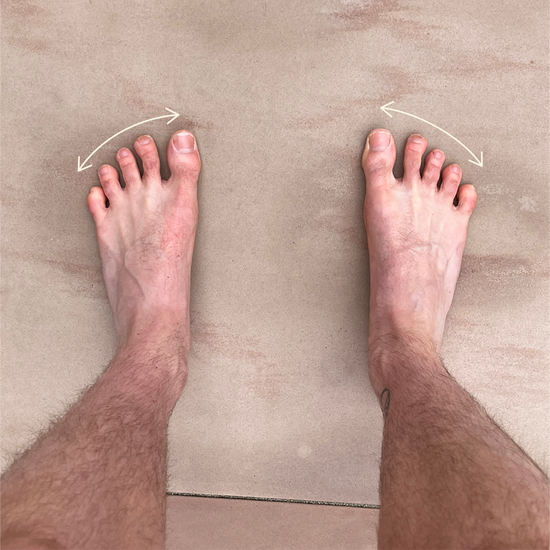
Sit or stand and try to spread all five toes as wide as possible, without curling them or lifting them off the floor.
How wide can you go? Is there visible space between each toe, or do they stay bunched? People who've spent time in foot-shaped footwear or barefoot typically have noticeably more spread (D’Août et al., 2009). Like the toe wave, this is a trainable skill - it just needs the right environment and a bit of consistent practice.

After a normal day of wearing your shoes, take them off and look at your toes.
Are there red marks, pressure lines, or areas of thickened skin along the sides of your toes? These are the physical record of your shoe pushing against your foot over hours and miles - and a useful thing to be aware of (Knapik et al., 2009).

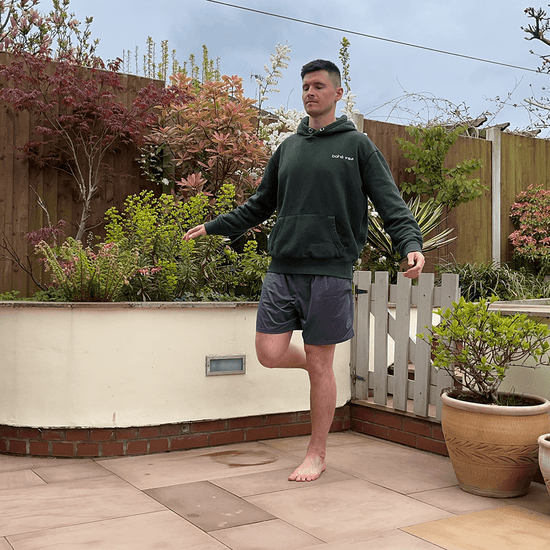
Stand on one foot for 20 seconds. Then try it with your eyes closed.
Balance is a whole-body skill, but the toes play a real role - they grip, adjust, and provide sensory feedback that helps keep you upright (Kelly et al., 2014). People with less toe mobility often find single-leg balance, especially with eyes closed, noticeably harder than expected. Not a definitive test, but a useful signal.
Whatever you found, it's worth taking a note - or even a quick photo or video of the toe wave test - so you have a genuine baseline to come back to. Foot strength and mobility are trainable, and progress becomes really visible when you can see where you started.
With consistent changes in footwear, habits, and exercises, improvements in foot strength and mobility may be seen within weeks in some people but this can vary (Mickle et al., 2016; Ridge et al., 2019). It doesn't require anything drastic. It just requires the right inputs, regularly.
The next post in this series covers exactly those inputs: a straightforward set of exercises designed to restore toe mobility and build foot strength from the ground up. If you want to get started in the meantime, toe spacers can encourage toes toward a more natural spread and may support improvements in toe mobility (Tang et al., 2015; Kim et al., 2020).
Charlie is Head of Movement at Bahé. He blends research with lived experience to help people rebuild strong, functional feet and move with confidence - creating practical movement guidance, transition education, and simple routines people can actually stick to.

Alert me via email when this size/colour becomes available
1 comment
M. Blake
Thanks, I enjoyed taking this quiz even though I didn’t pass with flying colors…in all seriousness, was a helpful, structural, foot health check-in.
Leave a comment