Skip to content

Five Exercises to Restore Toe Mobility and Foot Strength

Bag
0

Five Exercises to Restore Toe Mobility and Foot Strength

Lauren, Head Physio at Bahé, shares five simple exercises to rebuild toe mobility and foot strength - useful for barefoot shoe beginners, anyone transitioning from conventional footwear, or people who want to improve their foot function.

Toe mobilising and strengthening exercises

Whether you've just tried Charlie's five checks from the previous post in this series, or you're simply at the point where you want to do something practical about your foot health, this is a good place to start.

These five exercises are ones I return to regularly - both for people transitioning to foot-shaped footwear and for anyone who wants to rebuild some of the toe mobility and intrinsic foot strength that years in conventional shoes can gradually reduce (Holowka et al., 2018; D’Août et al., 2009). They take less than five minutes. No equipment needed for most of them, though a small towel and an elastic band are useful for a couple.

The most important thing isn't how hard you work on any given day. It's consistency. Your body adapts to the inputs it receives regularly - and feet are no different (Schmidt & Lee, 2019).

Who these exercises are for

These are particularly useful if you are:

  • New to foot-shaped or barefoot-style shoes and want to support your transition
  • Starting to notice some of the signs Charlie described in 'Can Your Toes Do This?'
  • Someone who has spent most of their life in narrow or cushioned footwear and wants to rebuild foot function
  • Dealing with toe stiffness, reduced toe splay, or general foot weakness

If you have a specific foot condition, persistent pain, or a complex foot health history, it's worth getting individual guidance from a podiatrist or physiotherapist before starting. What I share here is general education, not a substitute for professional advice.

The five exercises

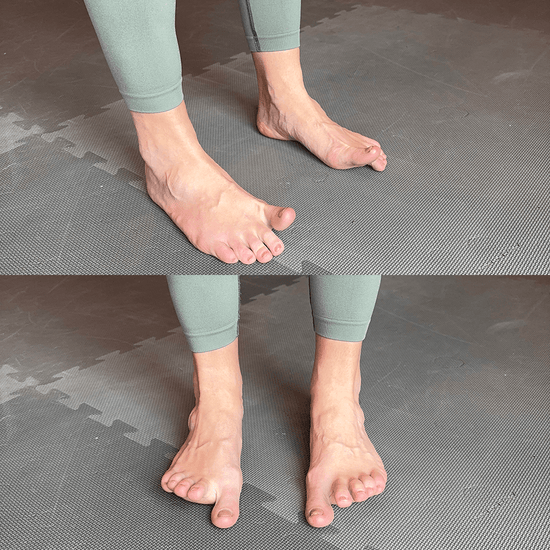
Toe Wave Exercise

1. Toe wave

You'll recognise this from Charlie's self-assessment post. It's also one of the most effective exercises for restoring independent toe control.

Lift your big toe while keeping the other four flat on the floor. Hold briefly, then swap - four toes up, big toe down. Alternate slowly and with intention.

Start with 10 repetitions of each, once or twice a day. It feels strange at first - that's entirely normal. With regular practice, the movement becomes noticeably easier, which is a good sign that the intrinsic muscles are waking up (Kelly et al., 2014).

Toe Splay Exercise

2. Toe splay

Sit or stand with your feet flat on the floor. Spread all five toes as wide as possible without curling or lifting them. Hold for 3-5 seconds, then release.

For an added challenge, place an elastic band around all five toes and spread against the resistance. This works the abductor muscles of the toes - particularly the big toe abductor, which is one of the first muscles to weaken from years of toe compression (Holowka et al., 2018).

Aim for 10-15 repetitions. This is also a useful exercise to do in foot-shaped shoes once you're comfortable with the movement barefoot.

Towel Scrunch Exercise

3. Towel scrunches

Place a small towel flat on the floor. Using only your toes, scrunch the towel toward you - gripping, pulling, and releasing repeatedly. This targets the intrinsic muscles of the foot, which play a key role in arch support and overall foot stability (Kelly et al., 2014; McKeon et al., 2015).

Do this for 30-60 seconds per foot. It's a deceptively tiring exercise if your intrinsic muscles haven't had much practice.

Toe Extensor Exercise

4. Extensor stretch

This one counteracts the effect of toe spring - the upward curve built into most conventional shoes that keeps the toes in a passively raised position over time (Nigg et al., 2016).

Place the top of your toes on the floor so the toes are gently curled downward. Lean forward slightly until you feel a mild stretch across the top of the toes and forefoot. Hold for 20-30 seconds per foot.

This helps restore range of motion in the toe extensors and can feel particularly useful for people coming from shoes with a significant toe spring.

Calf Raise Exercise

5. Calf raise with big toe position elevated

This one works on loading the foot correctly during a common movement.

Place a small rolled towel under your big toe so it sits in a slightly raised position. Perform a calf raise slowly, focusing on pushing through the big toe as you rise. This encourages the correct loading pattern through the first metatarsal and reinforces the big toe's role in propulsion (Hicks, 1954; Zelik & Honert, 2018).

10-15 repetitions per foot. Go slowly - the quality of the movement matters more than the number of repetitions.

Useful tools to complement these exercises

Toe spacers place the toes in a more natural spread position, encouraging a straighter alignment of the big toe, and can be worn during these exercises or at rest. They work particularly well alongside regular movement rather than instead of it.

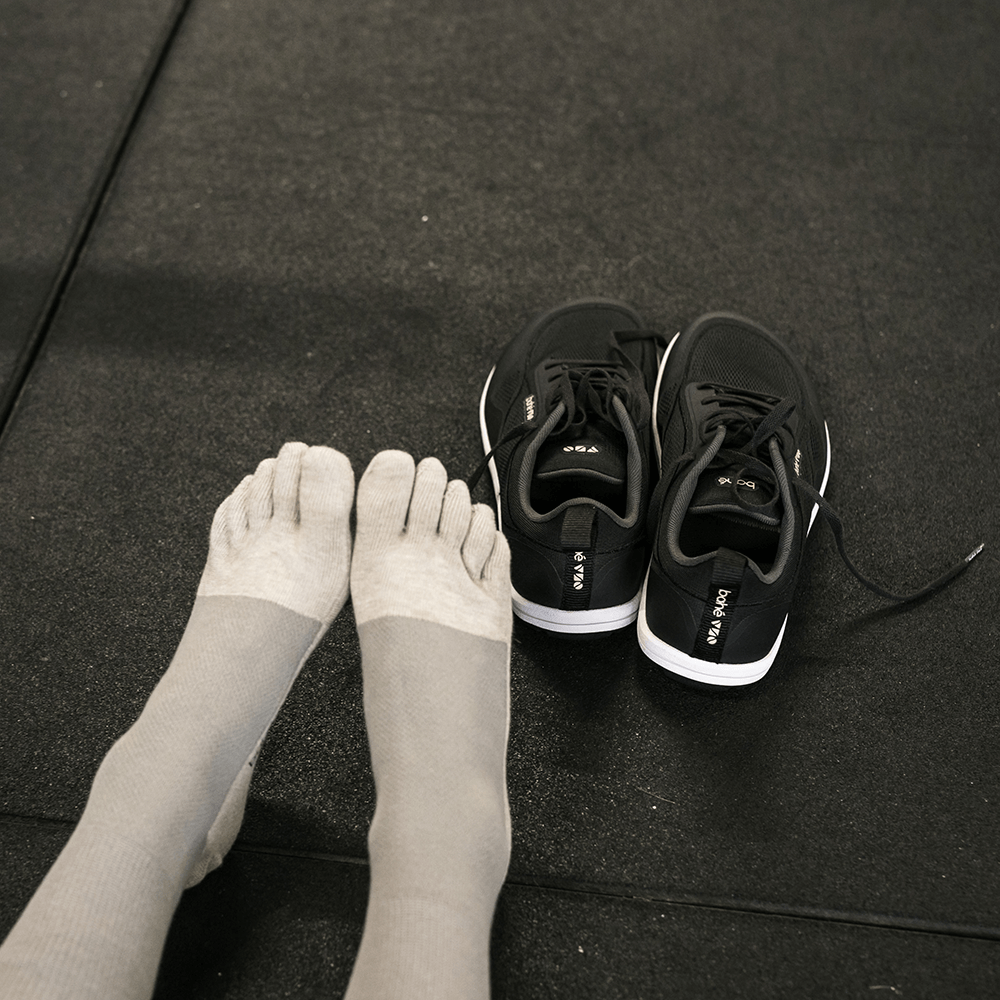
Toe socks encourage individual toe movement and improve sensory feedback from the ground - useful for anyone transitioning to foot-shaped footwear or rebuilding proprioception (Robbins et al., 1995).

Neither is a substitute for the exercises, but both are practical additions to a consistent routine.

How to make progress

Do these exercises daily if you can - even just a few minutes at a time adds up. Compare back to your starting baseline from Charlie's checks in 'Can Your Toes Do This?' after four to six weeks. Many people may notice a real difference in toe independence and spread when they look back at where they started.

Progress gradually. If you're also transitioning to foot-shaped footwear, don't change everything at once - give your feet time to adapt to new footwear demands at the same time as rebuilding strength.

Your body has an innate capacity to adapt, given the right inputs. Consistency is what makes the difference.


Lauren is Head Physiotherapist at Bahé. She focuses on load management, adaptation, and translating biomechanics into practical guidance - calm, clear, and grounded in real life.

Person adjusting toe spacers

Spread Your Toes

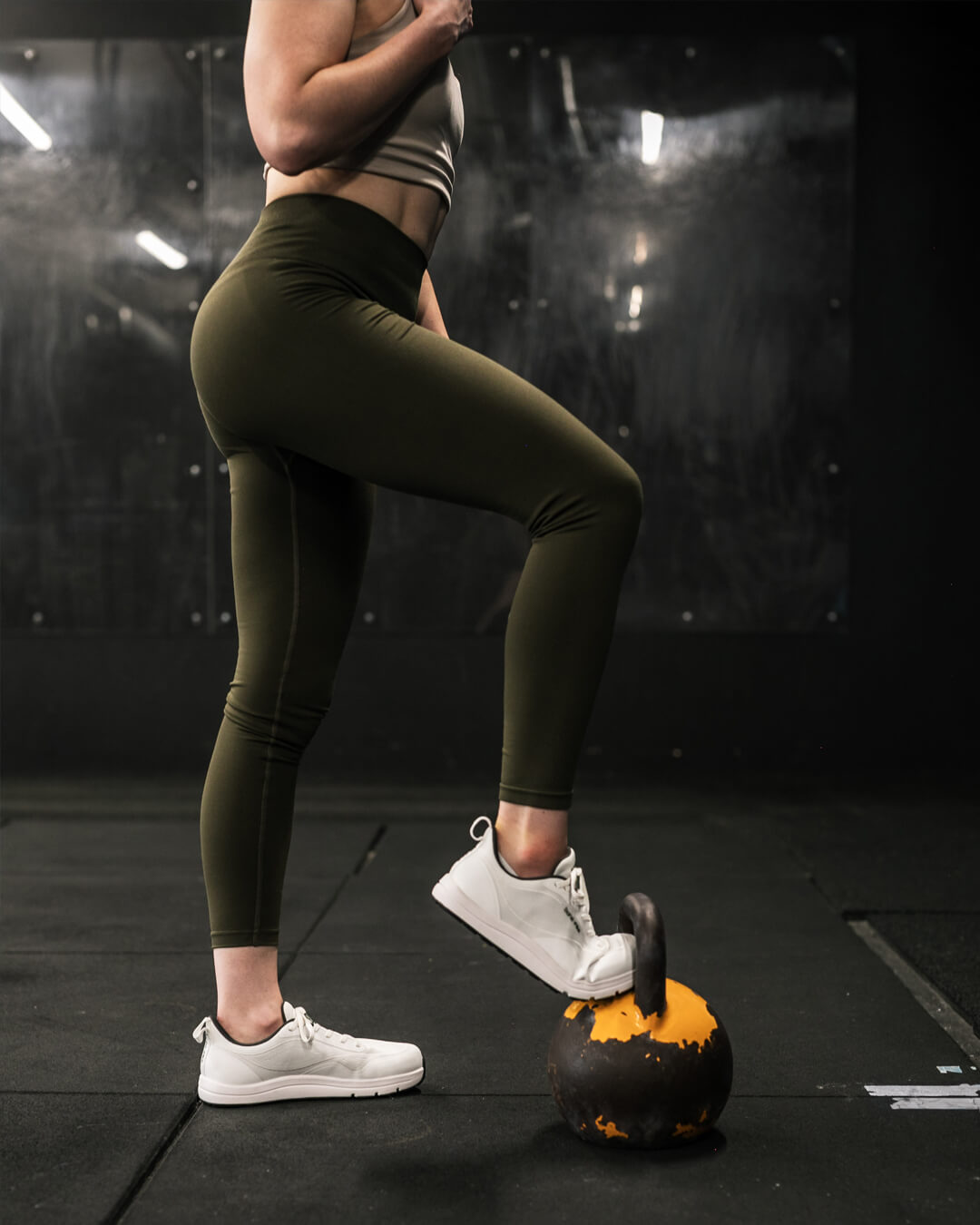
someone wearing bahé toe socks in the gym, with a pair of Bahé modes to the right of her feet.

Let Your Toes Move

References

  1. D’Août, K. et al. (2009). The effects of habitual footwear use: foot shape and function in native barefoot walkers. Footwear Science. Read the article

  2. Hicks, J.H. (1954). The mechanics of the foot II: The plantar aponeurosis and the arch. Journal of Anatomy. Read the article

  3. Holowka, N.B. et al. (2018). Foot callus thickness does not trade off protection for tactile sensitivity during walking. Nature. Read the article

  4. Kelly, L.A. et al. (2014). Intrinsic foot muscles have the capacity to control deformation of the longitudinal arch. Journal of The Royal Society Interface. Read the article

  5. McKeon, P.O. et al. (2015). The foot core system: a new paradigm for understanding intrinsic foot muscle function. British Journal of Sports Medicine. Read the article

  6. Nigg, B.M. et al. (2016). The influence of shoe construction on foot mechanics. Footwear Science.

  7. Robbins, S. et al. (1995). Athletic footwear affects balance in men. British Journal of Sports Medicine. Read the article

  8. Schmidt, R.A. & Lee, T.D. (2019). Motor Learning and Performance. Human Kinetics. Read the article

  9. Zelik, K.E. & Honert, E.C. (2018). Ankle and foot power in gait. Journal of Biomechanics. Read the article

Leave a comment

Please note, comments need to be approved before they are published.

Alert me via email when this size/colour becomes available