Switching to barefoot shoes? Build calf-Achilles strength safely
Why zero-drop shoes can make calves and Achilles sore, what’s normal during transition, warning signs to watch for, and how heel lifts can help.
Switching to zero-drop shoes can make your calves feel sore because your heel and forefoot are now level. That changes the load through your calves and Achilles - especially if you are used to raised-heel shoes.
This is not a sign that zero-drop is wrong for you. Most of the time, it means your lower legs are doing more of their natural job again and need time to adapt.
Start with short walks, keep harder sessions familiar at first, and build time gradually. A mild “worked” feeling that settles within 24-48 hours is usually manageable. If soreness builds across days, changes how you walk, feels sharp, or creates persistent morning Achilles stiffness, scale back and get individual guidance if needed.
This guide explains why it happens, what is normal, when to scale back, and how to transition with more confidence.
Your Achilles tendon is the thick band connecting your calf muscles to your heel bone. Think of it like a strong elastic strap, it stores and returns energy with each step, especially during faster walking and running.
Your calf consists mainly of two muscles:
Gastrocnemius
The larger superficial muscle visible under the skin.
Soleus
A deeper muscle specialised for steady, repetitive work such as walking and running.
Together they control ankle movement and help you push off the ground efficiently.
When you move into flatter, zero-drop shoes, these tissues often have two jobs at once:
This happens because your heel is no longer held in a raised position.
If these tissues have been relatively underused for years, they can feel “surprised” at first. That doesn’t necessarily mean something is wrong, it usually means they are adapting to new loading patterns.

In most conventional running shoes, the heel is raised. This changes the starting position of the ankle and reduces how much range the calf–Achilles system needs to control.
With zero-drop shoes:
Short-term soreness can occur when tendons experience increased mechanical loading during adaptation (Cook & Purdam, 2009; Gabbett, 2016).
The key is giving tissues time to adapt.
The body can be thought of as a tensegrity structure; a system where tension and compression distribute load across the whole structure.
When you change something like heel height, the load doesn’t only change in one place. It redistributes through:
That’s why changing footwear can sometimes feel like a bigger adjustment than expected.
Walking in barefoot-style shoes is often easier to tolerate because forces are lower and movement is slower.
Running involves:
That means tissues have to absorb and release load more quickly, which is why calves and Achilles often feel the change more during running.

Early soreness during transition is usually related to load change, not necessarily poor technique.
However, technique adjustments can make the transition smoother.
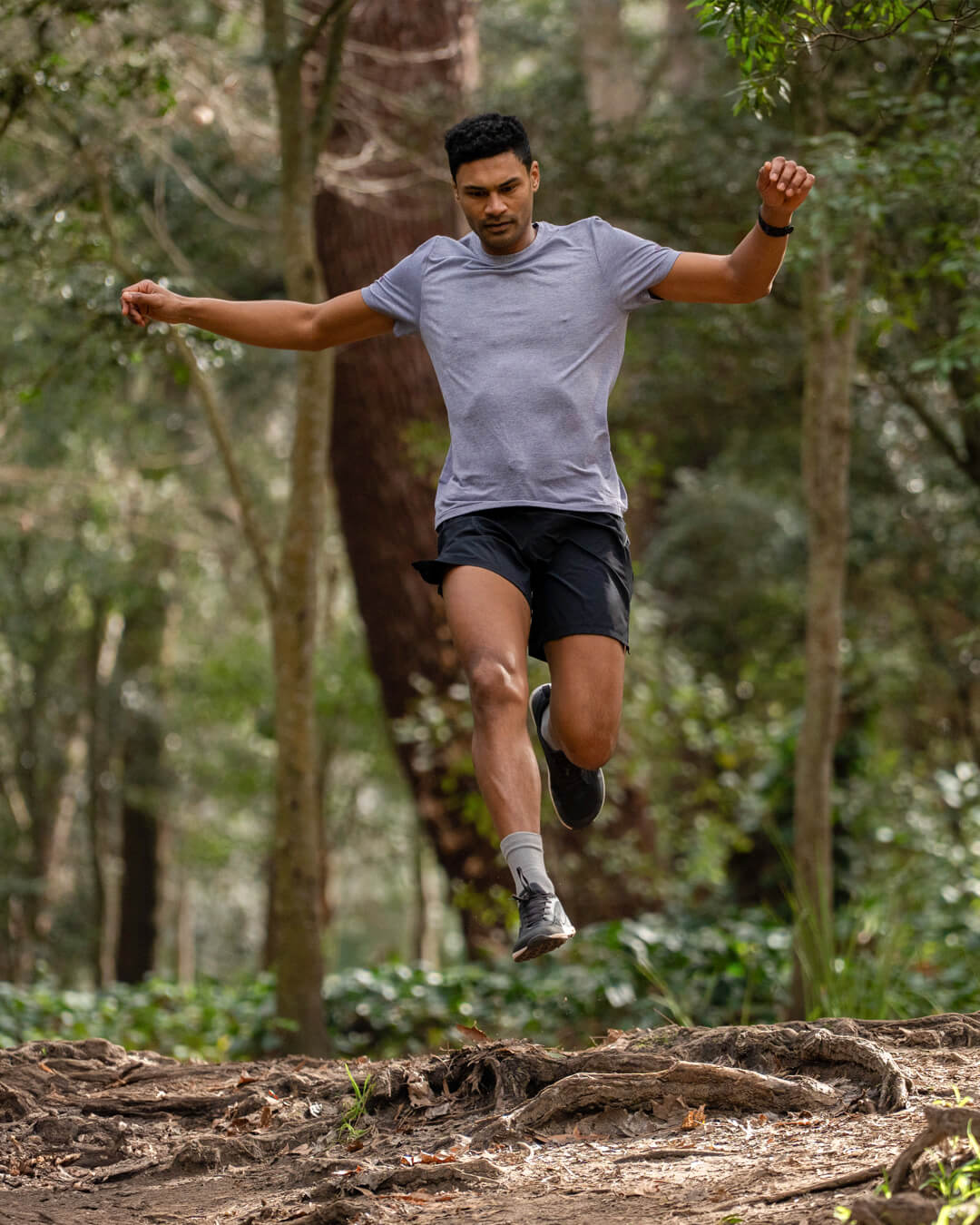
In barefoot-style running, heavy heel striking combined with overstriding (landing far in front of the body) can feel harsh because there is less cushioning and heel lift.
Helpful adjustments often include:
Some runners naturally shift toward a more midfoot contact when they reduce overstride, but forcing a specific foot strike is usually unnecessary.
The goal is smooth, repeatable movement.

Common early adaptation responses include:
These often settle within 24–48 hours and do not worsen week to week. However, certain symptoms may indicate tendon overload.
Ease back if you notice:
These patterns are recognised warning signs of Achilles tendon overload or tendinopathy (Cook & Purdam, 2009; Malliaras et al., 2013). If pain becomes persistent or severe, individual clinical assessment is recommended (Martin et al., 2018; Maffulli et al., 2020).
A common mistake is assuming cardiovascular fitness equals tissue readiness.
You might be aerobically fit while your calf–Achilles capacity still needs time to adapt.
Simple principles that work well in practice:
Start with walking or casual wear before adding running.
Change one variable at a time:
Allow recovery between early running sessions.
If your calves take more than a day or two to settle, you likely increased load too quickly.
Research suggests injury risk during minimalist footwear transition is strongly linked to rapid changes in training load rather than footwear itself (Fuller et al., 2015; Warne & Gruber, 2017).

If zero-drop feels like a big jump, heel lifts can help bridge the gap.
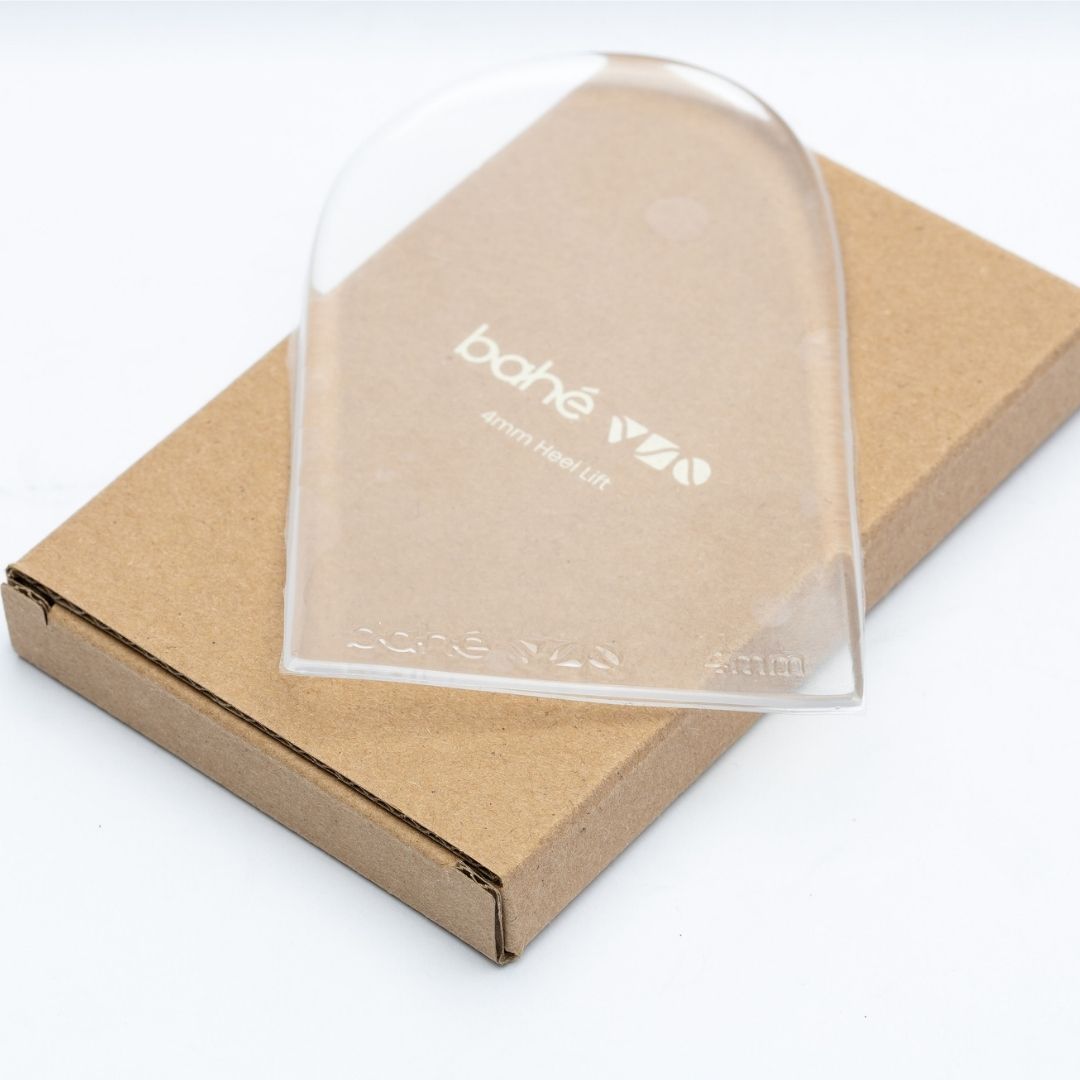
Our heel lifts raise the heel by 4 mm inside the shoe, reducing how much ankle range the calf–Achilles system must manage initially.
If needed, two lifts can be stacked to create 8 mm, which often feels closer to conventional trainers.
As adaptation improves, you can gradually step down:
8 mm → 4 mm → none
For a full explanation:

Progress gradually and start where your body feels most comfortable.
Endurance: usually the easiest place to begin.
Adapt: the balanced middle ground.
Flex: best once your calves and Achilles tolerate the load comfortably.
Not sure where to start? Take our Quiz
Zero-drop footwear does not inherently cause injury. Rapid transitions and sudden increases in loading are more commonly responsible. (Fuller et al., 2015; Warne & Gruber, 2017).
If you progress gradually, your calves and Achilles can rebuild strength and resilience over time.
Consistency and patience usually matter more than speed of transition.
Why do my calves hurt after switching to zero drop shoes?
Calf soreness often occurs because zero-drop shoes increase how much work the calf muscles and Achilles tendon must perform. The tissues may need time to adapt to increased ankle range and loading.
Is Achilles soreness normal when transitioning to barefoot shoes?
Mild, short-lived soreness can occur as tendons adapt to new loading patterns. However, worsening pain, swelling, or persistent morning stiffness may indicate overload and should be monitored.
How long does it take to adapt to zero drop shoes?
Adaptation time varies but commonly takes several weeks to a few months depending on training load, prior footwear, and individual tissue capacity.
Should I stop running if my Achilles hurts?
Mild soreness that settles within 24–48 hours may be manageable, but worsening or persistent pain should be assessed and training load reduced.
Can heel lifts help transition to barefoot shoes?
Heel lifts can temporarily reduce ankle range and tendon loading, helping some runners transition gradually before moving to full zero drop.
Lauren is Head Physiotherapist at Bahé. She focuses on load management, adaptation, and translating biomechanics into practical guidance - calm, clear, and grounded in real life.
Cook, J. L., & Purdam, C. R. (2009). Is tendon pathology a continuum? A pathology model to explain the clinical presentation of load-induced tendinopathy. British Journal of Sports Medicine, 43(6), 409–416. Read the Article
Fuller, J. T., Thewlis, D., Tsiros, M. D., Brown, N. A. T., & Buckley, J. D. (2015). Minimalist shoes and running-related injury: a systematic review and meta-analysis. British Journal of Sports Medicine, 49(6), 349–355. Read the Article
Gabbett, T. J. (2016). The training–injury prevention paradox: should athletes be training smarter and harder? British Journal of Sports Medicine, 50(5), 273–280. Read the Article
Malliaras, P., Barton, C. J., Reeves, N. D., & Langberg, H. (2013). Achilles and patellar tendinopathy loading programmes: a systematic review comparing clinical outcomes and identifying potential mechanisms. Sports Medicine, 43(4), 267–286. Read the Article
Martin, R. L., Chimenti, R., Cuddeford, T., et al. (2018). Achilles pain, stiffness, and muscle power deficits: Midportion Achilles tendinopathy clinical practice guideline. Journal of Orthopaedic & Sports Physical Therapy, 48(5), A1–A38.
Read the Article
Maffulli, N., Longo, U. G., Kadakia, A., & Spiezia, F. (2020). Achilles tendinopathy. Foot and Ankle Surgery, 26(3), 240–249.
Read the Article
Warne, J. P., & Gruber, A. H. (2017). Transitioning to minimal footwear: a systematic review of methods and future clinical recommendations. Sports Medicine – Open, 3(1), 33. Read the Article
Alert me via email when this size/colour becomes available
Leave a comment