Skip to content

Why cushioned shoes can feel “numbing” - sensory feedback explained

Bag
0

Do cushioned shoes numb your feet? Sensory feedback explained (and how to rebuild it)

Takeaway: Your feet respond to the input you give them. If your shoes blur that input, you can usually bring it back with thinner footwear - plus a few small, consistent foot drills.


Sensory feedback is the information your brain gets from your feet: pressure, texture, tiny balance shifts, and how your toes and arch are loading the ground. It’s basically your body’s built-in guidance system for walking, running, lifting, hiking - everything.

My stance is pretty straightforward: your feet aren’t fragile, they’re adaptive. Give them clearer input, at the right dose, and they tend to respond.

One important boundary before we get rolling: true numbness (pins and needles, sudden loss of sensation, anything that feels concerning or new) is a different conversation and worth getting checked.

67943322780032

Do cushioned shoes numb your feet?

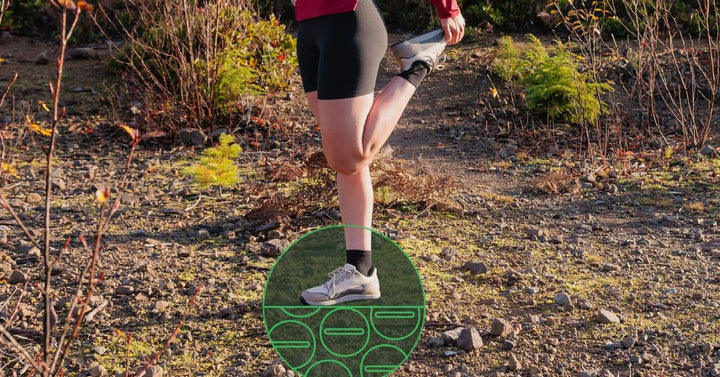
Often, yes - but usually not in a scary “your nerves are broken” way. More like a signal quality thing.

Thick cushioning can make the ground feel quieter. (Nurse et al., 2005; Robbins & Waked, 1997)

And when the ground gets quieter, your nervous system has less detail to work with. (Meyer et al., 2004; Peterka, 2002)

A few common trade-offs:

  • The details get softened. You still feel contact, but it’s less precise.
  • Stability can get outsourced. When the base is soft and high, your body may do less of its own stabilising work. (Nurse et al., 2005; Peterka, 2002)
  • You get less ground feedback. That can matter for balance, coordination, and how confidently your foot loads the ground. (Kavounoudias, Roll & Roll, 1998; Meyer et al., 2004)

People call this “numb feet” all the time. Most of the time it’s really: duller input, less awareness.

And your body does what bodies do - it adapts to whatever you give it.

67943322714496

"Your feet are a sensory organ. When the signal is constantly dampened, your nervous system has less information to work with for balance and coordination.”

Eider Perez, Podiatrist & Posturologist

67943322648960

What is sensory feedback and why does it matter?

Think of sensory feedback like a live map.

Every step gives your brain info about:

  • where your weight is
  • whether you’re wobbling, turning, or collapsing inwards
  • what your toes are doing
  • how stable the ground is

When the map is clear, movement tends to feel smoother and more confident.

When the map is blurry, your body still finds a way - but it often leans on bigger, stiffer strategies without you realising, like:

  • gripping through the hips
  • bracing through the knees
  • avoiding toe use because it feels unstable
  • moving louder and heavier

That’s why changing shoes can feel like turning the volume up.

What are the benefits of thinner shoes?

When you introduce thinner, flatter, more flexible footwear gradually, people tend to notice a few practical shifts.

Clearer “feel” underfoot

Clearer “feel” underfoot

More honest feedback can help you move with more awareness - especially for balance work, lifting, and outdoor movement.

A more predictable base

A more predictable base

For a lot of training, stable doesn’t mean stiff. It means not squishy. A flatter platform often feels easier to control.

Toes getting involved

Toes getting involved

If your shoes let toes spread and flex, many people start to feel their feet doing more of the job again.

Here’s the boundary that keeps this honest:

Less cushioning can feel harsher to begin with and that’s OK. It doesn’t mean you’re doing it wrong. It just means you’re noticing more. (Ridge et al., 2013)

How to transition without overdoing it

The mistake usually isn’t thinner shoes. It’s changing the input too fast.

A helpful way to think about it is cushioning as a dial - more cushioning is usually easier to tolerate for longer, and more ground feel usually needs a bit more patience.

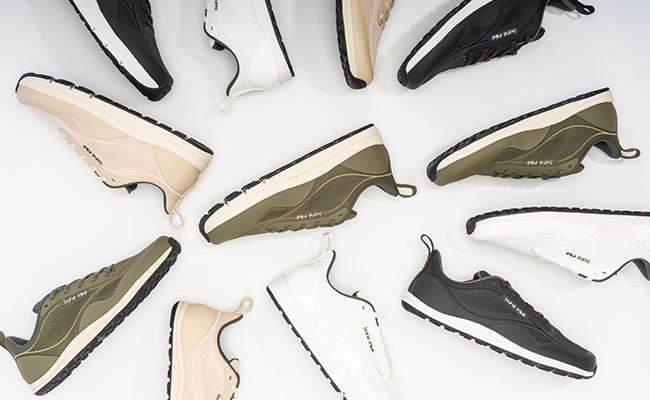
With Bahé, think of our Modes as the same dial - Endurance gives you more cushioning, Adapt sits in the middle, and Flex is for more ground feel as you build tolerance.

Endurance -> Adapt -> Flex is the progression that tends to make sense for most people.

67943322616192

Start here (pick the lane that matches you today):

If you’re starting in Endurance (more cushioning)

  • Aim for 60-120 minutes in normal daily life (walks, errands, commute)
  • Keep it easy for a few days, then add a little more time
  • Add intensity later (longer walks, hills, training)
67943322452352

If you’re in Adapt (middle ground)

  • Start with 45-90 minutes a day
  • Build time first, then intensity
  • If you’re training, use this for warm-ups and easy sessions first
67943322583424

If you’re moving into Flex (most ground feel)

  • Start with 20-45 minutes a day (or split it into 2 x 15-25 minutes)
  • Think exposure, not performance at first
  • Add time gradually once you’re reliably fine the next day

The rules that keeps this on track:

  • Increase time before intensity (Magnusson & Kjaer, 2019; Silbernagel et al., 2007)
  • If soreness builds across days, reduce the dose (time or intensity) and keep the habit
  • A good sign you can progress is feeling normal again the next day

Progression beats purity. Every time.

If you’re interested in what might suit you: Take the quiz to find a sensible starting point.

67943322747264

What foot exercises improve sensory feedback?

Shoes are one input. Practice is the other.

If you want this to stick, pick a tiny routine you can repeat. Six minutes is enough if you actually do it.

If you’re using our SoleMate, treat it as your consistent setup for these drills - same feel, same practice, less overthinking. (You can do these without it too.)

The 6-minute “reawaken the feet” routine (3-5x per week)

  1. Tripod stand
    Duration: 60 sec
    How to: Stand tall, soft knees. Feel 3 points - heel, base of big toe, base of little toe. Hold steady and breathe.
    Watch out: Don’t claw toes or roll to the outside edge.

2. Toe lift switches
Duration: 60 sec total (5-8 reps each pattern)
How to: Keep foot flat. Lift big toe while 4 toes stay down - then switch (4 up, big toe down). Slow and controlled.
Watch out: Don’t twist the ankle to cheat. Awkward is normal.

3. Short-foot arch raise
Duration: 60 sec (6 rounds of 5 sec on - 5 sec off)
How to: Keep toes long and down. Gently lift the arch by drawing the ball of the foot slightly towards the heel (tiny movement).
Watch out: If toes curl, you’re gripping - make it smaller. (Mulligan & Cook, 2013; Kelly et al., 2014)

4. Slow calf raises
Duration: 90 sec (10-15 slow reps)
How to: Rise up in 3 sec, pause 1 sec, lower in 3 sec. Keep weight spread across the tripod.
Watch out: No bouncing. Don’t let ankles roll out at the top. (Magnusson & Kjaer, 2019; Silbernagel et al., 2007)

5. Single-leg balance with head turns
Duration: 60 sec (30 sec each side)
How to: Stand on one foot near a wall. Turn head left-right slowly 6-10 times while staying tall. Switch sides.
Watch out: Don’t grip toes hard or rush the head turns.

6. Quiet steps
Duration: 60 sec (10-20 slow steps)
How to: Take short, slow steps and aim to land quieter - smooth roll-through, not a stomp.
Watch out: Don’t tiptoe or overstride - both usually make you louder.

“When people reduce cushioning, the safest wins come from gradual exposure and building tissue tolerance before adding intensity.” If pain is persistent, severe, or you’ve got a complex history, it’s worth getting individual assessment. What I share here is general education, not diagnosis.

Eider Perez, Podiatrist & Posturologist

Next steps

If you want the terminology made simple (zero-drop, foot-shaped, stack height, flexibility) and what to look for, start here:

Barefoot shoes explained

And if you want a quick way to get a personalised starting point for Revive or Rewild (including Modes), take the quiz:

Take the quiz - find your starting point

If you’re already a Bahé wearer and you’re curious about working towards more ground feel over time, Flex can be a great goal - just treat it like training: dose first, intensity later.

Mini FAQ

Are cushioned shoes bad for your feet?
Not automatically. Cushioning can be useful. The trade-off is that very thick, soft shoes can make feedback less precise for some people.

Why do my calves feel tight when I wear flatter or thinner shoes?
Often because the input has changed and your calf-Achilles system is working differently. Reduce the dose and build gradually.

How thin should my shoes be?
Start with what you can wear consistently without building soreness across days. Thinner is not automatically better if you can’t tolerate it yet.

How often should I do foot exercises?
Ideally 3-5 times a week - but honestly, anything is better than nothing. Even 2-3 short sessions makes a difference if you’re consistent. If you do them daily, keep the dose small so you still feel good the next day.

What’s a good sign I’m progressing safely?
You feel normal again the next day. If soreness accumulates across days, scale back and rebuild.


Charlie is Head of Movement at Bahé. He blends research with lived experience to help people rebuild strong, functional feet and move with confidence - creating practical movement guidance, transition education, and simple routines people can actually stick to.

References

Kavounoudias, A., Roll, R., & Roll, J.-P. (1998). The plantar sole is a “dynamometric map” for human balance control. NeuroReport, 9(14), 3247–3252. Read the Article

Meyer, P. F., Oddsson, L. I. E., & De Luca, C. J. (2004). Cutaneous plantar stimulation alters postural control in humans. Neuroscience Letters, 369(1), 29–33. Read the Article

Strzalkowski, N. D. J., Peters, R. M., Inglis, J. T., & Bent, L. R. (2018). Cutaneous afferent innervation of the human foot sole: what can we learn from single-unit recordings? Journal of Neurophysiology, 120(2), 542–565. Read the Article

Nurse, M. A., Hulliger, M., Wakeling, J. M., Nigg, B. M., & Stefanyshyn, D. J. (2005). Changing the texture of footwear can alter gait patterns. Journal of Biomechanics, 38(6), 1243–1249. Read the Article

Robbins, S. E., & Waked, E. (1997). Balance and vertical impact in sports: role of shoe sole materials. Archives of Physical Medicine and Rehabilitation, 78(5), 463–467. Read the Article

Peterka, R. J. (2002). Sensorimotor integration in human postural control. Journal of Neurophysiology, 88(3), 1097–1118. Read the Article

Ridge, S. T., Johnson, A. W., Mitchell, U. H., et al. (2013). Foot bone marrow edema after a 10-week transition to minimalist running shoes. Medicine & Science in Sports & Exercise, 45(7), 1363–1368. Read the Article

Magnusson, S. P., & Kjaer, M. (2019). The impact of loading, unloading, ageing and injury on the human tendon. The Journal of Physiology, 597(5), 1283–1298. Read the Article

Silbernagel, K. G., Thomeé, R., Thomeé, P., & Karlsson, J. (2007). Eccentric overload training for patients with chronic Achilles tendinopathy: a randomized controlled study. The American Journal of Sports Medicine. Read the Article

Mulligan, E. P., & Cook, P. G. (2013). Effect of plantar intrinsic muscle training on medial longitudinal arch morphology and dynamic function. Journal of Athletic Training, 48(2), 156–163. Read the Article

Kelly, L. A., Lichtwark, G., & Cresswell, A. G. (2014). Intrinsic foot muscles have the capacity to control deformation of the longitudinal arch. Journal of the Royal Society Interface, 11(93). Read the Article

Leave a comment

Please note, comments need to be approved before they are published.

Alert me via email when this size/colour becomes available