Skip to content

Designing Shoes That Respect the Human Foot

Bag
0

Designing Shoes That Respect the Human Foot

Takeaway: The story behind the development of our thinking around barefoot-style shoes, starting from the Revive Original and culminating in our Modes concept.


I’ve been designing and developing footwear for around 20 years, and every shoe I’ve worked on has meant a lot to me. Opening the box when the first sample arrives from our production partner still feels like Christmas Day. But it’s rare that one product genuinely changes your opinions about how shoes should be made.

Revive Original did that for me. It was a proper lightbulb moment - not because it was perfect, but because it forced us to ask better questions about feet, loading, and how people actually transition into more natural footwear in real life.

67754533814656

What does ‘barefoot-fit’ actually mean (and what it doesn’t)?

‘Barefoot-fit’ is easy to misunderstand. It’s not about being hardcore. It’s not about ditching all cushioning overnight. And it’s definitely not a moral badge.

For us, it’s a set of design principles that aim to let the foot do more of what it’s designed to do:

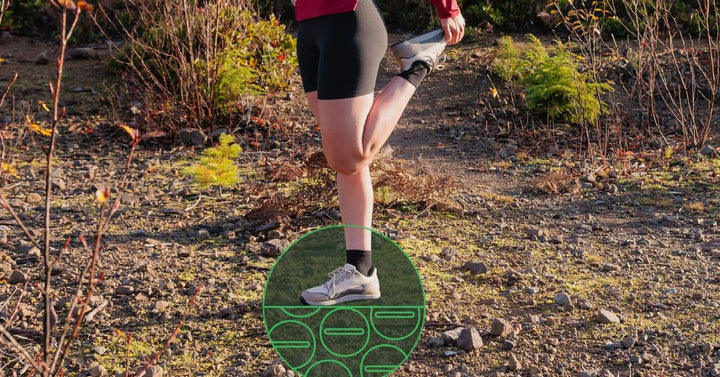
  • Foot-shaped toe box so toes have space (rather than being compressed together).
  • Flexible sole so the shoe can move with you.
  • Level platform (no raised heel) to avoid tipping you forward by default.

People experience this differently. Some feel an immediate sense of freedom. Others need time, a gentler starting point, or a more structured progression - especially if they’ve spent years in stiff, narrow, raised-heel footwear.

67754540237184

My story before Bahé

Before I’d even considered designing shoes as a career, feet were already a big part of my life.

As a kid I was diagnosed with a bone fusion in both feet. It didn’t stop me doing the things I loved, but it did limit how much I could do them and I’d often pay for it afterwards with days of pain. I had two major foot surgeries as a teenager, and afterwards I still dealt with pain and limitation.

Like a lot of people, the advice I heard most often was some version of: more support, more cushioning.

67754540368256

What I learned inside the footwear industry

Fast forward to my introduction to the world of footwear design. It’s a fascinating industry to work in. The skill that goes into creating footwear is unbelievable, there are countless components, processes and materials needed to create these items that are then responsible for looking after your body through thousands of steps in all kinds of conditions.

This requires a range of people from last makers, material suppliers, pattern engineers, stitchers - people with incredible skills and experience.

67754540466560

What’s missing in mainstream shoes (and why the foot matters)

What I didn’t fully understand at the time is that there was - and still is - a big gap in how the industry thinks. We design brilliantly around the shoe: the materials, the construction, the finish, the story. But we don’t always design deeply enough around the foot itself - how it’s shaped, how it wants to move, and how it shares load over thousands of steps.

Most mainstream shoes end up with the same defaults: stiff soles, narrower toe boxes, raised heels. Those choices can feel stable and familiar, especially if you’ve worn them for years. But that stability usually comes from the shoe doing more of the work - holding shape, controlling motion, propping you up. Over time, that can teach the foot to rely on structure instead of contributing itself - spreading, flexing, sensing the ground, sharing load. Then ‘comfort’ becomes ‘more support’, and the foot can start to lose some of the function it’s built for.

That’s the gap in the industry. It’s time we put the foot back at the centre of footwear design.

67842462876032

Why Revive Original changed our design approach

When we set out to create Revive Original, we had to face the uncomfortable truth: we could keep refining “comfort” inside the same template - or we could redesign the template.

We didn’t start Bahé as a barefoot-fit brand. In some ways I regret not starting there. In other ways I’m proud we changed course, because it meant we learned first-hand what transition actually looks like - including the doubts, the missteps, and the need for a progression that respects where someone’s body is right now.

That’s what Revive Original kicked off: a shift from “make a great shoe” to build a system that helps people change gradually.

Progressing from Revive Original to our Modes concept

The design of the Revive Original model was a pain staking process of prototyping and trialing, trying to create the ideal cushioning level that gave people high levels of flexibility and ground feel, but also balancing this with a little cushioning.

The intention was to create a shoe that allowed people to experience the features of a barefoot-style shoe and maintain their active lifestyles. This little bit of cushioning made them a good option as an introduction to this kind of footwear, as well as for more experienced people looking to cover longer miles on firmer surfaces. But something clear to us was that creating a ‘one size fits all’ shoe wasn’t possible in the barefoot shoe space.

Everyone is different and nobodies experience of different activities is unique. On top of that, people aren’t at a fixed point, their foot strength and mobility changes over time and their needs changed depending on what they were doing. For us, the clear difference that was lacking in the market was a shoe available in different cushioning levels.

Enter our Modes concept. 

What are Modes (Endurance -> Adapt -> Flex) - and where should you start?

People don’t need one ‘perfect’ level of cushioning. They need the right starting point - and a way to progress.

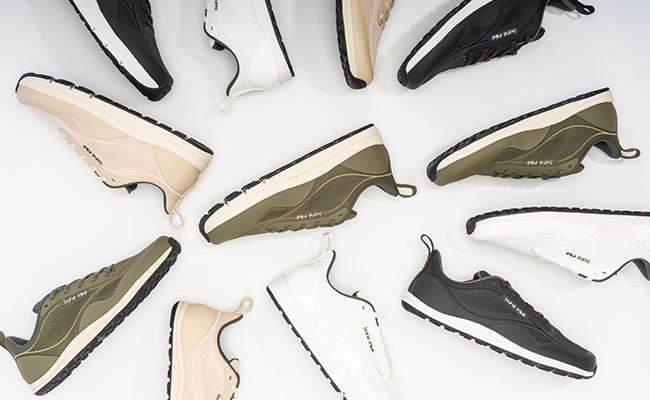
That’s why we created Modes: three cushioning levels within the same barefoot-fit platform.

This isn’t about “less cushioning is better”. It’s about matching the shoe to your current capacity and activity and giving your body time to adjust.

A good sign you can progress is that you’re comfortable during and after your usual walking/training, and any new sensations settle quickly. If things feel worse across days, scale back - either by using a more cushioned Mode, reducing volume, or alternating with what you currently wear.

67754601251200

The shoe that changed my thinking

Revive Original fundamentally changed how we design. It pushed us to learn faster, listen harder, and build footwear around real bodies - not just a product brief.

It also made me think about my younger self. I wish I’d known earlier that footwear is not only about cushioning and support - it’s also about shape, movement, and building capacity over time. I can’t rewrite that story, but I can build shoes that make the next person’s story a little easier.

If you’re curious, Revive Original is where Modes started - and it’s still one of the clearest expressions of what we’re trying to do at Bahé.

Browse Revive + explore Modes

If you want to see Revive and understand which Mode might suit you right now, browse Revive and find your Mode.

Mini FAQ

What are barefoot / barefoot-style / barefoot-fit shoes?

When we use these terms, the key focus is on foot-shaped toe boxesand providing as much flexibility as possible. Most shoes like this, including our current barefoot-style ranges are also zero-drop, meaning the heel is the same height as the ball of the foot. So the foot is in a more neutral position, we also avoid toe spring, which is found on most traditional shoes where the toe of the shoe curves upwards from the ball of the foot forwards. The variables we have in our range with the Modes concept is variation in cushioning and ground feel.

Should I start with the least cushioning?

For most people, no. Endurance is the entry cushioning level for most people, then Adapt, and Flex often later.

How long does it take to transition?

It varies. A useful approach is to treat it like training: start small, and gradually build, listening to your body. There may be some discomfort initially as your body adapts, but as long as you’re comfortably recovering, you can build from here. Is you find the discomfort too much, scale back a little while your body recovers. Transitioning in more cushioned barefoot shoes will typically be quicker than in more minimal ones.  

Can barefoot-fit shoes help with pain?

Some people feel better, others don’t - and it depends on the cause. No shoe can guarantee pain relief. If pain is persistent or worsening, get clinical advice.

Do I need special exercises?

You don’t always, but simple foot and calf capacity work can help some people. The bigger lever is usually progression: volume, intensity, and recovery.

Can I use Revive for training?

Many people do, depending on their tolerance and Mode choice. If you’re new, start in Endurance, keep early sessions short, and build gradually.


Alex is Co-founder and Designer at Bahé. With around 20 years’ experience in footwear, he leads the design and development of every product - from prototypes and materials testing to the details that shape fit, ground feel, and real-world performance.

Leave a comment

Please note, comments need to be approved before they are published.

Alert me via email when this size/colour becomes available