Skip to content

Zero-Drop Shoes With Cushioning: What Beginners Should Know

Bag
0

Zero-Drop Shoes With Cushioning: What Beginners Should Know

Cushioned zero-drop shoes give you the foot-shaped fit and level platform of barefoot footwear with more protection underfoot. Bahé co-founder Alex explains what makes a good cushioned zero-drop shoe, why the transition still matters and how beginners can start comfortably.

72220081127808

Barefoot and zero-drop shoes are often associated with very thin, minimal soles, but that is only one end of the spectrum. There are also more cushioned options, including Bahé's Endurance Mode and models from brands such as Altra and Topo. For many people, that extra cushioning can be useful during higher-impact activities such as running, or when moving gradually from conventional footwear into a foot-shaped, zero-drop shoe.

When I first started wearing barefoot shoes several years ago, before we launched Bahé's barefoot range, I tried both ends of that spectrum. The very minimal pair was useful for feeling the ground and paying attention to technique, but it felt quite aggressive over longer runs. A more cushioned zero-drop shoe felt easier to run in, so I made the common mistake of doing too much too soon. The foam felt soft and comfortable, but I ended up irritating my Achilles.

That experience stayed with me when we designed Revive Endurance. We wanted to create a more comfortable entry into barefoot footwear, especially for running, while avoiding the overly soft, unstable feel that had caused problems for me. Endurance uses more cushioning, but it is designed to remain stable, responsive and flexible enough to let the foot move naturally.

This article looks at what makes a good cushioned zero-drop shoe, where cushioning can be useful and how we approached the design of Endurance to keep the benefits while reducing some of the common trade-offs.

What are cushioned zero-drop shoes?

Zero-drop simply means there is no height difference between the heel and forefoot, while cushioning describes how much material sits beneath the foot. Put these two characteristics together and you get a level platform with more protection underfoot than you would find in a very minimal barefoot shoe.

A cushioned zero-drop shoe can still keep the features that matter to us: a foot-shaped toe box, useful flexibility and secure hold around the heel and midfoot. The extra cushioning simply makes it feel more forgiving over longer distances, harder surfaces or higher-impact activities.

In the Bahé range, Endurance is our most cushioned Mode. It keeps the same foot-shaped, zero-drop foundation while offering more protection for people moving from conventional footwear, running longer distances or simply preferring a more cushioned feel.

Why can cushioning be useful in barefoot shoes?

Barefoot and zero-drop shoes are often associated with very thin soles, but that does not suit every person or every activity.

More cushioning can be helpful when you are new to barefoot footwear, running on hard surfaces or spending longer periods on your feet. It can reduce how much ground texture and impact you feel while still giving you the toe space, level platform and flexibility associated with barefoot design.

Brands such as Altra and Topo have also helped show that zero-drop or more anatomical footwear can still be cushioned. At Bahé, our approach is to treat cushioning as a variable rather than assume that everyone needs the thinnest possible sole.

The right amount depends on your experience, the activity and how much ground feel you enjoy.

What makes a good cushioned zero-drop shoe?

The best cushioned zero-drop shoe is not necessarily the softest one.

Very soft foam can feel comfortable at first, but if the heel sinks deeply under load, the platform may feel less stable and predictable. For running in particular, I prefer cushioning that feels comfortable and responsive without becoming spongy.

That balance shaped the design of Revive Endurance. Its 14 mm midsole creates a total stack height of 22 mm, including the insole, but the aim was never simply to add more foam. We wanted the shoe to feel cushioned enough for longer or higher-impact use while remaining stable under the heel.

Flexibility matters too. More midsole material can make a shoe feel stiff, so Revive Endurance feature flex grooves on the sole, and an internal lattice structure to help the forefoot move naturally. It also retains the wide, foot-shaped toe box and zero-drop design of the rest of the collection.

For me, a good cushioned zero-drop shoe needs to bring those elements together:

  • enough cushioning for the activity
  • stable, responsive foam
  • flexibility through the forefoot
  • secure hold through the upper
  • room for the toes to spread

The aim is to give the foot freedom to move while adding enough protection and comfort to make barefoot-style footwear practical for more people and more activities.

Why does the transition to zero-drop still matter?

Many conventional shoes, whether they are running shoes, casual or formal often feature a raised-heel, which means the heel is positioned above the forefoot. Moving to zero-drop removes that lift, which changes the position of the ankle and how work is shared through the foot, calf and Achilles during walking and running.

So although extra cushioning can make impacts feel more forgiving, especially for running or longer periods on hard surfaces, switching from a raised heel to a zero-drop sole does still mean the foot and lower leg are working from a different position. That is why even a cushioned zero-drop shoe often needs to be introduced gradually, especially for activities like running.

Research suggests that heel-to-toe drop can influence running mechanics and how work is distributed across the lower-limb joints (Liu et al., 2025). Reviews of minimalist-footwear transitions also show that people adapt at different rates, rather than following one fixed timetable (Warne and Gruber, 2017).

Heel lifts can make the change feel less abrupt. Bahé offers 4 mm heel lifts as a temporary transition tool, adding a small amount of heel height while the calves and Achilles become more accustomed to zero-drop.

Read Why Zero-drop Hurts Calves And What To Do and Heel Lifts And Insoles Explained for more detail.

How does running technique change?

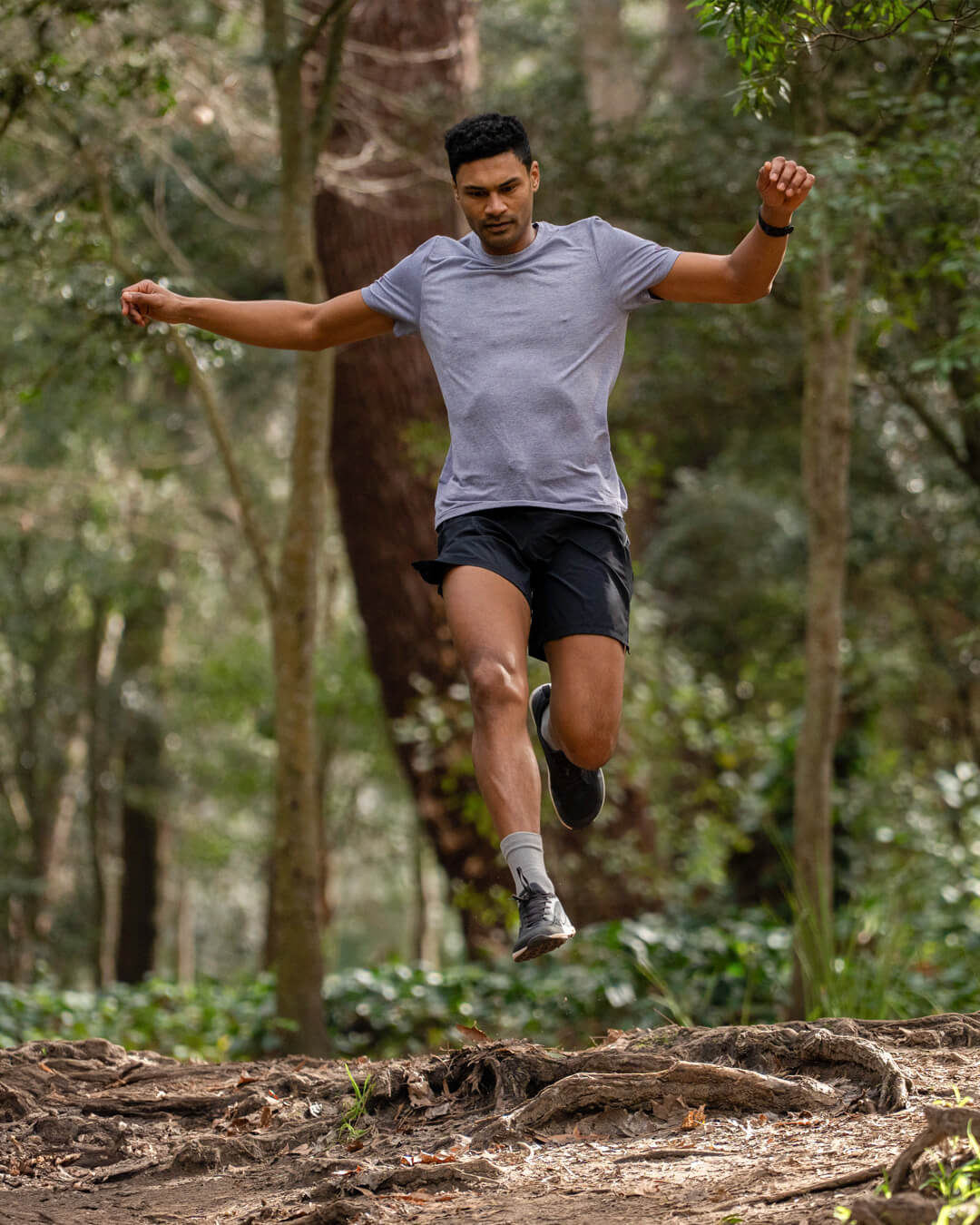
For heel strikers, a cushioned zero-drop shoe can still feel reassuringly familiar because there is more protection underfoot. The real change is the removal of the raised heel compared to conventional running shoes, means the foot, calf and Achilles work a little differently through each step. I would introduce the use of any zero-drop shoe gradually, use heel lifts, build distance over time and pay attention to how your lower legs feel between runs.

Many runners also find that a slightly shorter stride, less overstriding and landing closer beneath the body makes the transition feel smoother and more controlled.

For a fuller explanation of barefoot-style running technique and progression, read the Older Yet Faster Guide.

How should beginners start with cushioned zero-drop shoes?

Start with everyday walking or shorter, easier runs and build from there. A cushioned zero-drop shoe should feel approachable, so the goal is to give yourself enough time to enjoy the change while your feet, calves and Achilles get used to working from a level platform.

Some people will want to keep their familiar shoes for longer runs or harder sessions at first. This is understandable but as the long term goal is to switch to more foot-shaped shoes, we wanted to create a solution so people can transition more comfortably whilst sticking with their barefoot shoe. That is exactly why we created our 4 mm heel lifts - they let you benefit from the foot-shaped fit and wider toe box while reducing the size of the change in heel-to-toe drop.

We have focused a lot on Endurance in this blog because it is our most cushioned Mode and the natural starting point for many people coming from conventional footwear. Our Adapt Mode is also an important option. It has a 14 mm stack and includes a midsole, so it still offers meaningful cushioning while giving more ground feel and flexibility than Endurance. For some people, that will be the sweet spot from the beginning. For others, it may be the next step once they feel comfortable in a more cushioned zero-drop shoe.

Not sure where to begin? Take the Find Your Mode Quiz to match your cushioning level to your current experience and activity.

For a fuller progression plan, use the 0-12 Week Barefoot Shoe Transition Plan.

Take-home message

Cushioned zero-drop shoes are not a contradiction. For many people, they offer a practical way to gain the foot-shaped fit, level platform and freedom of movement associated with barefoot footwear while keeping more protection underfoot.

The strongest option is not simply the softest. Look for cushioning that feels stable and responsive, enough flexibility for the forefoot to move and a shoe that suits the activity you want to use it for.

References

  1. Esculier, J-F., Dubois, B., Dionne, C.E., Leblond, J., Roy, J-S. and Berrigan, F. (2015) ‘A consensus definition and rating scale for minimalist shoes’, Journal of Foot and Ankle Research, 8, article 42. (Accessed: 23 July 2026). Read the article.

  2. Liu, Z., Zhou, Y., Liu, H., Cheng, P., Zheng, Z. and Zeng, Q. (2025) ‘Immediate and long-term effects of zero-drop running shoes on lower extremity biomechanics’, Frontiers in Bioengineering and Biotechnology, 13, article 1462159. (Accessed: 23 July 2026). Read the article.

  3. Perkins, K.P., Hanney, W.J. and Rothschild, C.E. (2014) ‘The risks and benefits of running barefoot or in minimalist shoes: a systematic review’, Sports Health, 6(6), pp. 475-480. (Accessed: 23 July 2026). Read the article.

  4. Warne, J.P. and Gruber, A.H. (2017) ‘Transitioning to minimal footwear: a systematic review of methods and future clinical recommendations’, Sports Medicine - Open, 3, article 33. (Accessed: 23 July 2026). Read the article.

Leave a comment

Please note, comments need to be approved before they are published.

Alert me via email when this size/colour becomes available