Skip to content

Strengthen Your Arches Without Orthotics: A Practical Plan

Bag
0

Strengthen your arches without orthotics: a practical plan (and when support can still help)

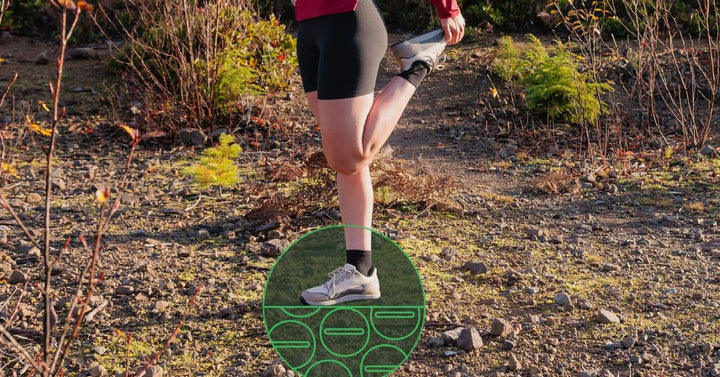
Most people trying to “fix” flat feet or weak arches are told they need more support. But for many feet, the real issue isn’t lack of support, it’s lack of capacity.

Your arch isn’t a static structure that needs holding up. It’s a dynamic system designed to adapt to load, store energy, and help you move efficiently.

If that system hasn’t been doing much work, often because of years in stiff, supportive footwear, it can start to feel tired or unstable when demands increase. The good news is that capacity can be rebuilt.

In this guide, we explain what “stronger arches” actually means, when orthotics may still be useful, and a simple step-by-step plan to help your feet gradually build strength, tolerance, and resilience.
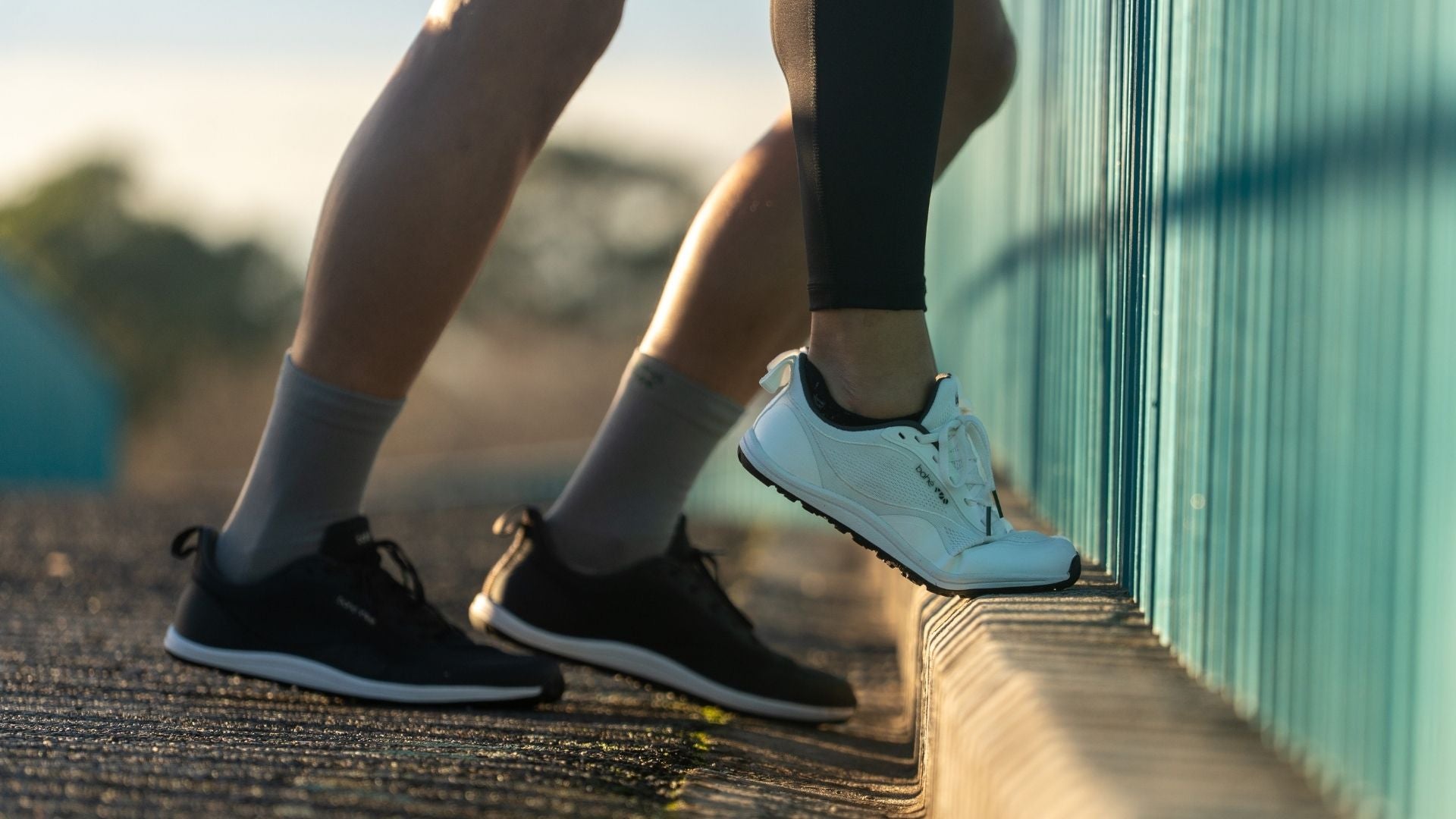
If you only take one thing from this, let it be this: most people don’t need more “support”, they need more capacity, built gradually.

To understand why, start with Flat feet and arches: what your arch actually does (and why shape isn’t a diagnosis).

Then read Pronation: what it is, why it matters, and why it isn’t the problem for the movement piece.

This guide is the practical next step: how to build a foot that copes better with load.

68044898173312

What “stronger arches” actually means

Your arch isn’t one muscle you can “tone up”. It’s a system that changes shape as you move; bones, connective tissue and muscles working together (Ker et al., 1987; McKeon & Fourchet, 2015).

So when people say “I want stronger arches”, what they usually want is one of these:

  • less aching after walking or standing

  • more stability under load (without feeling like you’re gripping)

  • better tolerance to training- the same or better across days

  • a foot that can adapt when it lands, then stiffen when it pushes off

That’s the goal: a foot that adapts, then rebounds; step after step.

68205448069504

Why orthotics aren’t the automatic answer

We didn’t evolve with shoes, let alone devices designed to control foot motion. So the idea that a “normal” human foot needs fixing by default doesn’t really hold up.

What does hold up is this: modern life can leave feet a bit under-trained. Years in stiff, supportive shoes can reduce how much work the foot has to do (Holowka et al., 2018; Miller et al., 2014). Then when someone tries to move more naturally, it can feel like their feet “can’t handle it”.

The good news is this is trainable. If your feet have been doing less work for years, they can feel surprised at first, but you can build tolerance back gradually with progressive loading (McKeon & Fourchet, 2015; Mulligan & Cook, 2013).

68205448003968

When support can help (without becoming the plan)

Support can be useful as a short-term comfort tool, mainly:

  • during a flare-up, if it helps you stay comfortably active

  • early in a return-to-activity phase

  • during a transition period if you’re changing footwear and your feet are adjusting

Evidence suggests foot orthoses can reduce pain for some people with conditions such as plantar heel pain, though responses vary and benefits are typically modest (Whittaker et al., 2018).

If you use support, think of it like turning the volume down. Helpful sometimes but the long-term win is still building capacity.

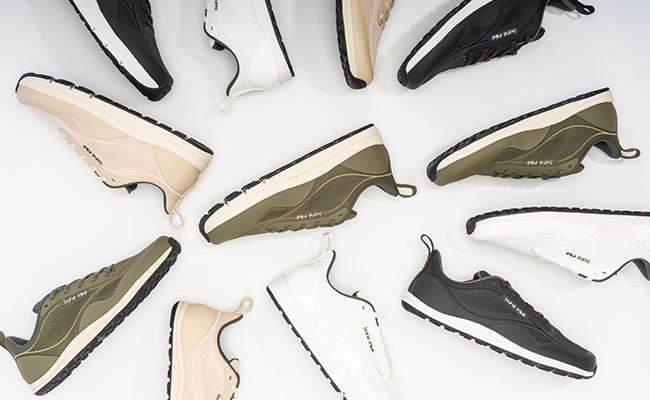
For many people, barefoot-style shoes can support that goal by letting the foot move and work more naturally. Some studies show increased intrinsic foot muscle activity or size when transitioning toward minimal footwear, though the evidence is mixed and adaptation needs to be gradual (Miller et al., 2014; Holowka et al., 2018).

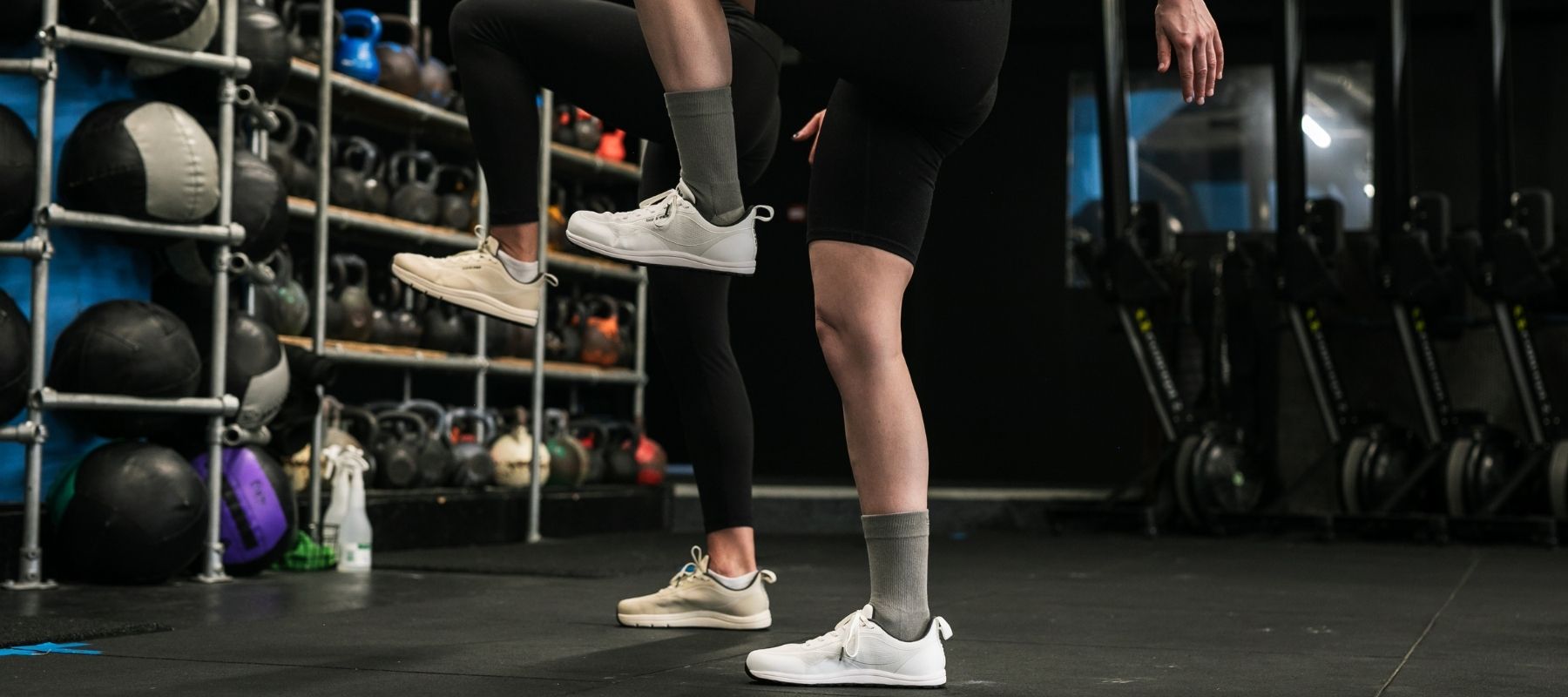
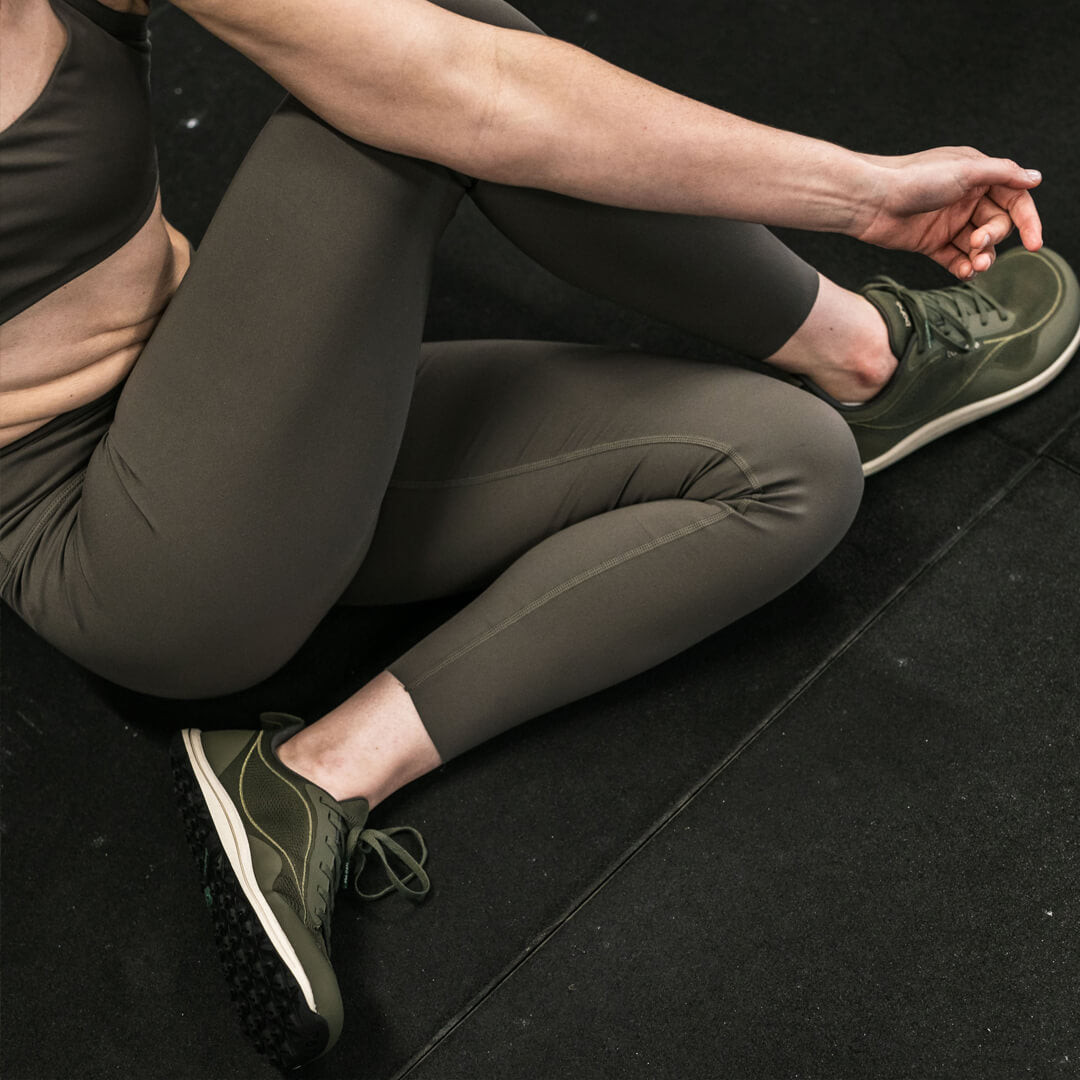
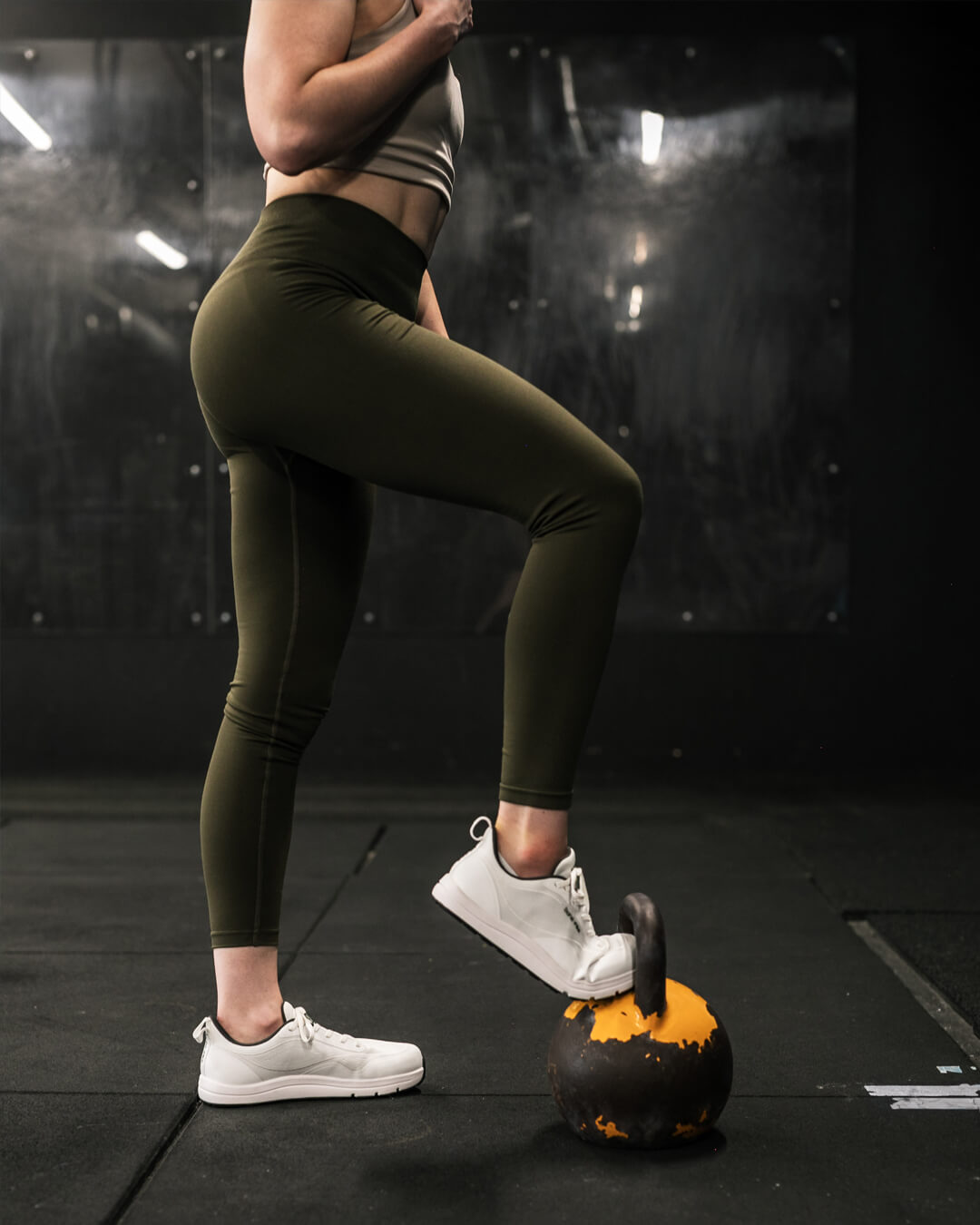
Person exercising in a gym with weights and exercise equipment in the background

The plan: start simple, then build, then add challenge

If you’re transitioning towards barefoot-style shoes, or you’re getting arch fatigue as your foot adapts under load,this is a simple way to build tolerance without doing too much too soon.

Move on when you’re feeling the same or better across days.

Two rules:

  • Start easier than you think.
  • Check how you feel later that day and the next morning.
68205448135040

1) Base work (start here)

Goal: build basic foot-and-calf tolerance.

Do this 3 times a week:

Calf raises, straight knee
Stand tall, rise onto your toes, then lower slowly.
2–3 sets of 8–12 reps, slow up and slow down.

Calf raises, bent knee
Same move, but with a slight knee bend to shift the effort lower into the calf. Bent-knee heel raises increase the relative contribution of the soleus compared with the gastrocnemius because the gastrocnemius crosses the knee joint (Hébert-Losier et al., 2012; Neumann, 2017).
2–3 sets of 8–12 reps, slow and controlled.

Single-leg balance (near a wall)
Stand on one foot and aim for steady, quiet control.
2 rounds of 30–45 seconds each side.

Short foot holds Keep toes relaxed and gently lift the arch without curling. 5 holds of 10–20 seconds.

68205448200576

2) Strength under movement (when mornings stay steady)

Goal: stay controlled when the rest of the leg moves.

Do this 2–3 times a week:

Step-downs (slow)
Stand on a step and slowly tap the other heel to the floor, keeping the knee tracking comfortably over the foot.
2–3 sets of 6–10 each side.

Split squats
In a split stance, lower and rise under control, keeping pressure through the whole foot.
2–3 sets of 6–10 each side.

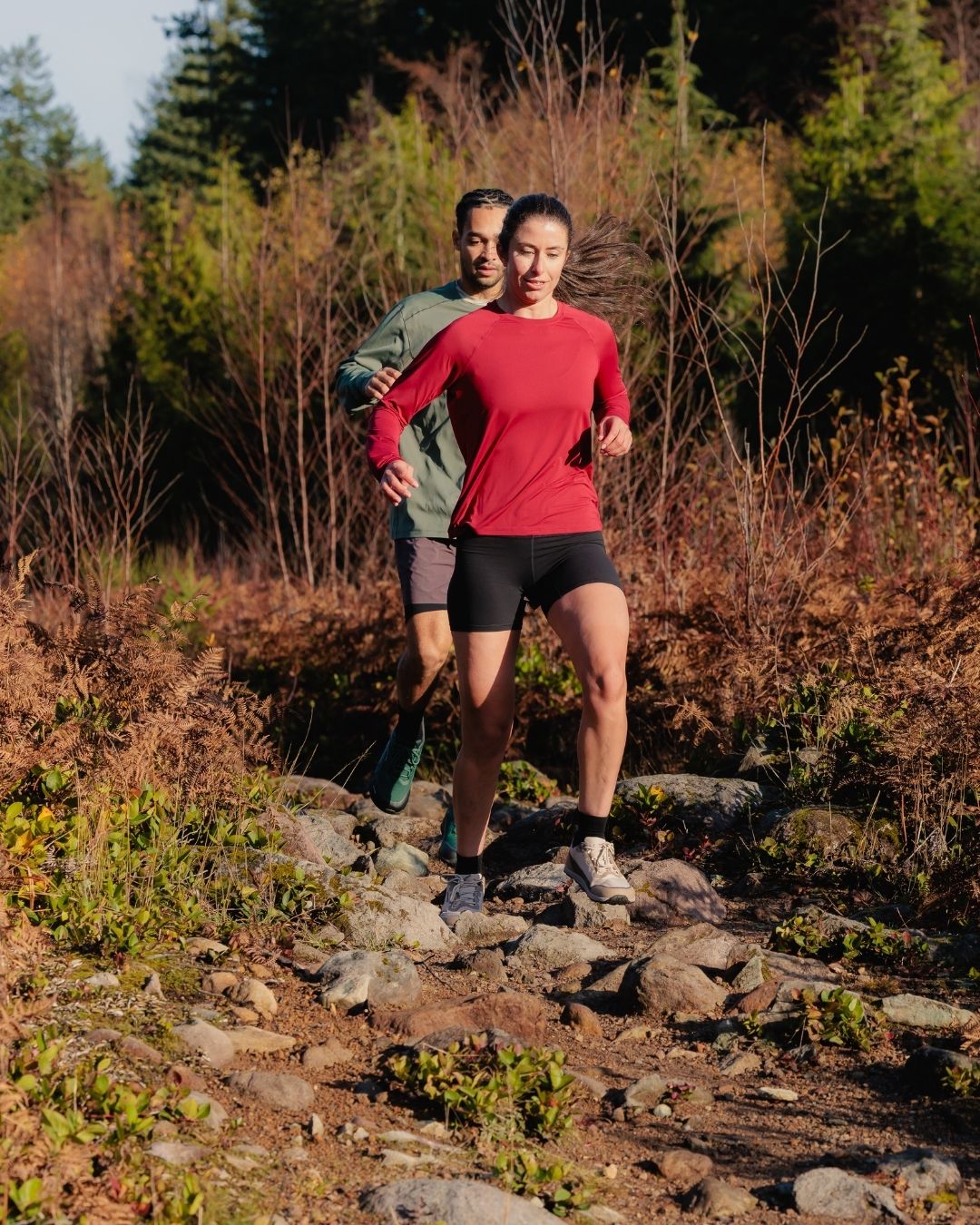
Two people running on a rocky trail in a forested area in the Rewild Shoes

3) Add challenge later (bounce, hills, uneven ground)

Goal: prepare for higher-load inputs.

Do this 1–2 times a week, low dose:

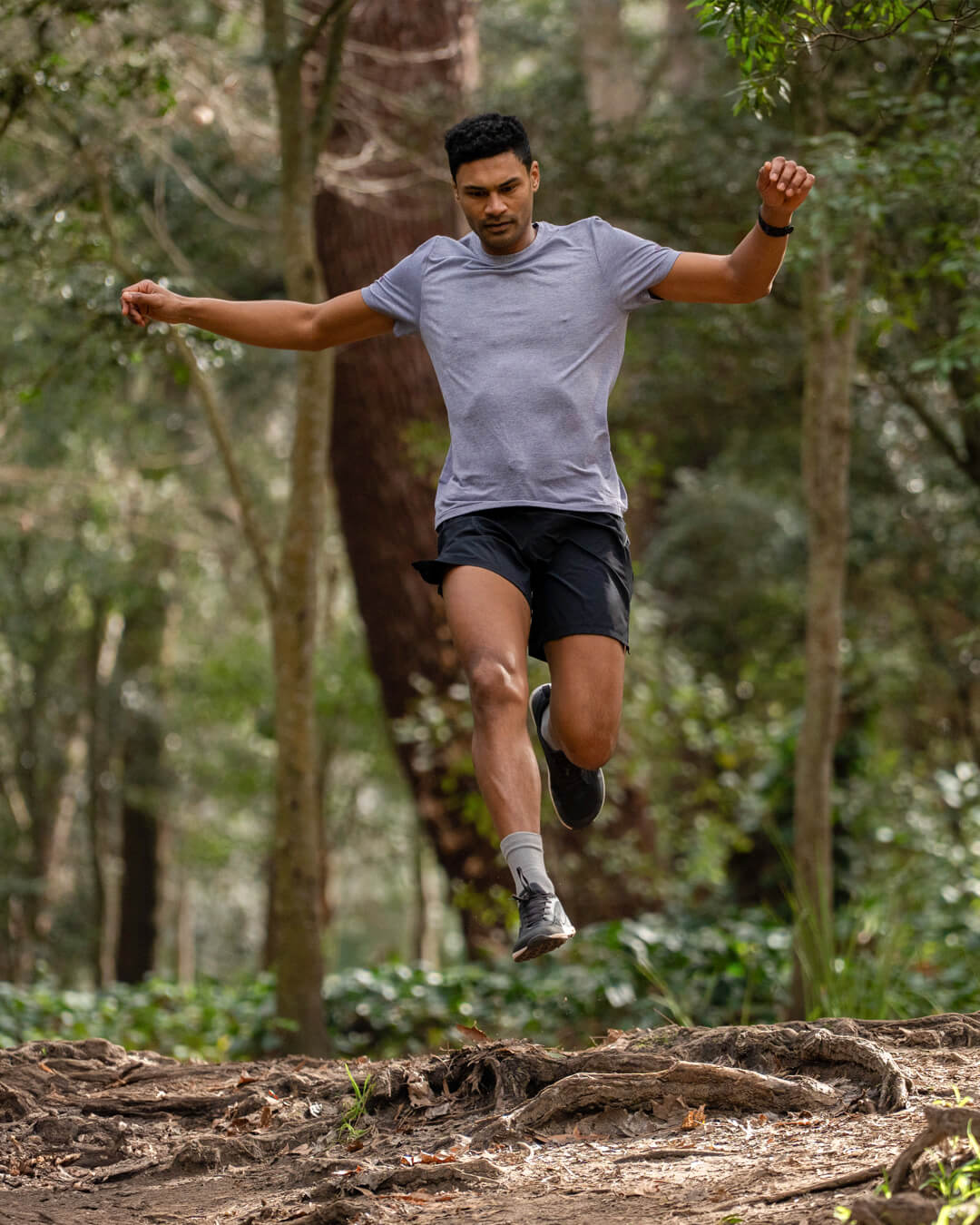
Small hops in place
Quick, light hops with quiet landings (think “springy”, not “slammy”).
2–3 rounds of 10–20 seconds.

Short hills or uneven ground
Add brief exposures first (a short hill walk or a few minutes on an uneven path), then build gradually.

68205448036736

Progress check

Green light: same or better next day, progress slightly.

Yellow light: mild soreness that settles within 24 hours, keep it the same for a few sessions before increasing.

Red light: worse across days, reduce the dose and build again.

68205448233344

Footwear and building natural function

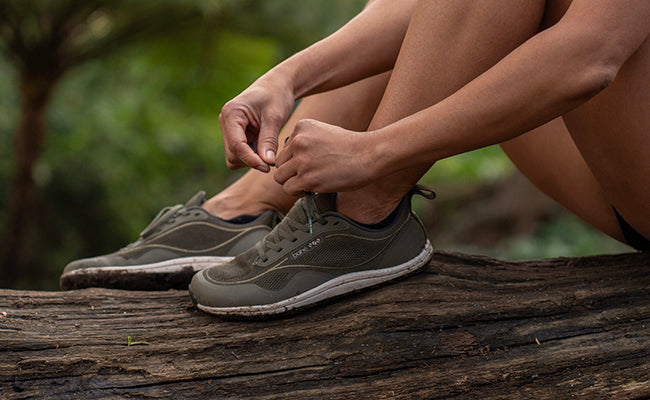
If your goal is to restore more natural foot function, moving towards foot-shaped, flexible, zero-drop shoes can make sense. The key is the transition.

Treat it like training:

  • start with short bouts in the new shoes
  • keep your more conventional shoes for longer or higher-load days early on
  • phase them down gradually as your feet adapt

Listen to your body. A bit of new muscle fatigue can be normal when you start loading underused tissues (McKeon & Fourchet, 2015). If discomfort is building across days, that’s your cue to reduce the dose and build again.

When it’s worth getting checked

If pain is sticking around, getting worse, or you’ve had a few things going on with your feet before, it’s worth booking in with a good clinician. This post is here to guide you, it can’t replace an individual assessment.

68067578773888

Want the simple next step?

If you want a straightforward way to choose the right level of cushioning for where your feet are right now, take the Bahé Modes Quiz.

It helps you pick a pair that fits how you move and what you’re using them for.


Charlie is Head of Movement at Bahé. He blends research with lived experience to help people rebuild strong, functional feet and move with confidence - creating practical movement guidance, transition education, and simple routines people can actually stick to.

References

Ker, R. F., Bennett, M. B., Bibby, S. R., Kester, R. C., & Alexander, R. M. (1987). The spring in the arch of the human foot. Nature, 325(7000), 147–149. Read the article.

McKeon, P. O., Fourchet, F., Hertel, J., & Bramble, D. (2015). The foot core system: a new paradigm for understanding intrinsic foot muscle function. British Journal of Sports Medicine, 49(5), 290. Read the article.

Miller, E. E., Whitcome, K. K., Lieberman, D. E., Norton, H. L., & Dyer, R. E. (2014). The effect of minimal shoes on arch structure and intrinsic foot muscle strength. Journal of Sport and Health Science, 3(2), 74–85. Read the article.

Whittaker, G. A., Munteanu, S. E., Menz, H. B., Tan, J. M., Rabusin, C. L., & Landorf, K. B. (2018). Foot orthoses for plantar heel pain: a systematic review and meta-analysis. British Journal of Sports Medicine, 52(5), 322–328. Read the article.

Hébert-Losier, K., Schneiders, A. G., García, J. A., Sullivan, S. J., & Simoneau, G. G. (2012). Influence of knee flexion angle and age on triceps surae muscle activity during heel raises. Journal of Strength and Conditioning Research, 26(11), 3124–3133. Read the article.

Holowka, N. B., Wallace, I. J., & Lieberman, D. E. (2018). Foot strength and stiffness are related to footwear use in a comparison of minimally- vs. conventionally-shod populations. Scientific Reports, 8, 3679. Read the article.

Mulligan, E. P., & Cook, P. G. (2013). Effect of plantar intrinsic muscle training on medial longitudinal arch morphology and dynamic function. Manual Therapy, 18(5), 425–430. Read the article.

Neumann, D. A. (2017). Kinesiology of the Musculoskeletal System: Foundations for Rehabilitation (3rd ed.). Elsevier. View the book

Leave a comment

Please note, comments need to be approved before they are published.

Alert me via email when this size/colour becomes available