Skip to content

Foot Core Explained: The Muscles That Support Better Movement

Bag
0

Foot Core Explained: The Muscles That Support Better Movement

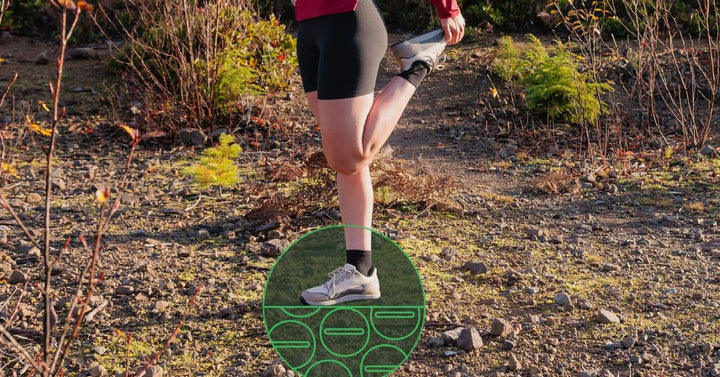
Your feet are not passive blocks at the bottom of the body. They are active, responsive, and built to support movement from the ground up. This post looks at how the muscles, arches, and nerves of the foot work together to support balance, movement, and foot strength.


Foot Core Explanation

Most people only think about their feet when something starts hurting, or when balance feels worse than it should. But every step you take depends on a remarkably capable structure doing a quiet, complex job beneath you. Your feet are not passive blocks at the bottom of the body. They are active, responsive, and built to support movement from the ground up.

That matters whether you care about walking well, training hard, feeling steadier, or simply understanding what your body is doing. The stronger and more responsive the foot is, the better foundation the rest of your body has to work from.

This post is part of our series on how feeling the ground beneath your feet affects movement. In the posts around it, we'll look at sensory feedback, cushioning, surface variety, and balance. This one sets the scene underneath all of that: the foot core itself, how it works, and why it matters more than most people realise.

What is the foot core?

The term foot core is used to describe the system of structures that helps the foot stay supportive, adaptable, and responsive under load. That includes the small intrinsic muscles within the foot, the larger muscles that cross into the foot from the lower leg, the plantar fascia, ligaments, bones, joints, and the sensory nerves that help the brain understand what is happening at ground level  (McKeon et al., 2015).

So when people talk about “strengthening the feet”, they are not usually talking about one muscle. They are talking about a system that works together.

A good way to think about it is the same way people sometimes talk about the core of the trunk. It is not one single structure doing all the work. It is a co-ordinated support system that helps stabilise, transfer force, and respond to movement demands as they change (McKeon et al., 2015).

In the foot, that system matters every time you walk, run, balance, lift, land, or change direction.

Which muscles help stabilise the foot?

Some of the most important muscles for foot support are the small intrinsic muscles that sit within the foot itself. These help control the toes, support the arch, and contribute to fine adjustments in balance and stability (Kelly et al., 2014).

Then there are the larger extrinsic muscles, which start in the lower leg and connect to tendons into the foot. These help control the ankle, support the arches, and create bigger movements like pointing the foot, lifting it, and managing how you load through each step (Neumann, 2010).

What matters in practice is that these groups work together. The foot needs enough strength to hold shape under load, and enough adaptability to respond to the surface underneath you.

That is one reason foot function is so important for better movement. If the muscles and supporting structures of the foot are doing their job well, the rest of the body has a much better base to work from.

Podiatrist, Andy Bryant tells us that “the foot works best as a co-ordinated system. The small muscles inside the foot and the larger muscles from the lower leg both contribute to stability, force transfer, and adaptability.”

What do the three arches of the foot actually do?

When people talk about “the arch”, they often make it sound like the foot has one single curved structure in the middle. In reality, the foot has three arches: the medial longitudinal arch, the lateral longitudinal arch, and the transverse arch.

Together, the arches help the foot do something quite clever. They allow it to be supportive and springy at the same time. They help distribute load, adapt to the ground, absorb and release force, and stop the foot from behaving like a stiff block (Ker et al., 1987).

The arches are not meant to be held up passively by a shoe forever. They should be supported by the way muscles, ligaments, fascia, bones, and joints all work together under load. That is why foot function is not just about shape. It is also about how well the whole system responds when you move.

How do the arch, toes, and nervous system work together?

This is where the foot becomes especially interesting.

Your toes help with balance, pressure distribution, and push-off. The arches help the foot adapt and transfer force. The nerves in the sole of the foot help provide information about the surface beneath you (Strzalkowski et al., 2018). None of these work in isolation.

When that system is working well, the foot can sense the ground, adjust to it, and help the rest of the body respond smoothly. That is a big part of why foot sensation and ground feel matter so much. Better signals from the foot give the brain more to work with, and that can support better movement higher up the chain (Strzalkowski et al., 2018).

This is also why a foot-shaped toe box, healthy toe movement, and good sensory feedback all matter together. Space, strength, and sensation are closely linked.

What can weaken the foot core over time?

For most people, this is not about one dramatic injury or one obvious moment. It is usually more gradual than that.

Years in stiff, heavily structured, or narrow footwear can reduce how much the foot has to do for itself. If the toes are compressed, the foot is heavily supported, and the sole blocks a lot of sensation from the ground, some of that natural responsiveness can fade (Robbins and Hanna, 1987). The muscles are still there, of course, but they may not be asked to work through as much range or with as much variation as they otherwise would.

Changes in footwear or increased barefoot exposure can lead to noticeable differences in foot function due to possible de-conditioning of the foot (Ridge et al., 2019).

That said, weakness is not the only issue. Sometimes it is less about strength and more about co-ordination, awareness, timing, or how well the foot handles load in real life. That is why improving foot function usually works best when you look at the whole picture, not just strength in isolation.

How do you start rebuilding foot support naturally?

The first step is usually giving the foot a better environment to work in.

That might mean wearing shoes with a foot-shaped toe box so the toes can spread more naturally. It may mean spending more time barefoot where practical and comfortable. It may mean using simple exercises that improve toe control, foot strength, and awareness of how you are loading (Kelly et al., 2014).

It also means giving the foot more opportunity to feel the ground properly. A stronger foot is only part of the picture. When the foot can also feel the ground clearly, it gives the brain better information to work with, and that helps support more co-ordinated movement from the ground up (Strzalkowski et al., 2018).

That is where our earlier posts are useful. Natural Foot Shape vs Shoe-Shaped Feet explains why space matters, Why Wide Toe Boxes Improve Foot Health looks at what happens when the toes are restricted, and Five Exercises to Restore Toe Mobility and Foot Strength gives you practical ways to start building better function.

Give your feet the right environment and the right inputs, and they can become stronger, more responsive, and better able to support the way you move.

FAQs

What is the foot core?
The foot core is the support system of the foot - including muscles, fascia, ligaments, bones, joints, and sensory structures - that helps the foot stabilise, adapt, and move well under load.

Which muscles support the foot arch?
Both the small intrinsic muscles within the foot and the larger muscles from the lower leg help support the arches. It is a team effort rather than one single muscle holding everything up.

How many arches are in the foot?
There are three arches in the foot: two lengthways arches and one transverse arch across the midfoot.

Can weak feet affect balance?
They can. Foot strength, foot control, and sensory feedback all contribute to how well the body balances and adjusts during movement.

Can thinner sole shoes help strengthen the foot core?
They can help, because they often allow more ground feel and allow the foot to do a little more for itself. From a physio point of view, that clearer feedback can support better control, better awareness, and better movement.


Lauren is Head Physiotherapist at Bahé. She focuses on load management, adaptation, and translating biomechanics into practical guidance - calm, clear, and grounded in real life.

Bahé Revive Adapt Stone

Barefoot Shoes Explained

Foot strengthening exercises

Foot And Toe Exercises

References

  1. Kelly, L.A., Cresswell, A.G., Racinais, S., Whiteley, R. and Lichtwark, G.A. (2014) Intrinsic foot muscles have the capacity to control deformation of the longitudinal arch. Journal of The Royal Society Interface, 11(93), 20131188. Read the article

  2. Ker, R.F., Bennett, M.B., Bibby, S.R., Kester, R.C. and Alexander, R.M. (1987) The spring in the arch of the human foot. Nature, 325, pp.147–149. Read the article.

  3. Kibler, W.B., Press, J. and Sciascia, A. (2006) The role of core stability in athletic function. Sports Medicine, 36(3), pp.189–198. Read the article

  4. McKeon, P.O., Hertel, J., Bramble, D. and Davis, I. (2015) The foot core system: a new paradigm for understanding intrinsic foot muscle function. British Journal of Sports Medicine, 49(5), pp.290–290. Read the article

  5. Neumann, D.A. (2010) Kinesiology of the Musculoskeletal System: Foundations for Rehabilitation. 2nd edn. St. Louis: Elsevier. Read the article

  6. Robbins, S.E. and Hanna, A.M. (1987) Running-related injury prevention through barefoot adaptations. Medicine & Science in Sports & Exercise, 19(2), pp.148–156. Read the article

  7. Ridge, S.T., Johnson, A.W., Mitchell, U.H., Hunter, I., Robinson, E., Rich, B.S.E. and Brown, S.D. (2013) Foot bone marrow edema after a 10-wk transition to minimalist running shoes. Medicine & Science in Sports & Exercise, 45(7), pp.1363–1368. Read the article

  8. Strzalkowski, N.D.J., Peters, R.M., Inglis, J.T. and Bent, L.R. (2018) Cutaneous afferent innervation of the human foot sole: what can we learn from single-unit recordings? Journal of Neurophysiology, 120(3), pp.1233–1246. Read the article

Leave a comment

Please note, comments need to be approved before they are published.

Alert me via email when this size/colour becomes available